Epigraphic Overview, Cuneiform Tablets, and Meaning
The Epic of Atrahasis (Akkadian: Atra-ḫasīs, meaning “Exceedingly Wise” or “Surpassingly Wise”) is an ancient Mesopotamian literary masterpiece composed in the Old Babylonian dialect of Akkadian. Documented on three clay tablets dating to the reign of King Ammi-Saduqa (c. 1646–1626 BCE, a descendant of Hammurabi), the epic provides humanity’s oldest comprehensive narrative detailing the creation of mankind, the socioeconomic tensions of the divine hierarchy, and a cataclysmic universal flood designed to regulate human overpopulation.
Unlike fragmented flood references in the earlier Sumerian Eridu Genesis (featuring King Ziusudra) or the integrated flood episode in the later Standard Babylonian Epic of Gilgamesh (Tablet XI, featuring Utnapishtim), the Epic of Atrahasis is a self-contained cosmological epic. It systematically explains why humanity was created (to relieve the lower gods of hard labor) and how biological mortality,F infant mortality, and social sterility were divinely institutionalized to maintain cosmic equilibrium.
Epigraphic & Literary Identity Card of Atrahasis
| Philological & Archaeological Parameter | Cuneiform & Academic Record |
| Original Title (Incipit) | Inuma ilū awīlum (“When the gods like man [bore the work]”) |
| Protagonist Name | Atra-ḫasīs (Atrahasis / Atramhasis — “Exceedingly Wise”); King of Shuruppak |
| Language & Script | Old Babylonian Akkadian; written in standard Mesopotamian cuneiform |
| Primary Scribe / Redactor | Ku-Aya (recorded in the colophon of the primary British Museum tablets) |
| Chronological Dating | c. 1646–1626 BCE (17th century BCE, Old Babylonian Period) |
| Primary Physical Artifacts | British Museum tablets (BM 78941, 78942, 78943), excavated from Sippar |
| Structural Length | 3 Tablets comprising approximately 1,245 poetic lines |
| Primary Deities Involved | Anu (sky), Enlil (earth/command), Enki/Ea (sweet waters/wisdom), and Mami/Nintu (birth goddess) |
| Core Theological Purpose | Aetiological explanation for human creation, manual labor, mortality, and population limits |
Structural Summary of the Three Cuneiform Tablets
| Tablet | Primary Narrative Focus | Theological & Cosmological Development |
| Tablet I | Divine Labor & The Creation of Man | The lower gods (Igigi) mutiny against the exhausting labor of digging irrigation canals. The god Geshtu-e is slaughtered; his blood and flesh are mixed with clay by Mami to create 14 humans (7 male, 7 female) to carry the divine toil. |
| Tablet II | Human Overpopulation & Divine Plagues | Within 1,200 years, humanity multiplies exponentially. Their roaring noise (rigmu) prevents Enlil from sleeping. Enlil unleashes three successive population-control catastrophes: plague, famine, and drought, all mitigated by Enki’s secret advice. |
| Tablet III | The Great Deluge & The New World Order | Enlil decrees a universal flood and binds the gods by oath. Enki bypasses the oath by whispering the plan to a reed wall (kikkisu), commanding Atrahasis to dismantle his home, build a massive ark, preserve biological species, and establish post-flood reproductive limitations. |
Aquí tienes el siguiente bloque, estructurado con rigor asiriológico y sin numeración en los encabezados:
The Three Tablets: Creation, Divine Rebellion, and Cosmic Noise
The narrative arc of the Epic of Atrahasis unfolds across three major thematic segments preserved on the Old Babylonian clay tablets copied by the scribe Ku-Aya.
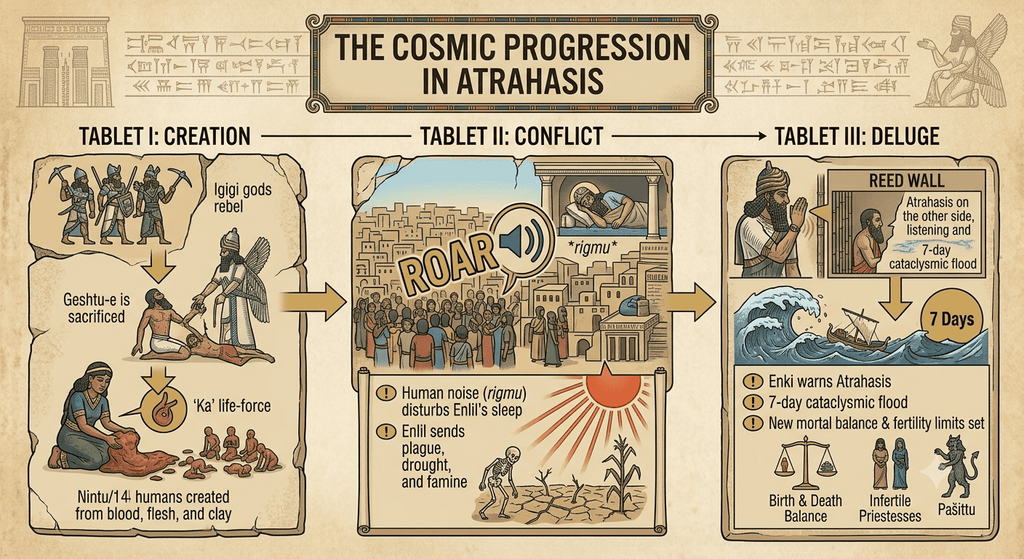
Tablet I: The Revolt of the Igigi and the Creation of Man
The epic opens in primordial times before human existence, described by the famous incipit: Inūma ilū awīlum (“When the gods were like man, they bore the toil and carried the burden”).
- The Divine Hierarchy at Work: The supreme Anunnaki gods forced the subordinate Igigi gods to perform the exhausting labor required to maintain the universe: excavating the Tigris and Euphrates riverbeds, digging vast irrigation canal networks, and quarrying mountains for 3,600 years.
- The Midnight Mutiny: Broken by ceaseless toil, the Igigi revolted. They burned their spades, broke their wicker baskets, and marched under the cover of night to surround the palace temple of Enlil (Ekur in Nippur). Terrified, Enlil called a council of the great gods, including the sky god Anu and the god of wisdom and subterranean sweet waters, Enki (Ea).
- The Creation Solution: Rather than annihilating the rebellious Igigi, Enki proposed a revolutionary theological solution: create a mortal surrogate to bear the yoke of the gods.
- The Sacrifice of Geshtu-e: Enki instructed the great mother and birth goddess Mami (Nintu / Ninhursag) to perform the ritual creation. To impart consciousness and divine spirit into mortal form, the gods slaughtered Geshtu-e (“the god who possessed intellect”):
- Clay (ṭīṭu): Represented earthly matter and physical form.
- Flesh and Blood (dāmū): Imparted divine vitality and the enduring ghost/spirit (eṭemmu).
- Spit of the Gods: Mixed into the paste to bind divine essence with mortal clay.
- Mami shaped 14 womb-masses, creating seven males and seven females. Humanity was thus engineered for a specific cosmic function: to provide sacrificial food and drink to the temples and maintain the agricultural infrastructure of Mesopotamia.
Tablet II: The Roaring Noise (Rigmu) and Enlil’s Plagues
Because humanity was originally created without natural biological senescence (programmed death) or fertility constraints, the population expanded uncontrollably across the fertile river valleys:
- The Disturbing Noise (Rigmu & Hubūru): Within twelve hundred years, the clamor of billions of human voices and the bustling agricultural activities generated a deafening roar (rigmu) across the earth. Enlil, the supreme executive deity of the pantheon, found his sleep shattered:“The noise of mankind has become too intense for me; with their tumult, I am deprived of sleep.”
- The Failed Reductions (Plague, Drought, and Famine): Enlil resolved to cull the human population using three successive ecological catastrophes:
- The Namtar Plague: Enlil unleashed a virulent epidemic. Enki secretly instructed his devoted servant Atrahasis to advise mankind to stop offering sacrifices to their personal patron gods and focus all offerings solely on Namtar, the god of plague. Flattered by the exclusive attention, Namtar withdrew the disease.
- The Adad Drought: Enlil ordered the storm god Adad to withhold rain and dew from the skies, causing total crop failure. Enki again guided Atrahasis to direct all worship exclusively to Adad, who relented and released life-giving moisture.
- The Great Famine: Enlil closed the gates of the earth, cutting off groundwater and causing widespread starvation. Once more, Enki orchestrated divine bribery and relief to preserve humanity.
Furious that his population-control decrees were being systematically undermined, Enlil convened the assembly of the gods, accused Enki of insubordination, and forced every deity to swear a binding, inviolable oath to unleash an inescapable, universal cosmic catastrophe: The Great Deluge (abūbu).
The Great Deluge, The Reed Wall, and The Post-Flood Order
Habiendo obligado Enlil a todo el panteón anunnaki a jurar silencio y complicidad para el exterminio total de la humanidad, Enki (Ea) ideó una estratagema legal y teológica para no romper su juramento ante la asamblea divina.
The Warning Through the Reed Wall (Kikkisu)
En lugar de dirigirse de forma directa y explícita a Atrahasis, Enki habló a la pared de cañas de la choza donde dormía el rey en la ciudad de Shuruppak:
- La estratagema del dios de la sabiduría: Enki susurró sus advertencias al muro de cañas («¡Pared de cañas, escucha! ¡Muro, presta atención!»), permitiendo que Atrahasis escuchara sus palabras al otro lado sin que el dios hubiera quebrado formalmente su juramento sagrado.
- Las instrucciones de construcción: Enki ordenó a Atrahasis desmantelar su propia casa señorial y construir una embarcación de dimensiones colosales:“Desmantela tu casa, construye un barco; renuncia a tus posesiones y salva vidas. Cierra bien la nave con betún y brea.”
- La recolección y embarque: Atrahasis reunió a su familia, artesanos cualificados, provisiones de grano y especímenes de todas las criaturas de la tierra y aves del cielo para asegurar la continuidad de la biosfera terrestre.
The Seven Days of the Cataclysm (Abūbu)
El diluvio mesopotámico no fue una lluvia apacible, sino una tempestad de violencia cósmica liderada por el dios de las tormentas, Adad:
- El terror de los propios dioses: La ferocidad del temporal (abūbu) fue de tal magnitud que incluso los grandes dioses huyeron aterrorizados a las alturas del cielo de Anu, encogiéndose de miedo «como perros» ante el cataclismo desatado.
- Siete días y siete noches de devastación: La tormenta aniquiló toda la civilización de los valles del Tigris y el Éufrates, reduciendo a la humanidad a arcilla informe.
- El hambre y la sed del panteón: Al cesar la tormenta y posarse la nave sobre tierra firme, los dioses descubrieron el grave error de su decisión: al no haber humanos vivos en la tierra, nadie ofrecía libaciones ni quemaba sacrificios agrícolas. Los dioses padecían hambre y sed extremas.
- El sacrificio de Atrahasis: Al salir de la embarcación, el héroe encendió un altar y ofreció un banquete de incienso y carne asada. Atraídos por el aroma, los dioses acudieron rápidamente en masa «revoloteando como moscas alrededor del sacrificador».
The New World Order and Population Control
Al ver que un grupo de humanos había sobrevivido, Enlil montó en cólera, pero Enki intervino para reprocharle su desmesurada crueldad. Ambos alcanzaron un pacto fundacional que redefinió la condición humana para siempre:
- Institucionalización de la mortalidad y la esterilidad: Para evitar que la sobrepoblación volviera a colapsar el mundo, la diosa madre Nintu/Mami y Enki establecieron un nuevo orden biológico y social:
- Mortalidad programada: La vida humana quedó limitada de forma finita y universal.
- Mortalidad infantil: Se creó a la criatura demoníaca Pašittu, encargada de arrebatar un porcentaje de recién nacidos para frenar el crecimiento demográfico.
- Infertilidad y celibato sagrado: Se instauraron clases de mujeres a las que se les prohibió concebir biológicamente, como las sacerdotisas consagradas (Ugbabtu, Entu y Igituhlu).
Comparative Mythology: Atrahasis, Utnapishtim, and Noah
The flood narrative preserved in the Epic of Atrahasis does not stand in isolation; it represents the primary structural ancestor of a widespread Ancient Near Eastern literary and theological tradition. Tracing this myth through chronological layers reveals direct textual dependencies across Sumerian, Babylonian, and Hebrew traditions.
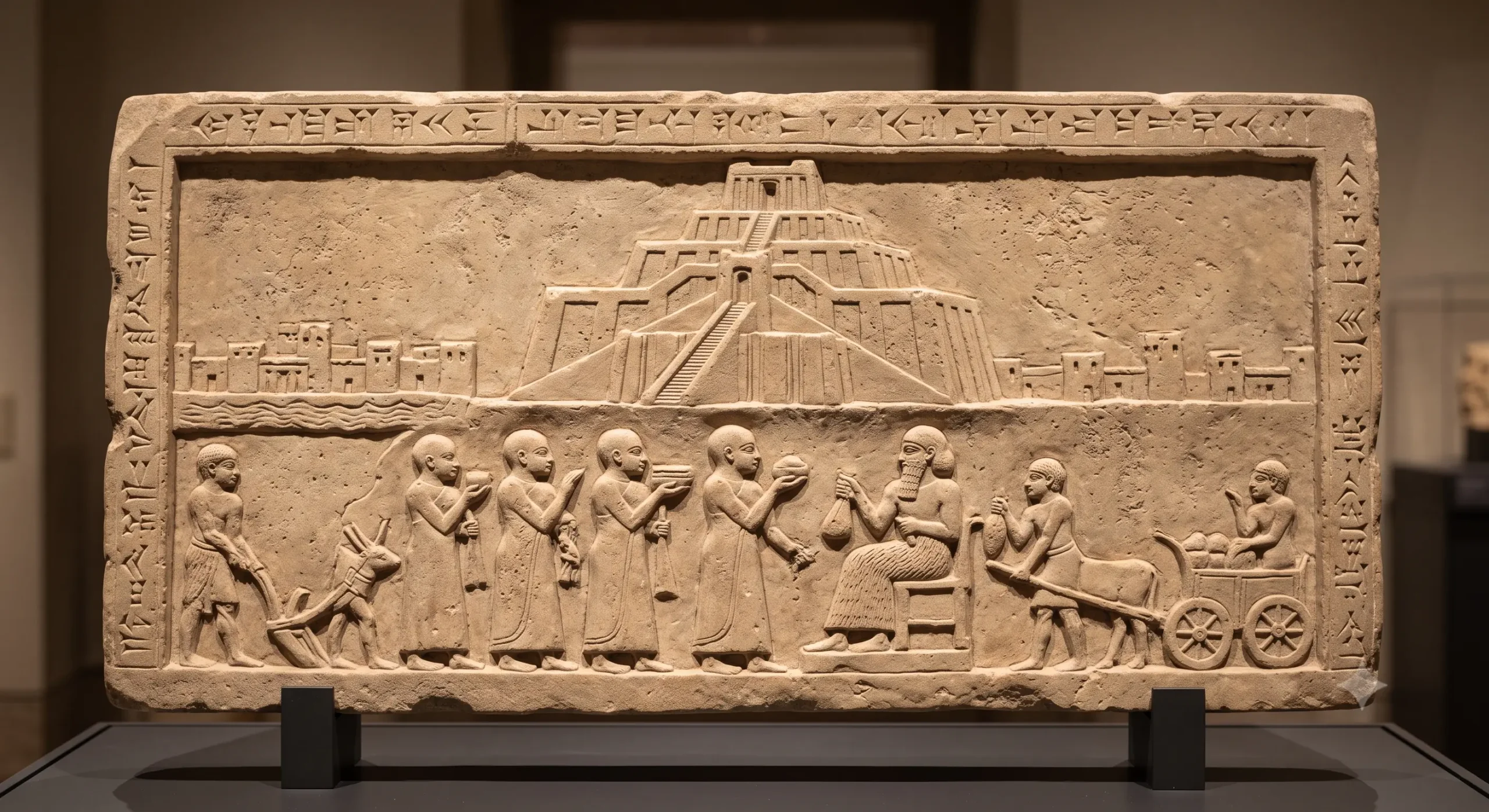
                  GENEALOGY OF ANCIENT FLOOD HEROES

   SUMERIAN (c. 2100 BCE)         OLD BABYLONIAN (c. 1646 BCE)
    [ King Ziusudra ]         ───►     [ Atrahasis ]
   (Eridu Genesis / WB-444)            (Epic of Atrahasis)
                                                │
                                                ▼
     HEBREW (c. 6th c. BCE)       STANDARD BABYLONIAN (c. 1200 BCE)
       [ Noah / Noach ]        ◄───   [ Utnapishtim ]
       (Book of Genesis)             (Epic of Gilgamesh, Tab. XI)
Are Atrahasis and Utnapishtim the Same Figure?
Yes. In Mesopotamian literary history, Atrahasis and Utnapishtim (“He Who Found Long Life”) are two titles and literary iterations of the exact same mythical hero:
- Epithet vs. Proper Name: In the Old Babylonian epic, the protagonist is introduced as Atra-ḫasīs (“Exceedingly Wise”).
- The Gilgamesh Bridge: In the Standard Babylonian Epic of Gilgamesh (Tablet XI, redactor Sîn-lēqi-unninni), the hero is named Utnapishtim, but the text explicitly retains the older name as an honorific. When Ea confesses to having warned the hero, he states: “I did not reveal the secret of the great gods; I merely let Atrahasis see a vision.”
- The Sumerian Prototype: Both characters derive from the earlier Sumerian flood hero Ziusudra (“Life of Long Days”), named in the Sumerian King List (WB-444) as the ruler of Shuruppak prior to the mythological deluge.
Is Atrahasis in the Epic of Gilgamesh?
Yes, the narrative core of Tablet XI of the Epic of Gilgamesh is a direct, near-verbatim adaptation of Tablet III of the Epic of Atrahasis.
When the Babylonian scribes expanded the Gilgamesh epic, they incorporated the older, independent flood poem into Gilgamesh’s quest for immortality. In this context, King Gilgamesh travels across the Waters of Death to the edge of the world to consult Utnapishtim (Atrahasis), who recounts the ancient flood and his reward of divine immortality granted by Enlil.
Textual Parallels: Atrahasis and the Biblical Story of Noah (Genesis 6–9)
The structural, lexical, and narrative parallels between the Epic of Atrahasis and the Genesis flood account (Noah’s Ark) demonstrate a direct cultural and literary heritage within the ancient Near East:
| Narrative & Theological Motif | The Epic of Atrahasis (Old Babylonian) | The Genesis Account (Hebrew Bible) |
| Reason for the Flood | Noise & Overpopulation (Rigmu): Human population clamor disrupts divine tranquility. | Moral Corruption (Ḥamās): Universal human violence and evil grief Yahweh. |
| Divine Warning | God Enki reveals the secret decree to Atrahasis via a reed wall. | Yahweh warns righteous Noah directly. |
| Ark Construction & Sealing | Multi-level wooden vessel waterproofed with native pitch and bitumen (kupru). | Multi-level wooden vessel (Tevah) coated inside and out with pitch (kofer). |
| Living Cargo | Family, skilled craftsmen, domestic livestock, and wild game. | Immediate family, pairs of unclean animals, and sevens of clean animals. |
| Releasing Birds | Releasing birds (dove, swallow, raven) to test for dry land (Tablet XI / Gilgamesh parallel). | Noah releases a raven, followed by a dove three times. |
| Post-Flood Sacrifices | Sacrifices offered; hungry gods gather “like flies” around the sweet savor. | Noah builds an altar; Yahweh “smelled the pleasing aroma”. |
| Divine Token of Covenant | Goddess Nintu touches her lapis lazuli necklace, swearing never to forget the flood. | God sets the rainbow in the clouds as an eternal covenant token. |
10 Essential Facts About the Epic of Atrahasis
- 1. The name means “Exceedingly Wise”: In the Akkadian language, Atra-ḫasīs translates directly as “Surpassingly Wise” or “Exceedingly Wise”, referencing his intellectual virtue and intimate connection to the god of wisdom, Enki.
- 2. It is older than the Epic of Gilgamesh’s flood story: The standard Old Babylonian edition of Atrahasis dates to around 1646 BCE (reign of King Ammi-Saduqa), predating the definitive Standard Babylonian version of Gilgamesh (Tablet XI) by roughly 400 to 500 years.
- 3. Humanity was created from a slaughtered god’s flesh and blood: To relieve the lesser Igigi gods from canal-digging labor, the mother goddess Mami mixed clay with the flesh and blood of the slain god Geshtu-e (“the god who had intellect”), creating 14 humans.
- 4. The flood was sent due to human noise, not moral sin: Unlike the biblical account where the deluge punishes wickedness, Enlil ordered the flood because unchecked human overpopulation created a deafening roar (rigmu) that deprived him of sleep.
- 5. Enki bypassed a sacred oath using a reed wall: Forbidden by divine oath from warning mortals directly, Enki whispered the impending catastrophe to the reed wall (kikkisu) of Atrahasis’s hut, technically keeping his promise while ensuring humanity’s survival.
- 6. Atrahasis and Utnapishtim are the same character: Utnapishtim (“He Who Found Life”) in the Epic of Gilgamesh and Ziusudra in earlier Sumerian tradition are literary evolutions and epithets of Atrahasis.
- 7. The surviving tablets name the actual ancient scribe: The primary clay tablets preserved in the British Museum conclude with a formal colophon identifying the master copyist: a junior scribe named Ku-Aya, working during the First Dynasty of Babylon.
- 8. The starving gods swarmed the post-flood altar “like flies”: Because the deluge wiped out all sacrificial offerings, the hungry and thirsty deities eagerly converged on Atrahasis’s roasted meat offering the moment the flood waters receded.
- 9. Post-flood population control instituted infant mortality and celibacy: To prevent future overpopulation without resorting to cataclysms, the gods created the child-snatching demon Pašittu, natural biological mortality, and celibate orders of priestesses.
- 10. It served as a direct prototype for the Noah’s Ark narrative: The structural sequence—divine warning, pitch-coated multi-level ark, animal preservation, universal storm, bird reconnaissance, and post-flood covenant—directly influenced the later composition of Genesis 6–9.
Aquí tienes la sección de Frequently Asked Questions (FAQs) optimizada para capturar las intenciones de búsqueda de People Also Ask de Google:
Frequently Asked Questions About the Epic of Atrahasis
What does Atrahasis mean?
In the ancient Akkadian language, the name Atrahasis (Atra-ḫasīs, from atru meaning “exceedingly/surpassing” and ḫasīsu meaning “wisdom/intelligence”) translates literally to “Exceedingly Wise” or “Surpassingly Wise.” The name emphasizes the hero’s profound piety, intellect, and favored relationship with Enki, the god of subterranean wisdom.
Are Atrahasis and Utnapishtim the same?
Yes. In Mesopotamian mythology and Assyriology, Atrahasis and Utnapishtim are different names and iterations of the exact same mythical flood hero:
- Atrahasis (“Exceedingly Wise”) is the protagonist’s primary name in the independent Old Babylonian epic (c. 1646 BCE).
- Utnapishtim (“He Who Found Long Life”) is the name used in the Standard Babylonian Epic of Gilgamesh (Tablet XI, c. 1200 BCE).
- Both figures derive directly from the older Sumerian flood hero, King Ziusudra (“Life of Long Days”) of Shuruppak. In Tablet XI of Gilgamesh, the god Ea even refers to Utnapishtim as “Atrahasis.”
Is Atrahasis in the Epic of Gilgamesh?
Yes. The flood narrative recounted in Tablet XI of the Epic of Gilgamesh is a direct literary borrowing and adaptation of Tablet III of the Epic of Atrahasis. When Gilgamesh seeks out the immortal flood survivor Utnapishtim to learn the secret of eternal life, Utnapishtim recounts the ancient deluge story nearly word-for-word from the older Atrahasis text.
What is the connection between Atrahasis and Noah in the biblical flood story?
The Epic of Atrahasis serves as the primary cultural and literary forerunner to the biblical account of Noah in the Book of Genesis (Genesis 6–9). Both accounts share undeniable textual and thematic parallels:
- A single righteous hero receives a divine warning of an impending universal flood.
- Precise instructions are given to construct a large, multi-level wooden vessel waterproofed with native pitch and bitumen.
- The preservation of family, artisans, and pairs of all living animal species aboard the vessel.
- The catastrophic devastation of the earth followed by the vessel resting on high ground.
- Sacrificial offerings made immediately upon exiting the ark, producing a sweet aroma that pleases the divine.
- The establishment of an eternal covenant limiting future universal destruction.
Why did the gods send the flood in the Atrahasis Epic?
Unlike the biblical flood narrative where humanity is punished for moral wickedness (ḥamās), the Mesopotamian gods sent the deluge to solve severe overpopulation. Humans had multiplied so extensively across the river valleys that their collective roaring clamor (rigmu) disturbed the sleep of the supreme god Enlil.
How was humanity created according to Atrahasis?
In Tablet I, humanity is created by the birth goddess Mami (Nintu) under the direction of Enki. To relieve the rebellious lesser gods (Igigi) from digging irrigation canals, the gods sacrificed a deity named Geshtu-e (“the god who possessed intellect”). His divine flesh, blood, and spirit were kneaded into earthly clay to create the first 14 mortal human beings (seven males and seven females).
Further Readings & Academic Web Resources
- The British Museum – The Atrahasis Epic Clay Tablets Collection (BM 78941, 78942, 78943)
- Cuneiform Digital Library Initiative (CDLI) – Atrahasis Primary Epigraphic Transliterations & Tablets
- World History Encyclopedia – The Atrahasis Epic: Creation, the Great Flood, & Meaning
- Electronic Babylonian Literature (eBL Project, LMU Munich) – The Epic of Atra-ḫasīs Edition
- The Electronic Text Corpus of Sumerian Literature (ETCSL, Oxford) – The Sumerian Flood Story (Ziusudra / The Eridu Genesis)