Assyria and Mesopotamia
Assyria was an ancient region and civilization located in northern Mesopotamia, centered around the city of Ashur on the Tigris River.
The Assyrians were therefore a Mesopotamian civilization, but Assyria was not synonymous with all of Mesopotamia. Mesopotamia was a much larger geographical and cultural region that included different peoples, kingdoms, and civilizations over thousands of years.
Understanding this distinction is essential for understanding Assyrian civilization.
Key Aspects of the Assyrians
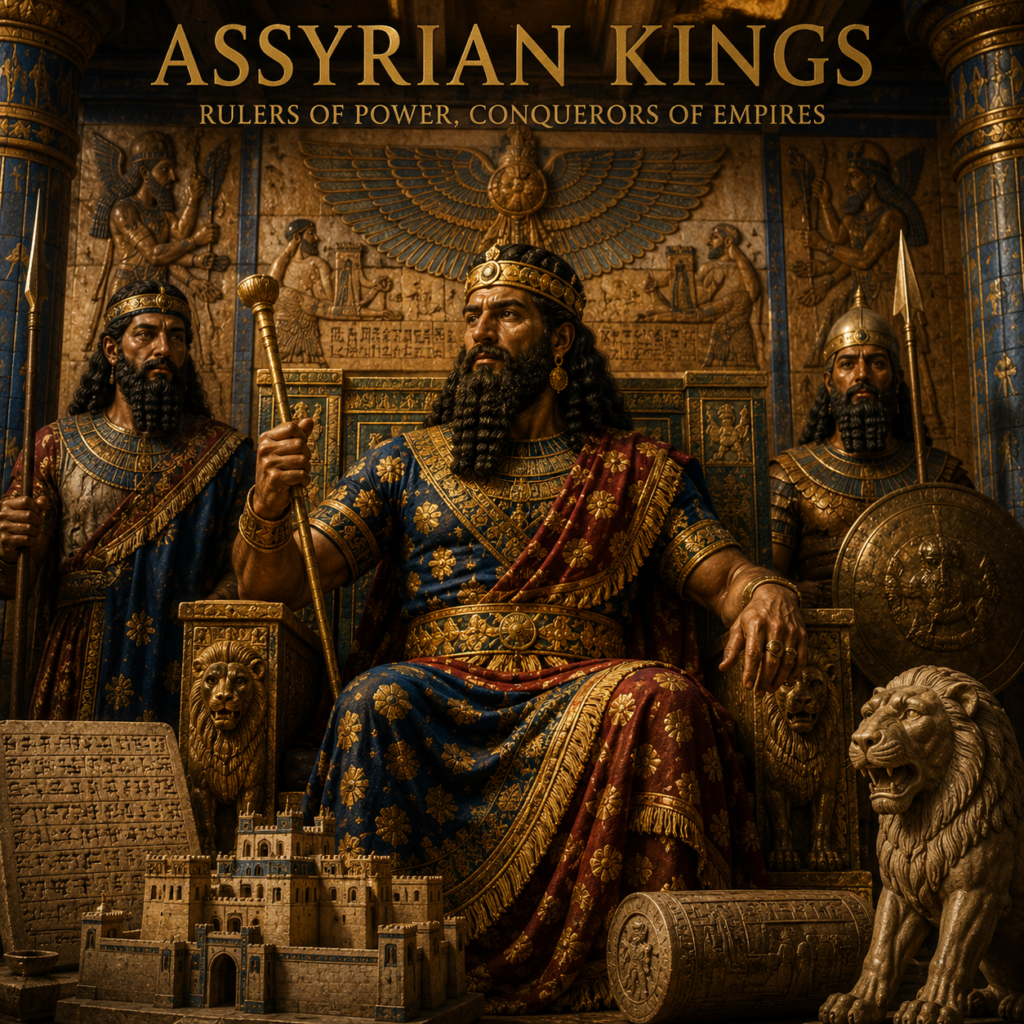
Assyrian Kings
Discover the kings who built, expanded, and ruled the mighty Assyrian Empire.
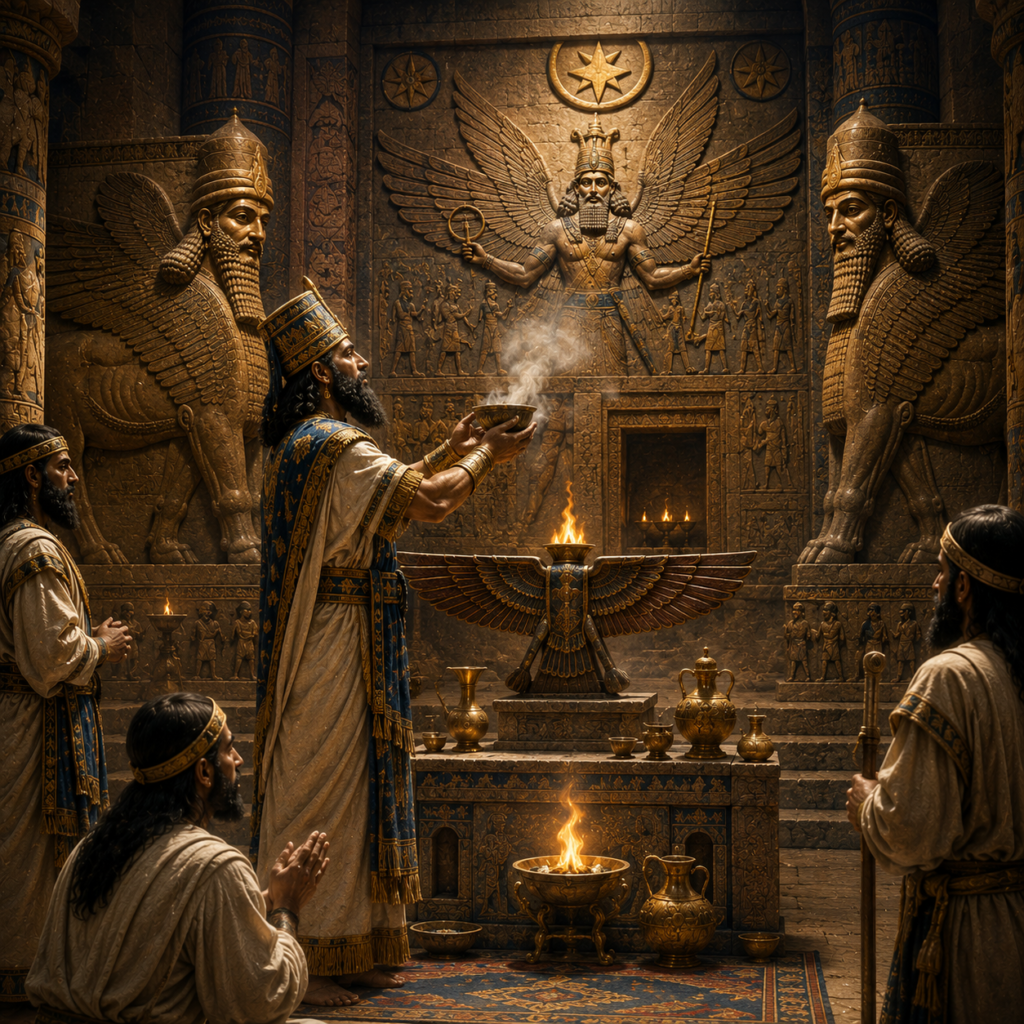
Assyrian Religion
Discover the beliefs, rituals, and gods that shaped the Assyrian Empire
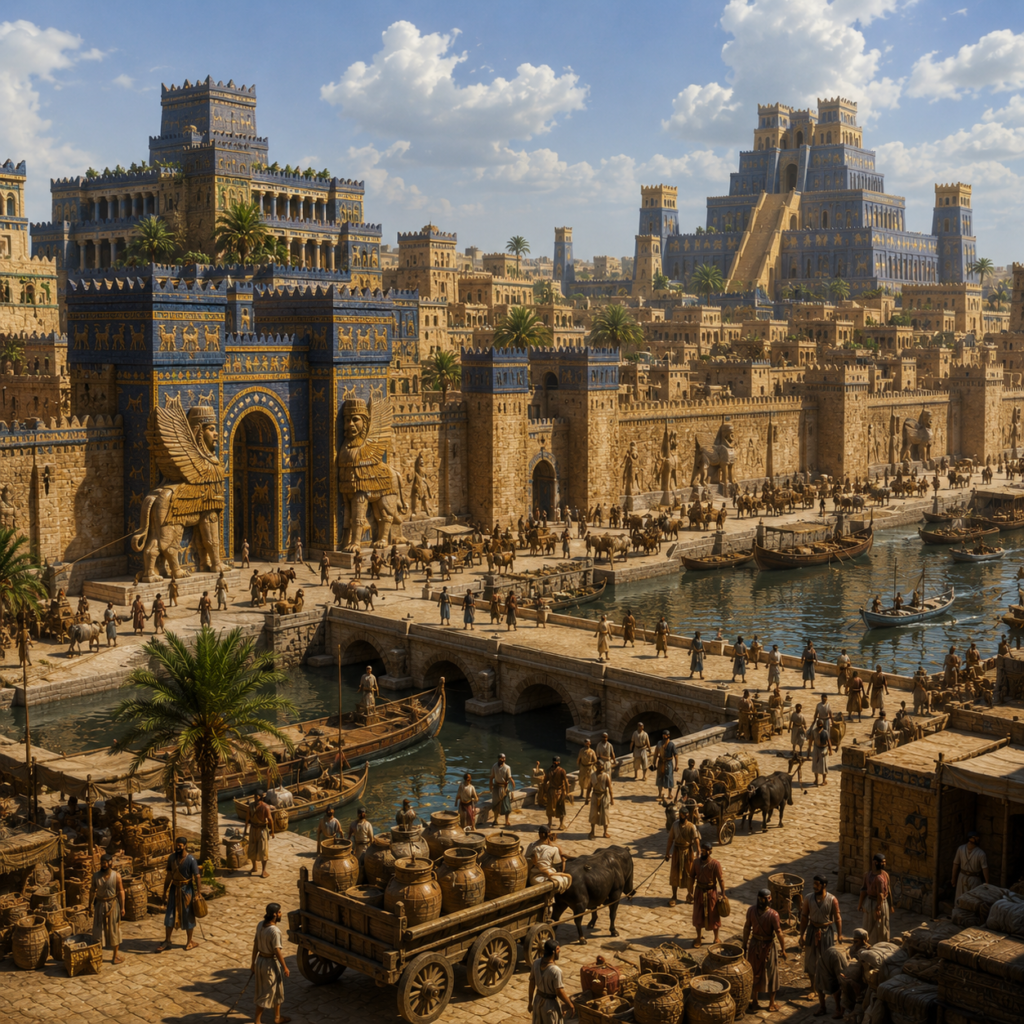
Assyrian Cities
Explore the legendary cities where kings ruled and empires were forged
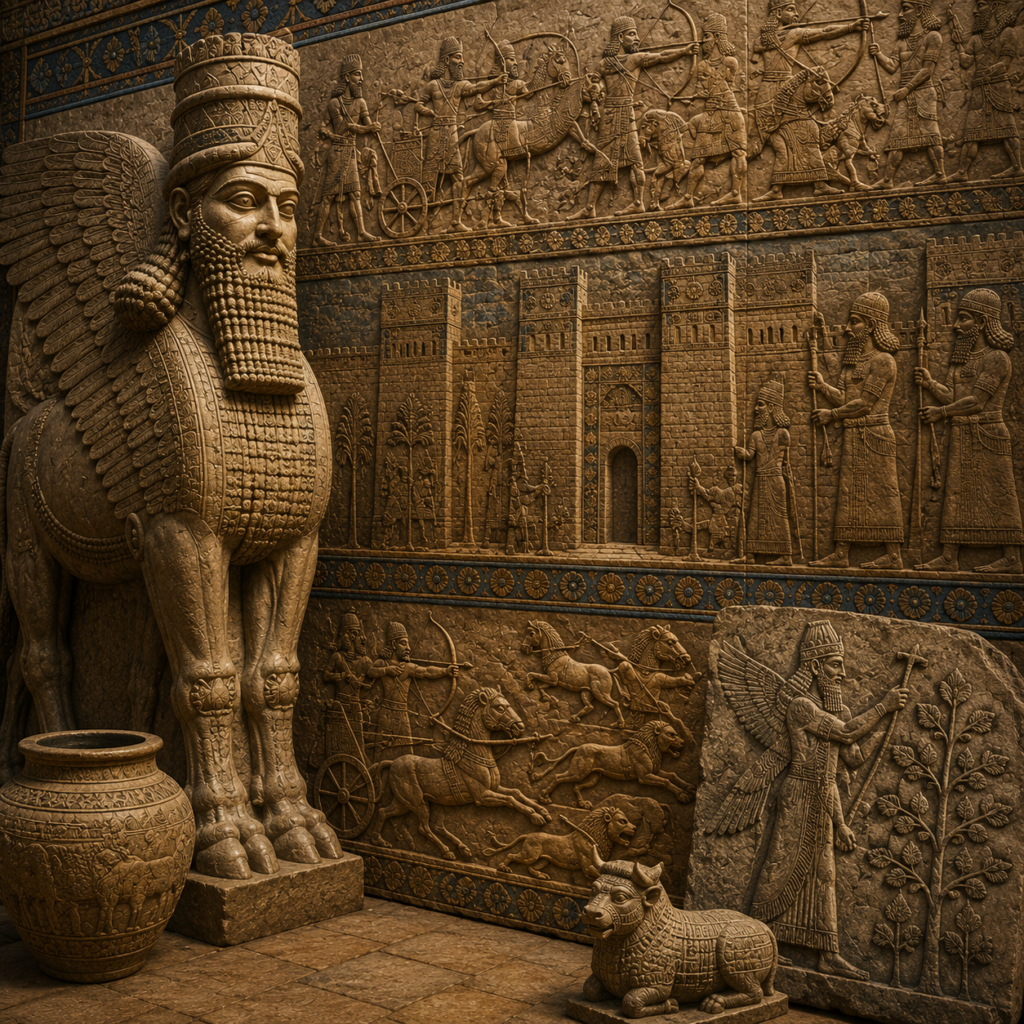
Assyrian Art
Discover the art that celebrated the power, victories, and legacy of the Assyrian Empire
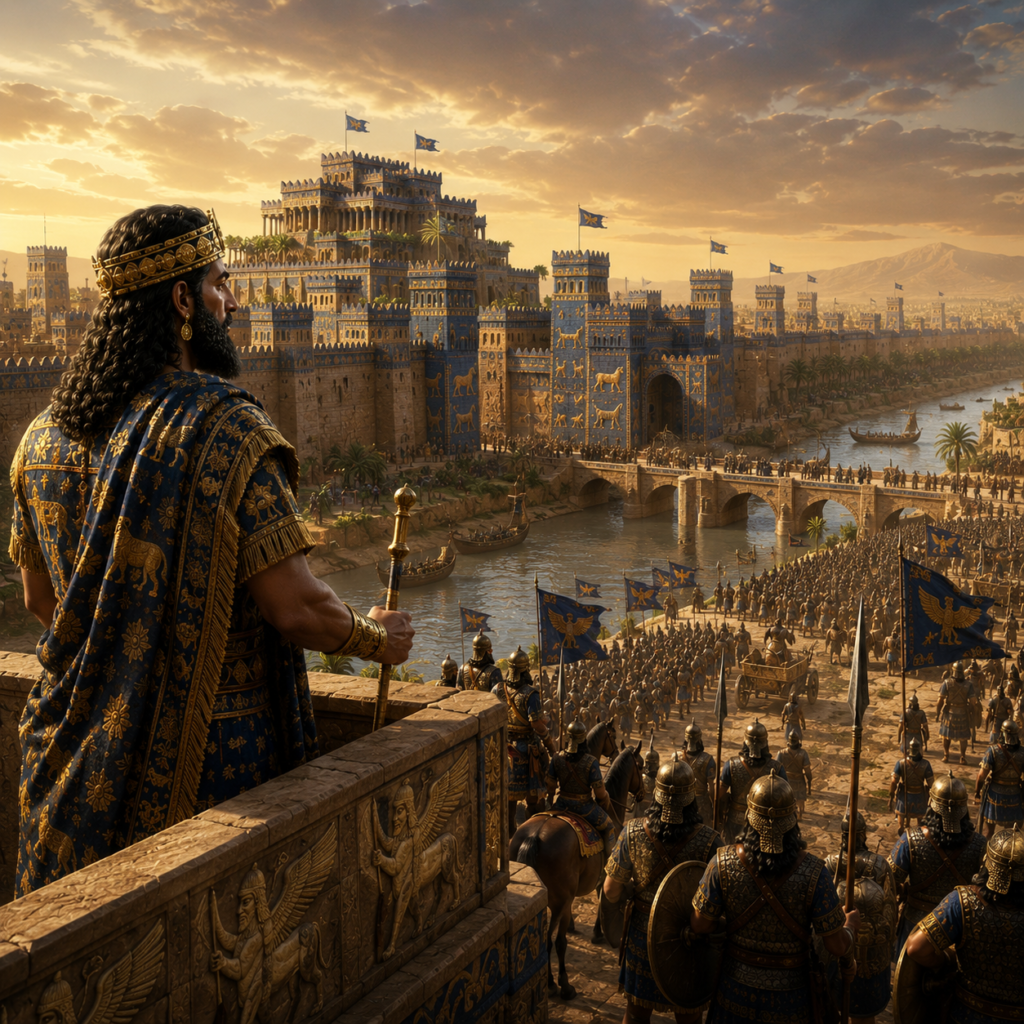
Assyrian Empire
Explore the rise, expansion, and legacy of one of history’s greatest empires.
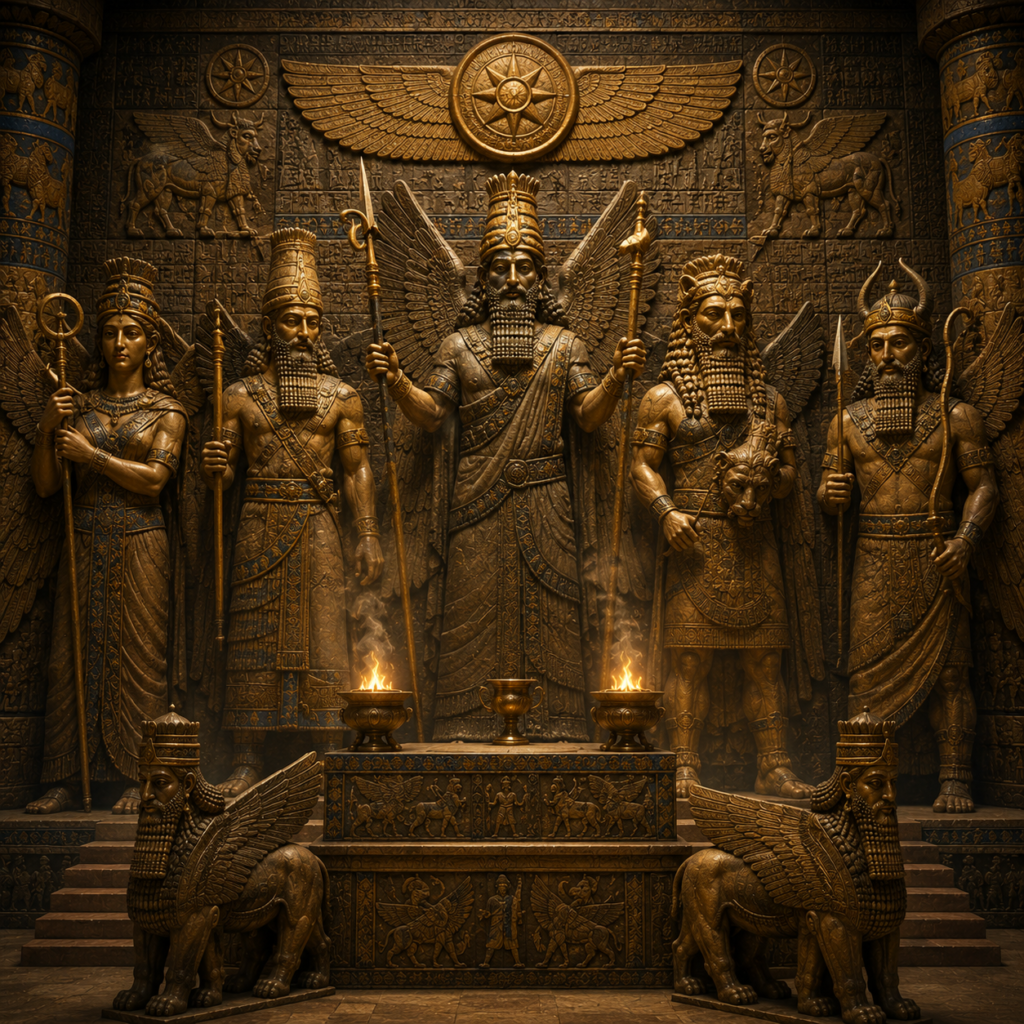
Assyrian Gods
Journey into the world of the gods who inspired one of history’s greatest empires
Where Was Assyria?
Assyria developed in northern Mesopotamia, primarily in the region around the upper Tigris River.
Its historical heartland included important centers such as:
- Ashur
- Nineveh
- Nimrud
- Arbela
These cities were located within a broader landscape of rivers, agricultural land, trade routes, and neighboring states.
Over time, the political boundaries associated with Assyria changed considerably.
The Assyrian heartland remained centered in northern Mesopotamia, while Assyrian political influence eventually extended far beyond this original region.
Was Assyria Part of Mesopotamia?
Yes.
Assyria was part of ancient Mesopotamia.
Mesopotamia refers broadly to the region between the Tigris and Euphrates rivers and their surrounding landscapes.
Assyria occupied the northern portion of this wider region.
This means that:
Mesopotamia = broader geographical and cultural region
Assyria = a northern Mesopotamian civilization and political tradition
The distinction matters because Mesopotamia was never a single civilization.
It was home to many different societies, including Sumerians, Akkadians, Babylonians, and Assyrians.
Who Were the Assyrians?
The Assyrians were the people associated with the ancient region of Assyria.
Their civilization developed over many centuries and incorporated traditions inherited from earlier Mesopotamian cultures.
They developed their own political institutions, religious traditions, artistic styles, and cultural identity while remaining part of the wider Mesopotamian world.
This combination of local identity and broader Mesopotamian heritage is one of the defining characteristics of Assyrian civilization.
Assyria and the Tigris River
The Tigris played an important role in the development of Assyria.
The river provided access to:
- Water
- Agricultural resources
- Transportation
- Communication routes
- Trade networks
Several important Assyrian settlements developed along or near the Tigris and its surrounding waterways.
The geography of northern Mesopotamia therefore influenced where Assyrian communities developed and how they interacted with neighboring regions.
Assyria Within the Wider Mesopotamian World
Assyria was part of a constantly changing Mesopotamian environment.
Its history was shaped by interaction with neighboring peoples and states, including:
- Babylonians
- Arameans
- Anatolian kingdoms
- Levantine states
- Iranian peoples
Trade, migration, warfare, diplomacy, and cultural exchange connected Assyria with regions far beyond its immediate heartland.
Assyrian civilization should therefore be understood as part of a wider network rather than as an isolated culture.
Assyria Was Not Always an Empire
One important distinction is that Assyria existed before the Neo-Assyrian Empire reached its greatest territorial extent.
For much of its early history, Assyria was a regional Mesopotamian power centered on its northern heartland.
Its political organization and territorial influence changed over time.
Only later did Assyria develop into a vast imperial state.
This distinction helps separate the broader history of Assyrian civilization from the specific history of the Assyrian Empire.
For the detailed story of imperial expansion, administration, conquest, and decline, see our dedicated Assyrian Empire guide.
Assyria and Other Mesopotamian Civilizations
Assyria shared many cultural traditions with other Mesopotamian societies.
These included:
- Cuneiform writing
- Temple institutions
- Polytheistic religion
- Monumental architecture
- Scribal traditions
- Agricultural economies
At the same time, Assyrians developed distinctive political and cultural traditions of their own.
This is why Assyrian civilization can be studied both as part of ancient Mesopotamia and as a distinct historical tradition.
Why the Geography of Assyria Matters
Understanding where Assyria was located helps explain many aspects of its civilization.
Its position in northern Mesopotamia placed it between several major cultural and geographical zones.
This created opportunities for:
- Trade
- Cultural exchange
- Agricultural development
- Political interaction
- Military movement
The same geographical position also exposed Assyria to competition with neighboring powers.
Geography was therefore an important part of the long-term development of Assyrian civilization.
Assyria in Ancient Mesopotamia
The simplest way to understand the relationship is:
Ancient Near East
↓
Mesopotamia
↓
Northern Mesopotamia
↓
Assyria
↓
Assyrian Civilization
This hierarchy provides the geographical context needed to understand the Assyrians before studying their political development in greater detail.
Assyria was not separate from Mesopotamia.
It was one of the major civilizations that developed within the wider Mesopotamian world.
The Beginning of Assyrian Civilization
The origins of Assyrian civilization should therefore be understood as a long process rather than a single founding event.
Communities in northern Mesopotamia developed around important urban centers, established religious and political institutions, participated in regional trade, and gradually developed a distinctive Assyrian identity.
Over the centuries, these foundations supported the emergence of one of the ancient Near East’s most influential civilizations.
The later rise of the Assyrian Empire was built upon this much older cultural and political foundation.
Origins of Assyrian Civilization
Assyrian civilization developed gradually in northern Mesopotamia rather than appearing as a fully formed empire.
Its early history was centered on the city of Ashur, located on the Tigris River. From this regional heartland, Assyrian communities developed distinctive political, religious, and economic institutions while remaining closely connected to the wider Mesopotamian world.
The origins of Assyrian civilization are therefore best understood as a long process of urban development, trade, religious tradition, and political change.
The City of Ashur
Ashur was the historical and religious center of Assyria.
The city’s position along the Tigris helped connect it with surrounding regions, while its religious importance gave Assyrian identity a strong connection with the god Ashur.
Over time, the city became more than a settlement.
It developed into a political and religious center around which the early Assyrian state was organized.
The importance of Ashur also explains why the name of the city, the god, the region, and eventually the people became closely connected.
Early Assyrian Society
Early Assyrian society developed around urban communities, agriculture, trade, religious institutions, and local political authority.
People occupied different social and economic roles, including:
- Merchants
- Farmers
- Craftsmen
- Religious officials
- Administrators
- Rulers and members of elite families
These groups were interconnected.
Agriculture provided essential resources, while craftsmen produced goods and merchants connected Assyria with distant markets.
Religious institutions also played an important role in organizing urban life and maintaining traditions.
Trade and the Development of Assyria
Trade was particularly important during the early history of Assyria.
Assyrian merchants established commercial connections extending beyond the immediate Assyrian heartland.
These networks connected northern Mesopotamia with regions of Anatolia and other parts of the ancient Near East.
Trade encouraged the movement of:
- Metals
- Textiles
- Agricultural products
- Luxury goods
- Information
- Cultural influences
This commercial activity helped Assyria become connected to a much wider economic world.
It also contributed to the development of administrative and scribal practices needed to manage long-distance commerce.
Writing and Administration
Assyrian civilization inherited the Mesopotamian tradition of cuneiform writing.
Writing was used for practical purposes as well as religious and political activities.
Written records could document:
- Commercial agreements
- Transactions
- Loans
- Property
- Correspondence
- Administrative matters
The survival of these records gives historians an unusually detailed view of some aspects of early Assyrian society.
Writing also became an important instrument of government as Assyrian political institutions developed.
Religion and Assyrian Identity
Religion was closely connected with the development of Assyrian identity.
The god Ashur held a particularly important position in Assyrian religious tradition.
The relationship between the city of Ashur, the god Ashur, and the Assyrian people created a distinctive sense of political and cultural identity.
Religion was not simply a separate part of society.
It was connected with political authority, urban institutions, traditions, and ideas about the Assyrian community.
For a detailed exploration of these beliefs and practices, see our dedicated Assyrian Religion guide.
Assyria and Its Neighbors
Assyria did not develop in isolation.
Its northern Mesopotamian location placed it near several important cultural and political regions.
Assyrians interacted with neighboring societies through:
- Trade
- Diplomacy
- Migration
- Cultural exchange
- Political competition
These interactions influenced the development of Assyria while also allowing Assyrians to maintain a distinctive identity.
From Regional Center to Civilization
The early development of Assyria can be understood as a progression:
Northern Mesopotamian communities
↓
Urban development around Ashur
↓
Expansion of trade networks
↓
Development of political and religious institutions
↓
A distinct Assyrian identity
This process took place over many generations.
The Assyrians did not suddenly become a major imperial civilization. Their later political strength was built upon institutions, traditions, cities, and economic networks that had developed much earlier.
The Early Foundations of Assyrian Civilization
Several characteristics of later Assyrian civilization already had important foundations in this early period:
- Strong urban centers
- Religious institutions
- Scribal traditions
- Long-distance trade
- Political organization
- Connections between regional communities
These foundations would change considerably over time.
Assyria would pass through several historical periods, each bringing changes to its political organization, economy, society, and territorial influence.
Understanding these early foundations is therefore essential before examining how Assyrian civilization developed during its later historical periods.
The Three Major Periods of Assyrian History
Assyrian civilization developed over many centuries, and historians generally divide its history into three major periods: the Old Assyrian, Middle Assyrian, and Neo-Assyrian periods.
Each period represents a different stage in the development of Assyrian society and political power.
The Assyrians did not begin as a vast territorial empire. Their civilization evolved gradually from a northern Mesopotamian urban and commercial center into one of the most powerful states of the ancient Near East.
The Old Assyrian Period
The Old Assyrian period is especially associated with the city of Ashur and the development of long-distance trade.
During this period, Assyrian merchants established commercial networks that extended into Anatolia.
Trade was an important part of Assyrian economic life, and written records from merchant communities provide valuable evidence about commercial activity.
The period is therefore particularly important for understanding:
- Long-distance trade
- Merchant communities
- Cuneiform records
- Urban institutions
- Early Assyrian political organization
Rather than focusing primarily on territorial conquest, the Old Assyrian period reveals a civilization deeply connected to the wider economic networks of the ancient Near East.
The Middle Assyrian Period
The Middle Assyrian period marked an important transformation in Assyrian political organization.
Assyria became increasingly focused on territorial control and developed stronger institutions for governing its expanding sphere of influence.
This period is important for understanding the development of:
- Centralized political authority
- Territorial administration
- Legal traditions
- Military organization
- Royal institutions
Assyria’s political influence became considerably greater than it had been during the earlier period.
The civilization was no longer defined primarily by its commercial networks around Ashur. Political and territorial power had become increasingly important.
The Neo-Assyrian Period
The Neo-Assyrian period represents the most powerful phase of Assyrian civilization.
During this period, Assyria developed into a vast imperial state that dominated much of the ancient Near East.
Major cities expanded, monumental architecture flourished, and administrative institutions became increasingly sophisticated.
The period is especially associated with:
- Large-scale territorial expansion
- Powerful central government
- Provincial administration
- Monumental cities
- Royal palaces
- Extensive military organization
- Large-scale cultural production
This is also the period most commonly associated with the Assyrian Empire.
For the detailed history of its expansion, political organization, and eventual collapse, see our dedicated Assyrian Empire guide.
How the Three Periods Differ
The three periods can be understood as stages in a much longer historical development.
| Period | Main Characteristic | Broader Significance |
|---|---|---|
| Old Assyrian | Trade and urban development | Formation of early Assyrian institutions |
| Middle Assyrian | Territorial and political growth | Development of stronger state structures |
| Neo-Assyrian | Imperial power | Expansion into a major Near Eastern empire |
This does not mean that trade disappeared during the Middle or Neo-Assyrian periods, or that warfare was absent during the Old Assyrian period.
The distinction simply highlights the dominant characteristics of each stage.
From Ashur to an Imperial Civilization
One of the most important developments in Assyrian history was the gradual transformation of the civilization’s political center of gravity.
Old Assyrian period
Ashur and long-distance trade
↓
Middle Assyrian period
Stronger territorial and political organization
↓
Neo-Assyrian period
Large-scale imperial expansion
This transformation took place over centuries.
The institutions, traditions, and economic networks established during earlier periods provided foundations for the later development of Assyria.
Continuity Across the Periods
Despite these changes, Assyrian civilization maintained important elements of continuity.
The Assyrians retained:
- A strong connection with Ashur
- Mesopotamian religious traditions
- Cuneiform writing
- Scribal culture
- Urban institutions
- Distinctive political identity
At the same time, these traditions were continually adapted to new political and social circumstances.
This combination of continuity and transformation is essential to understanding Assyrian civilization.
Why the Periods Matter
Dividing Assyrian history into three major periods helps explain why the civilization cannot be reduced simply to its later empire.
The Assyrians had already developed a distinctive culture and political identity long before their greatest territorial expansion.
The Old Assyrian period reveals their commercial and urban foundations.
The Middle Assyrian period shows the development of stronger territorial institutions.
The Neo-Assyrian period demonstrates how these foundations contributed to the creation of an enormous imperial state.
Together, the three periods tell the story of a civilization that evolved over centuries rather than emerging suddenly at the height of its power.
What Defined Assyrian Civilization?
Assyrian civilization was defined by more than military power.
Although the Assyrians became famous for warfare and imperial expansion, their civilization was built on a much broader combination of urban life, political organization, religion, writing, trade, agriculture, and cultural traditions.
These elements developed over many centuries and were closely interconnected.
Understanding this wider system helps explain why Assyria became one of the most distinctive civilizations of ancient Mesopotamia.
Strong Urban Centers
Cities were fundamental to Assyrian civilization.
Urban centers served as places where political, religious, economic, and administrative activities came together.
Cities such as Ashur, Nineveh, and Nimrud contained institutions that connected different parts of society.
They brought together:
- Government officials
- Religious institutions
- Merchants
- Craftsmen
- Farmers
- Scribes
- Military personnel
The city was therefore not simply a place where people lived.
It was one of the main structures through which Assyrian society was organized.
Explore the major urban centers in our Assyrian Cities guide.
Political Organization
Assyrian society developed increasingly sophisticated forms of political organization.
Authority was concentrated around institutions of government and the ruling elite, while officials were responsible for managing different aspects of society.
Political organization helped coordinate:
- Resources
- Labor
- Agriculture
- Trade
- Infrastructure
- Military activity
This administrative tradition became increasingly important as Assyria’s political influence expanded.
The detailed development of imperial government belongs to the history of the Assyrian Empire.
Religion and Identity
Religion was deeply embedded in Assyrian society.
The Assyrians worshipped a wide range of Mesopotamian deities, while the god Ashur held a particularly important position in Assyrian identity.
Religious institutions were connected with temples, cities, political authority, and social traditions.
Religion therefore helped define how Assyrians understood:
- Their cities
- Their rulers
- Their community
- Their relationship with the divine world
For a deeper look at these traditions, see Assyrian Religion and Assyrian Gods.
Writing and Scribal Culture
Writing was another defining feature of Assyrian civilization.
Assyrians used the Mesopotamian cuneiform tradition to record information ranging from commercial transactions to royal correspondence and religious texts.
Scribes played an important role in preserving and transmitting knowledge.
Written records could contain:
- Administrative documents
- Letters
- Legal texts
- Commercial records
- Religious compositions
- Historical accounts
The survival of these documents provides an unusually detailed window into the ancient Assyrian world.
Agriculture and Resources
Urban civilization depended on the agricultural landscape surrounding Assyrian cities.
Farmers produced resources that supported urban populations and institutions.
Agriculture provided:
- Grain
- Livestock
- Wool
- Food supplies
- Raw materials
The relationship between cities and their surrounding countryside was therefore essential.
Large urban centers could only function because they were connected to productive agricultural communities.
Trade and Economic Connections
Assyria was also connected to wider networks of exchange.
Trade linked Assyrian communities with neighboring regions and, during different periods, with distant markets.
Merchants moved goods and information across political boundaries.
These connections helped transmit:
- Materials
- Technologies
- Cultural influences
- Commercial practices
- Ideas
Trade was particularly important in the early development of Assyrian civilization, but economic exchange continued to connect Assyria with the wider ancient Near East.
A Distinctive Cultural Identity
Assyrians shared many traditions with other Mesopotamian societies.
They inherited:
- Cuneiform writing
- Religious traditions
- Temple institutions
- Urban culture
- Scribal practices
- Mesopotamian artistic traditions
At the same time, they developed a distinctive Assyrian identity.
This identity was reinforced by connections to the Assyrian heartland, the city of Ashur, political institutions, religious traditions, and a shared cultural heritage.
Assyrian civilization was therefore both part of Mesopotamia and distinct within it.
Monumental Architecture and Visual Culture
Architecture and visual culture also played an important role in expressing Assyrian identity.
Palaces, temples, city walls, gates, and monumental sculptures transformed major urban centers into powerful expressions of Assyrian culture.
These buildings and images communicated ideas about:
- Authority
- Religion
- Community
- Order
- Military success
- Cultural identity
For the artistic dimension of this civilization, explore our dedicated Assyrian Art guide.
Military Culture
Warfare became increasingly important as Assyria developed into a major political power.
Military organization influenced society, politics, and the expansion of Assyrian influence.
However, military power was one component of a much larger system.
The Assyrian state also depended on:
- Agriculture
- Administration
- Cities
- Religion
- Trade
- Communication
- Skilled labor
For the specialized history of Assyrian military organization, see our Assyrian Army guide.
Social Structure
Assyrian society was hierarchical.
Different groups occupied different positions within the social and economic system.
These included:
- The ruling elite
- Officials
- Religious specialists
- Scribes
- Merchants
- Craftsmen
- Farmers
- Laborers
- Enslaved people
Their responsibilities and living conditions could differ considerably.
This social structure allowed Assyrian institutions to coordinate large amounts of labor and resources while maintaining strong distinctions between different groups.
How the Elements Worked Together
The defining characteristics of Assyrian civilization were not isolated from one another.
They formed an interconnected system:
Agriculture
provided resources
↓
Cities
concentrated people and institutions
↓
Administration
organized resources and information
↓
Religion
provided shared beliefs and institutions
↓
Writing
preserved knowledge and records
↓
Trade
connected Assyria with neighboring regions
↓
Political and military organization
protected and expanded Assyrian interests
Together, these elements created the foundations of Assyrian civilization.
Civilization Before Empire
One of the most important points to remember is that Assyrian civilization was older and broader than the Assyrian Empire.
The empire represented the most expansive phase of Assyrian political power, but it depended on institutions and traditions that had developed much earlier.
Urban centers, religious traditions, writing, trade, agriculture, and political organization all contributed to the civilization’s long-term development.
This distinction allows us to understand Assyria as a civilization first and an empire at a particular stage of its history.
The Assyrian Civilization in Perspective
The Assyrians are often remembered primarily as warriors.
That image captures an important part of their history, but it does not tell the whole story.
Assyrian civilization was also a world of:
- Cities
- Farmers
- Merchants
- Scribes
- Temples
- Administrators
- Craftsmen
- Scholars
- Religious traditions
- Cultural exchange
The combination of these elements allowed Assyria to develop a distinctive identity within the wider world of ancient Mesopotamia.
Understanding this broader foundation makes it easier to understand how Assyrian civilization later developed into one of the most powerful political systems of the ancient Near East.
People and Institutions in Assyria
Assyrian civilization was supported by a wide range of people, occupations, and institutions.
Farmers produced the food and raw materials needed by communities, while craftsmen manufactured tools, textiles, pottery, and other goods. Merchants connected Assyria with neighboring regions, and scribes maintained the written records required for administration, commerce, religion, and communication.
At the same time, political and religious institutions provided important structures for organizing public life.
These different elements were closely connected.
Agriculture provided essential resources.
Trade connected Assyria with the wider ancient Near East.
Craft production supplied communities and institutions with goods.
Writing allowed information and knowledge to be recorded and transmitted.
Religious institutions preserved beliefs and cultural traditions.
Political institutions coordinated authority and resources.
Together, these elements created the foundations that allowed Assyrian civilization to develop and adapt over many centuries.
This broader perspective is important because Assyria was not defined by a single institution or occupation. Its development depended on the interaction between economic activity, urban communities, political authority, religion, and cultural traditions.
For a detailed examination of social organization and everyday life, see the dedicated Assyrian Society guide.
Political Organization and Government
Political organization was an important part of Assyrian civilization.
Over time, Assyria developed increasingly sophisticated institutions for managing cities, resources, territory, and public affairs. Authority was concentrated around the ruling establishment and supported by officials, administrators, and local institutions.
As Assyria became more powerful, these structures also had to adapt to a larger and more complex political environment.
Government depended on several interconnected elements:
- Central political authority
- Officials and administrators
- Local centers of power
- Written records
- Communication networks
This organization helped Assyria coordinate resources and maintain political stability across different periods of its history.
The way these institutions developed and operated changed significantly as Assyria expanded its influence. For a closer look at government, administration, and territorial control during the imperial period, see our Assyrian Empire guide.
Culture and Identity in Assyria
Assyrian culture developed within the wider Mesopotamian world while maintaining a distinctive identity.
The Assyrians inherited many traditions from earlier Mesopotamian civilizations, including cuneiform writing, religious practices, urban institutions, and artistic traditions. At the same time, they adapted these traditions to their own political and cultural environment.
Several elements contributed to this identity:
- Cuneiform writing and literary traditions
- Religious beliefs and rituals
- Urban and architectural traditions
- Artistic expression
- Language and administration
- Connections with neighboring cultures
Assyrian culture also changed over time. As communities interacted with different peoples and regions, ideas, technologies, artistic styles, and traditions circulated across the ancient Near East.
This combination of continuity, adaptation, and cultural exchange was one of the defining characteristics of Assyrian civilization.
The result was a culture that remained firmly rooted in Mesopotamian traditions while developing its own distinctive political, religious, and cultural identity.
The Evolution of Assyrian Civilization
Assyrian civilization changed considerably throughout its long history.
It began as a regional society centered on northern Mesopotamia and gradually developed stronger political institutions, wider economic connections, and greater territorial influence.
This evolution was not a single continuous process. Different periods brought changes in political organization, trade, urban development, and cultural life.
The broad transformation can be understood in three stages:
- Early development: Assyria was strongly connected to the city of Ashur and long-distance trade.
- Political consolidation: Assyrian institutions became more organized and territorial influence increased.
- Imperial phase: Assyria reached its greatest political and territorial power.
Despite these changes, important elements of Assyrian identity remained recognizable across the centuries.
The connection with northern Mesopotamia, cuneiform traditions, religious practices, urban institutions, and a distinctive Assyrian identity provided continuity while the civilization itself continued to evolve.
This combination of continuity and transformation is essential to understanding Assyrian civilization as a historical process rather than simply as the empire that existed at its peak.
Assyrian Civilization and Its Achievements
Assyrian civilization left an important mark on the history of the ancient Near East.
Its significance came from the combination of political organization, urban development, writing, culture, trade, and the ability to manage a complex society over many centuries.
Some of the most important aspects of Assyrian civilization include:
- The development of organized political institutions
- Strong urban centers
- Extensive trade networks
- The preservation of cuneiform traditions
- Monumental architecture and visual culture
- Sophisticated systems of communication and administration
- The transmission and preservation of Mesopotamian knowledge
These achievements were not created at a single moment. They developed gradually as Assyria changed from a regional Mesopotamian civilization into a major political power.
Preserving Mesopotamian Traditions
The Assyrians inherited a long cultural tradition from earlier Mesopotamian societies.
They continued practices involving writing, religion, scholarship, architecture, and administration while adapting them to their own circumstances.
Assyrian scribes also preserved and copied older Mesopotamian texts, helping transmit knowledge from earlier periods.
This makes Assyria important not only for understanding its own history, but also for understanding the broader development of Mesopotamian civilization.
A Lasting Historical Influence
The importance of Assyria did not disappear when its political power declined.
Its cities, written records, monuments, and cultural traditions became an important part of the historical legacy of the ancient Near East.
Modern archaeological discoveries have also made Assyria one of the best-documented civilizations of ancient Mesopotamia.
The surviving evidence allows historians to study not only political events, but also aspects of language, religion, administration, literature, art, and everyday life.
Why Assyria Matters
Assyrian civilization matters because it demonstrates how a society can develop over many centuries while maintaining a recognizable identity.
Its history combines continuity and change:
- Ancient Mesopotamian traditions were preserved.
- New political institutions developed.
- Cities grew and changed.
- Cultural influences moved across regions.
- Assyria’s political importance increased and later declined.
Looking at all these elements together provides a much more complete picture of the Assyrians than focusing only on their later political power.
Assyria was therefore an important part of the long history of Mesopotamia and one of the civilizations that shaped the ancient Near Eastern world.
The Decline of Assyrian Civilization
Assyrian civilization experienced major political changes after the collapse of its imperial power in the late seventh century BCE.
The fall of the Assyrian state was rapid compared with the many centuries over which Assyrian civilization had developed. Major political centers were destroyed or abandoned, and control over the region passed to other powers.
However, the end of Assyrian imperial rule did not mean that every aspect of Assyrian culture disappeared immediately.
People continued to live in the region, while languages, religious traditions, cultural practices, and memories of Assyria survived in different forms.
The political structure had changed, but the historical and cultural legacy of Assyria remained part of the wider history of Mesopotamia.
From Political Power to Historical Legacy
The decline of Assyria therefore represents a transformation rather than a simple disappearance.
The great political institutions that had supported Assyrian power were replaced by new political systems, while the cities and landscapes of the Assyrian heartland continued to form part of the ancient Near Eastern world.
Over time, Assyria became increasingly known through its surviving monuments, texts, traditions, and archaeological remains.
This later history is important because it shows that the end of an empire and the end of a civilization are not necessarily the same event.
Why the Decline Matters
The decline of Assyria is an important part of understanding its civilization because it demonstrates how political systems can change while cultural traditions continue to evolve.
Assyria had developed over many centuries, and its legacy outlasted the political structures that had once made it one of the most powerful states in the ancient Near East.
Its later history is therefore part of the broader story of continuity and transformation in Mesopotamia.
The Legacy of Assyrian Civilization
The legacy of Assyrian civilization extends far beyond the period in which Assyria was a major political power.
Its surviving cities, inscriptions, sculptures, texts, and archaeological remains have become an important source for understanding the ancient Near East.
A Record of Mesopotamian History
Assyrian written records preserve valuable information about the political, religious, economic, and cultural life of ancient Mesopotamia.
Cuneiform texts provide evidence about different aspects of Assyrian civilization, while monumental inscriptions and other surviving sources help reconstruct its history.
Together, these materials allow historians to study Assyria as part of the much longer development of Mesopotamian civilization.
Archaeological Legacy
The remains of Assyrian cities and monuments have also played an important role in modern scholarship.
Archaeological discoveries have revealed:
- Ancient settlements
- Palaces and temples
- Sculptures and reliefs
- Written archives
- Everyday objects
- Religious and administrative remains
These discoveries have transformed our understanding of Assyria and helped place the civilization within the broader history of the ancient Near East.
Cultural Memory
Assyria also remained part of the historical memory of the region.
Although its political institutions disappeared, the civilization continued to be remembered through ancient traditions, surviving texts, monuments, and later historical accounts.
Modern archaeology has given this legacy a new dimension by allowing researchers to reconstruct aspects of a civilization that existed thousands of years ago.
Why the Assyrians Still Matter
Studying Assyrian civilization helps us understand how ancient societies developed, adapted, organized themselves, and interacted with neighboring cultures.
Its history brings together many themes that are central to the study of Mesopotamia:
- Urban development
- Political organization
- Religion
- Writing
- Trade
- Cultural exchange
- Imperial expansion
- Historical change
Assyria is therefore important not simply because of the size of its later political power, but because it represents a long and complex civilization whose development can be traced across many centuries.
Its surviving evidence continues to make Assyria an essential part of the study of ancient Mesopotamia.
Conclusion
Assyrian civilization was much more than the empire it eventually became.
Its history began with the development of communities in northern Mesopotamia and evolved through centuries of trade, urban growth, political organization, religious traditions, writing, and cultural exchange.
The Assyrians eventually became a major political power in the ancient Near East, but their civilization was built on foundations that had developed long before its greatest period of expansion.
Their cities, institutions, texts, cultural traditions, and archaeological remains continue to provide valuable evidence for understanding ancient Mesopotamia.
Studying Assyria as a civilization rather than only as an empire gives us a broader picture of the people, institutions, and traditions that shaped one of the most important societies of the ancient Near East.
Frequently Asked Questions
Who were the Assyrians?
The Assyrians were an ancient Mesopotamian civilization that developed in northern Mesopotamia around the city of Ashur. Over many centuries, they developed distinctive political, religious, economic, and cultural traditions.
Where was Assyria?
Assyria was located in northern Mesopotamia, mainly in the region of modern-day northern Iraq. Its historical heartland was centered around the Tigris River and the city of Ashur.
Was Assyria part of Mesopotamia?
Yes. Assyria was one of the major civilizations of ancient Mesopotamia. It developed in the northern part of the Mesopotamian region and shared many cultural traditions with other Mesopotamian societies.
What was Assyrian civilization known for?
Assyrian civilization is particularly known for its cities, political organization, cuneiform traditions, monumental culture, religious institutions, trade networks, and later development into a major imperial power.
When did Assyrian civilization begin?
Assyrian civilization developed gradually over many centuries. Its early history is closely associated with the city of Ashur and the Old Assyrian period, while its roots extend further back into the development of northern Mesopotamian communities.
How did Assyrian civilization develop?
Assyria developed through several major historical stages. Early urban development and trade were followed by stronger political and territorial organization, eventually leading to the powerful Neo-Assyrian period.
What were the main characteristics of Assyrian civilization?
Important characteristics included urban communities, political institutions, cuneiform writing, religious traditions, agriculture, trade, cultural exchange, and a distinctive Assyrian identity within the wider Mesopotamian world.
Why is Assyrian civilization important?
Assyrian civilization is important because it provides evidence for the long-term development of ancient Mesopotamia. Its texts, cities, monuments, and archaeological remains reveal important aspects of ancient political, religious, economic, and cultural life.
How long did Assyrian civilization last?
Assyrian civilization developed over many centuries, from its early foundations in northern Mesopotamia through the rise and fall of its later political states. Its cultural legacy continued beyond the collapse of the Assyrian Empire.
Is Assyria the same as the Assyrian Empire?
Not exactly. Assyria refers to the region, people, and civilization that developed in northern Mesopotamia, while the Assyrian Empire refers specifically to the period when Assyria became a large territorial imperial power.
What happened to the Assyrians after the empire fell?
The collapse of the Assyrian Empire ended its political dominance, but this did not mean that Assyrian culture and identity disappeared immediately. Communities, traditions, and historical memories continued in different forms after the political collapse.
Further Reading
- Encyclopaedia Britannica — Assyria
- The British Museum — Assyria: Nineveh
- The British Museum — Mesopotamia 1500–539 BC
- The Metropolitan Museum of Art — Assyria to Iberia at the Dawn of the Classical Age
- World History Encyclopedia — Assyria
- World History Encyclopedia — History of Assyria
Related Topics