Jerusalem is one of the oldest and most fiercely contested cities in human history. For millennia, its massive stone walls and monumental gates have served as defensive military barriers, economic checkpoints, and powerful religious symbols. Today, the walls of the Old City represent a complex architectural timeline, blending biblical history, Roman destruction, and Ottoman engineering.
To truly understand the geographical and spiritual layout of this ancient capital, we must examine the physical gates that allowed pilgrims, merchants, and conquerors to enter the holy city over the centuries.
Map of the Gates of Jerusalem (Visual Guide)
When navigating the ancient capital today, a modern map of the gates of Jerusalem reveals a very specific defensive perimeter. The current walls, constructed by the Ottoman Sultan Suleiman the Magnificent in the 16th century, enclose the four traditional districts of the Old City: the Christian, Muslim, Jewish, and Armenian Quarters.
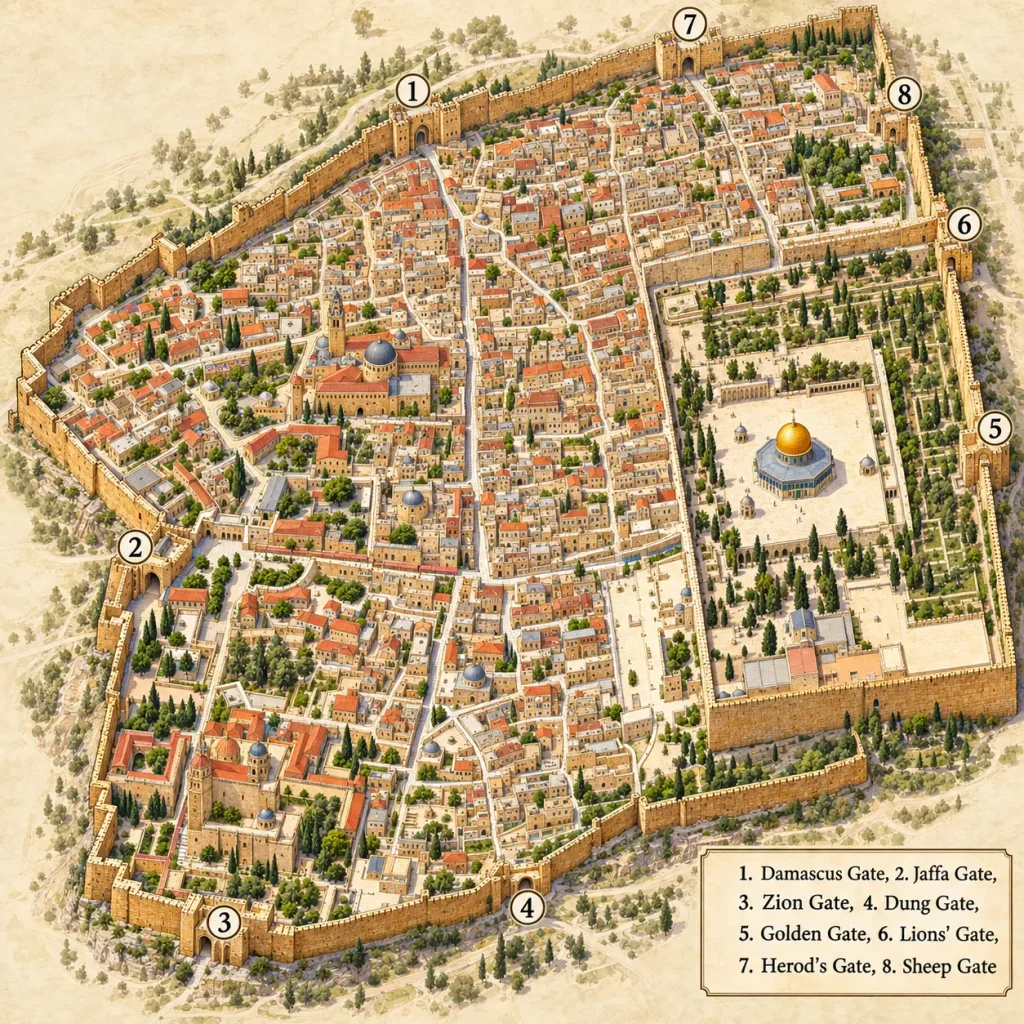
The geographical orientation of these entrances is not random. They were strategically placed to connect Jerusalem with the major trade routes of the ancient Near East, such as the road to Damascus in the north, the port of Jaffa in the west, and the Mount of Olives to the east.
How Many Gates Did Jerusalem Have? (Historical Timeline)
A frequent question among historians, archaeologists, and biblical scholars is exactly how many gates Jerusalem had in antiquity. The answer changes drastically depending on the historical era.
During the First Temple period and the era of Nehemiah (5th century BCE), biblical texts record up to 12 distinct gates, including the original Water Gate, the Sheep Gate, and the Dung Gate. These were often smaller, specialized entrances designed for specific trades, livestock management, and religious purification rituals.
Following the Roman destruction of the city in 70 CE by the legions of Titus, the walls were repeatedly leveled and rebuilt by successive empires. Today, the current Old City walls feature eight official gates. Seven of these gates remain open to daily pedestrian and vehicular traffic, while one—the legendary Golden Gate on the eastern wall—has been completely sealed with stone for centuries.
Explore the 8 Gates of the Old City
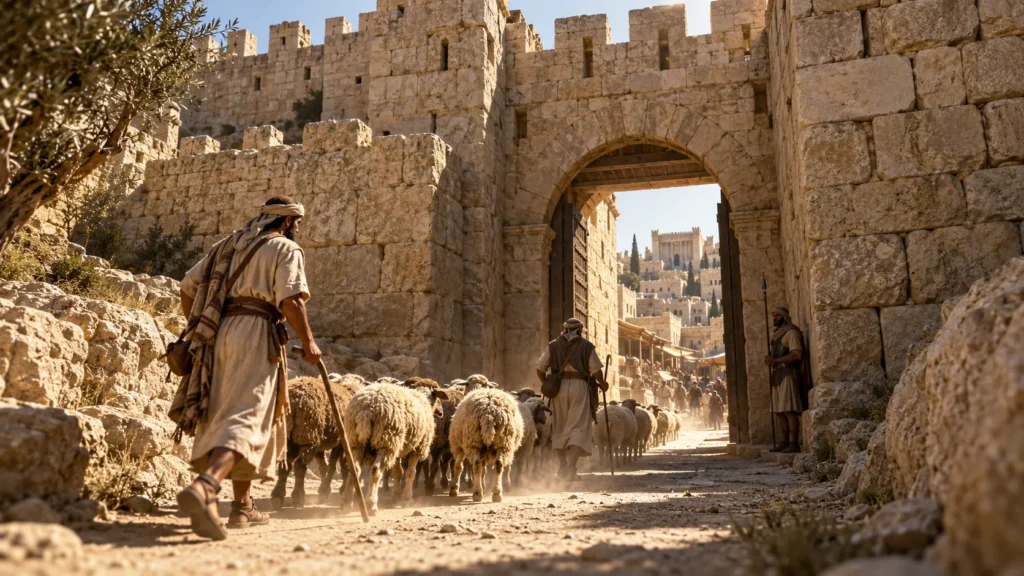
The Sheep Gate
Located near the Pool of Bethesda, this ancient entrance is deeply tied to biblical history and New Testament accounts. Originally used to bring sacrificial livestock into the temple, it is most famous today as the site where Jesus performed a miraculous healing, making it a pivotal location for Christian pilgrims.
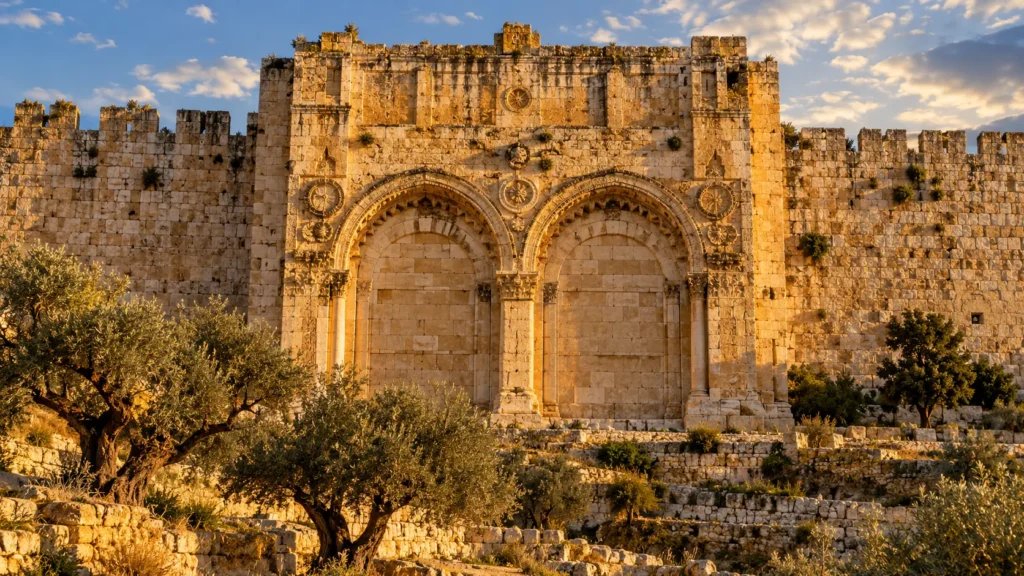
The Golden Gate (Eastern Gate)
Perhaps the most mysterious entrance to the Old City, the Golden Gate faces the Mount of Olives and has been completely sealed with stone for centuries. According to Jewish and Christian traditions, as well as the prophecies of Ezekiel, this is the exact gate through which the Messiah will enter Jerusalem.
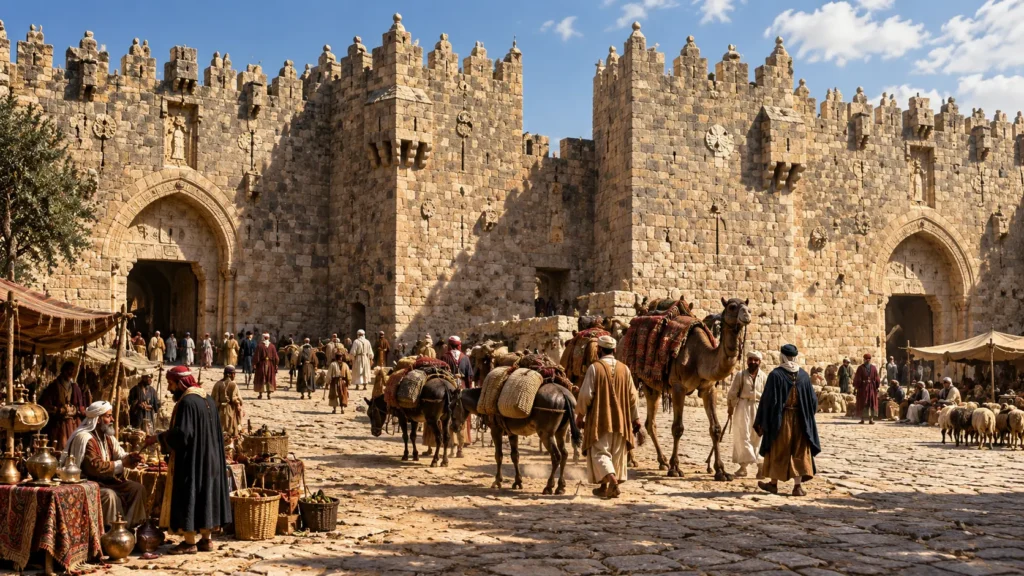
The Damascus Gate
As the most visually stunning and heavily trafficked entrance, the Damascus Gate connects the Old City to the northern trade routes. Built by Suleiman the Magnificent in 1537, its monumental Ottoman architecture and bustling surrounding markets make it the primary cultural and economic hub of the Muslim Quarter today.
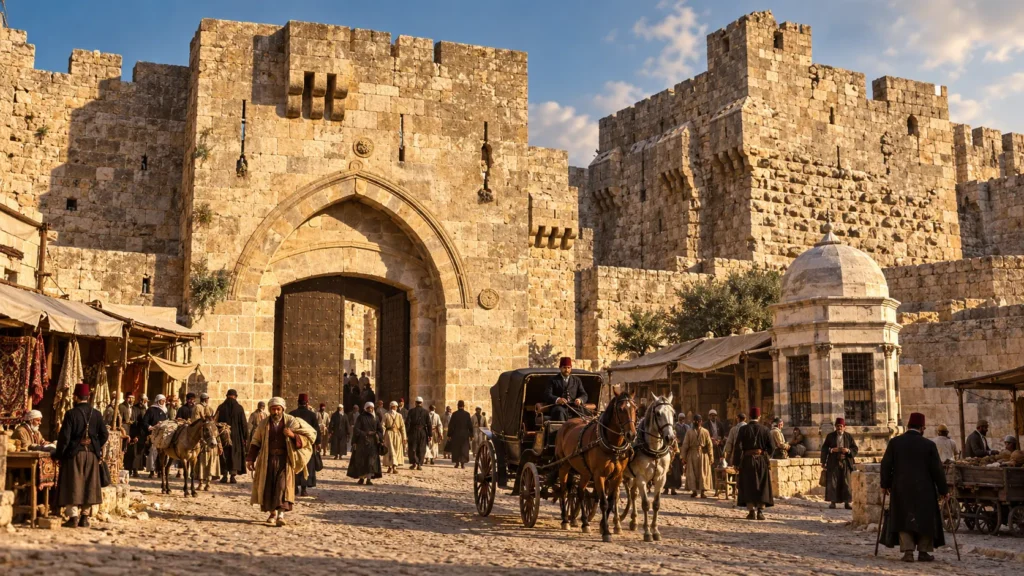
The Jaffa Gate
Serving as the western entrance for European pilgrims arriving from the Mediterranean port of Jaffa, this gate sits adjacent to the ancient Tower of David. In 1898, a section of the adjacent wall was famously breached to allow German Emperor Kaiser Wilhelm II to enter the city riding his carriage.
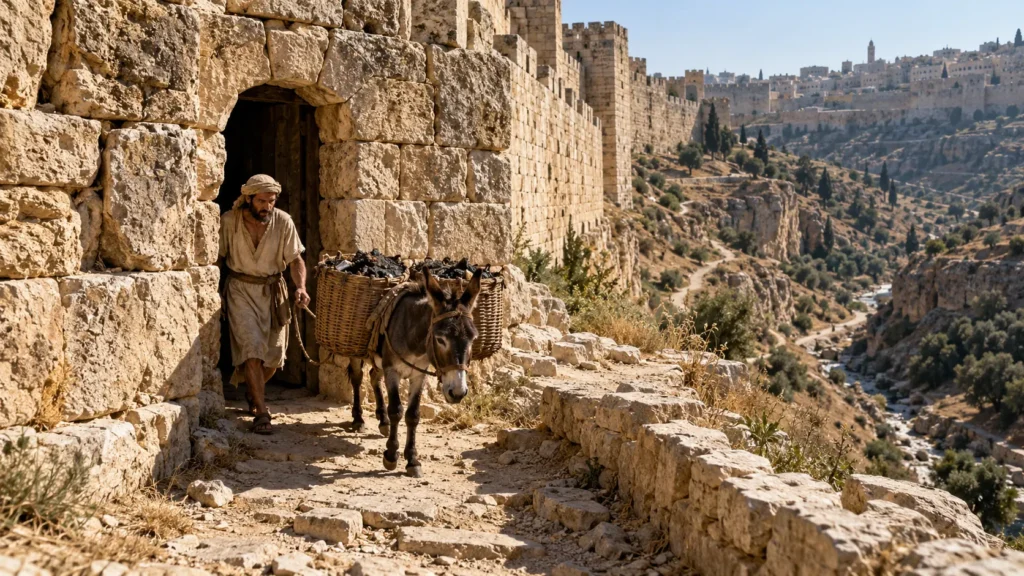
The Dung Gate
Despite its unglamorous name, this gate offers the most direct access to the Western Wall and the Temple Mount. Historically, it was positioned near the Valley of Hinnom and used for the city’s waste management, providing fascinating insights into the sanitation and infrastructure of the ancient biblical world.
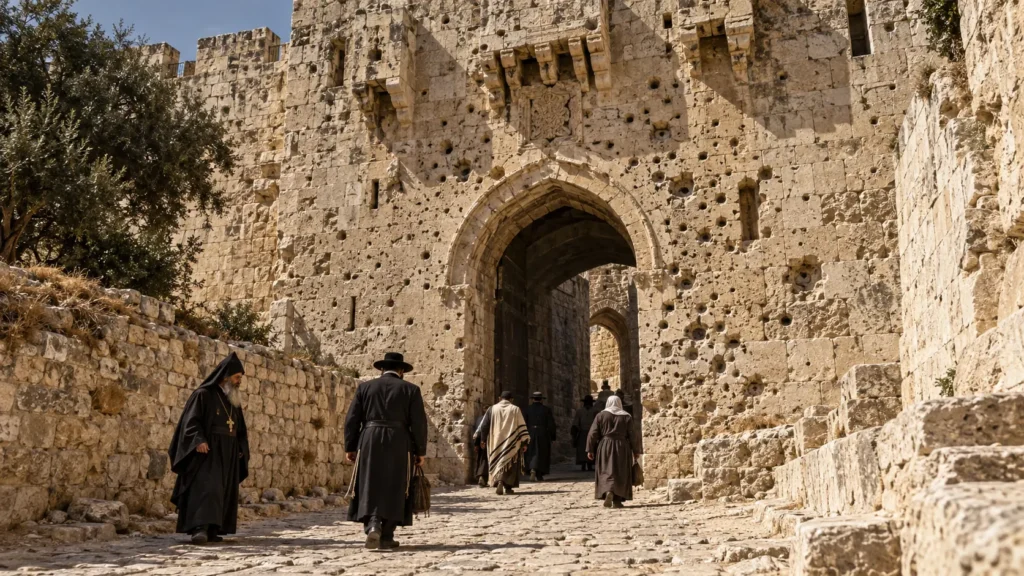
The Zion Gate
Connecting the Armenian and Jewish Quarters to Mount Zion, this southern entrance is steeped in modern history. Visitors passing through this gate today can still see the facade heavily heavily pockmarked with bullet holes, serving as a visceral reminder of the fierce fighting during the 1948 Arab-Israeli War.
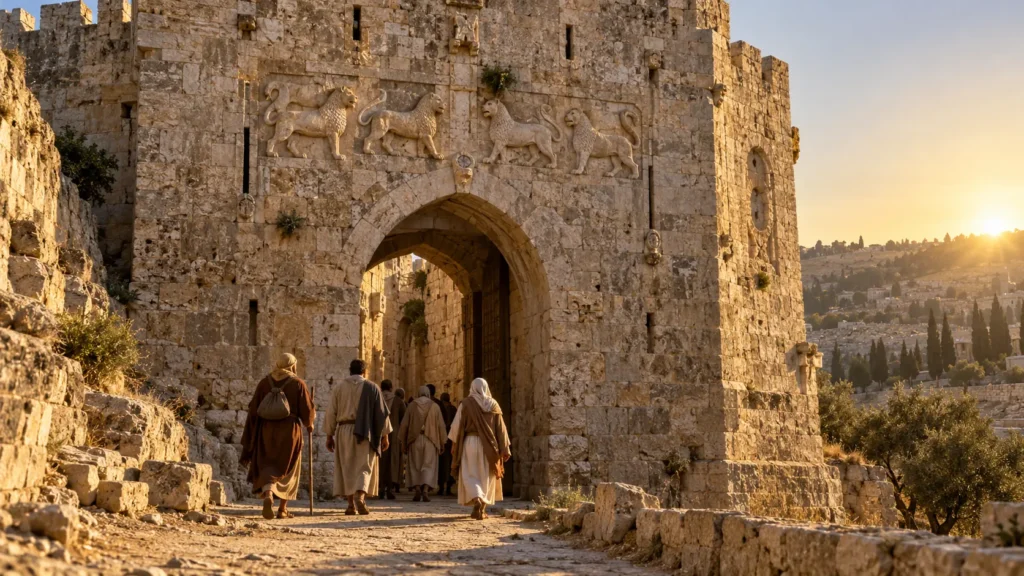
The Lions’ Gate
Marking the traditional beginning of the Via Dolorosa, this eastern entrance is flanked by stone carvings of leopards (often mistaken for lions). Also known as St. Stephen’s Gate, it is famous in modern history as the entry point used by Israeli paratroopers to capture the Old City in 1967.
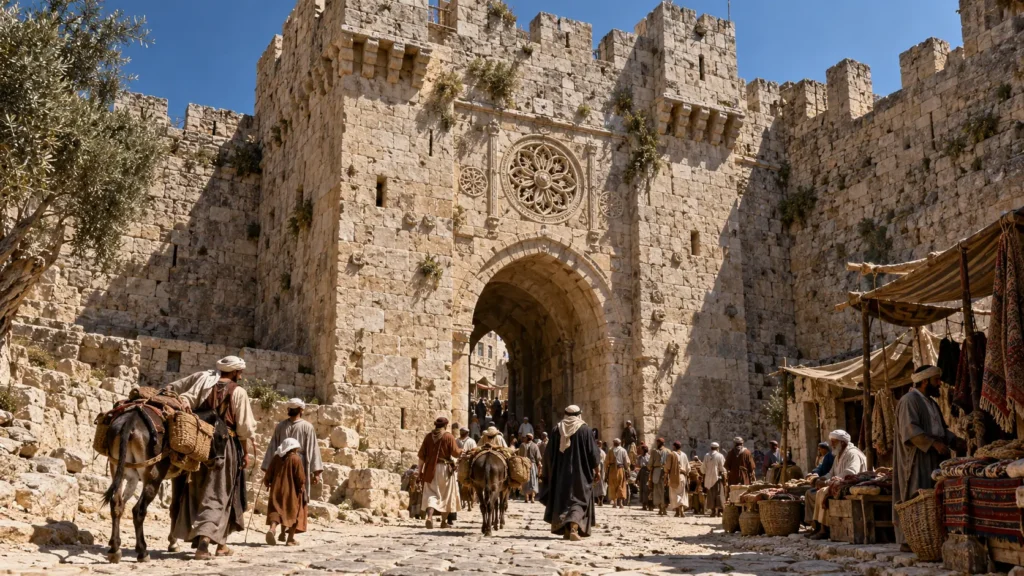
Herod’s Gate
Facing north and providing access to the Muslim Quarter, this entrance is also known as the Flower Gate due to the floral motifs carved into its stonework. It earned its common name from medieval pilgrims who mistakenly believed that a nearby structure was the palace of Herod Antipas.
The Lost Biblical Gates (Nehemiah’s Wall and the New Testament)
When reading the scriptures, visitors often search for gates that no longer exist in the modern Old City walls. The current Ottoman structure is vastly different from the defensive perimeter described during the First and Second Temple periods.
In the Book of Nehemiah (Chapter 3), the text details the massive reconstruction of the city walls and lists several specialized entrances that are now lost to history or buried underground. Among the most searched-for biblical entrances is the Water Gate (water gate in the bible), which was located near the Gihon Spring and used extensively during the Feast of Tabernacles for water libation ceremonies.
Another famous lost entrance is the Beautiful Gate (the beautiful gate in the bible). Mentioned in the New Testament (Acts 3), this was not a gate in the outer city wall, but rather an inner gateway leading directly into the Temple Mount courtyard. It was the site where the apostles Peter and John famously healed a beggar who had been lame from birth. While these physical gates are gone, their theological significance remains a cornerstone of biblical archaeology.
Study Guide & Quick Answers (FAQs)
How many gates did Jerusalem have?
Historically, the number of gates has fluctuated with each empire that rebuilt the walls. During the biblical era of Nehemiah, there were up to 12 distinct gates. Today, the modern Old City walls (built in the 16th century) feature 8 official gates.
Did Jesus enter Jerusalem through the Sheep Gate?
While Jesus famously healed a paralyzed man at the Pool of Bethesda near the Sheep Gate, biblical scholars and historians generally believe that his triumphant entry into Jerusalem on Palm Sunday occurred through the Eastern Gate (the Golden Gate), as he descended from the Mount of Olives.
Why is the Eastern Gate of Jerusalem sealed?
The Eastern Gate (or Golden Gate) was sealed with solid stone by the Ottoman Sultan Suleiman the Magnificent in 1541. According to Jewish tradition, the Shekhinah (Divine Presence) used to appear through this gate, and it will open again when the Messiah arrives. In Christian tradition, it is the gate Jesus will use upon his Second Coming. It is believed the Ottomans sealed it to prevent this messianic entrance.
What is the Gate of Mercy in Jerusalem? T
he Gate of Mercy (gate of mercy jerusalem) is simply another name for the Golden Gate or Eastern Gate. In Hebrew, it is called Sha’ar HaRachamim, meaning Gate of Mercy, reflecting its deep spiritual significance in Jewish eschatology and prayer.