What Was the Babylonian Civilization?
The Babylonian civilization was an ancient Mesopotamian civilization centered on the city of Babylon in southern Mesopotamia, in present-day Iraq. It developed from earlier Sumerian and Akkadian traditions and became one of the most influential civilizations of the ancient Near East, particularly during the reign of Hammurabi in the 18th century BCE and the Neo-Babylonian period under Nebuchadnezzar II. Babylonian civilization is especially remembered for its cities, writing, law, literature, mathematics, astronomy, and cultural traditions that continued to influence Mesopotamian history for centuries.
Explore Babylonian Civilization

Babylonian Kings
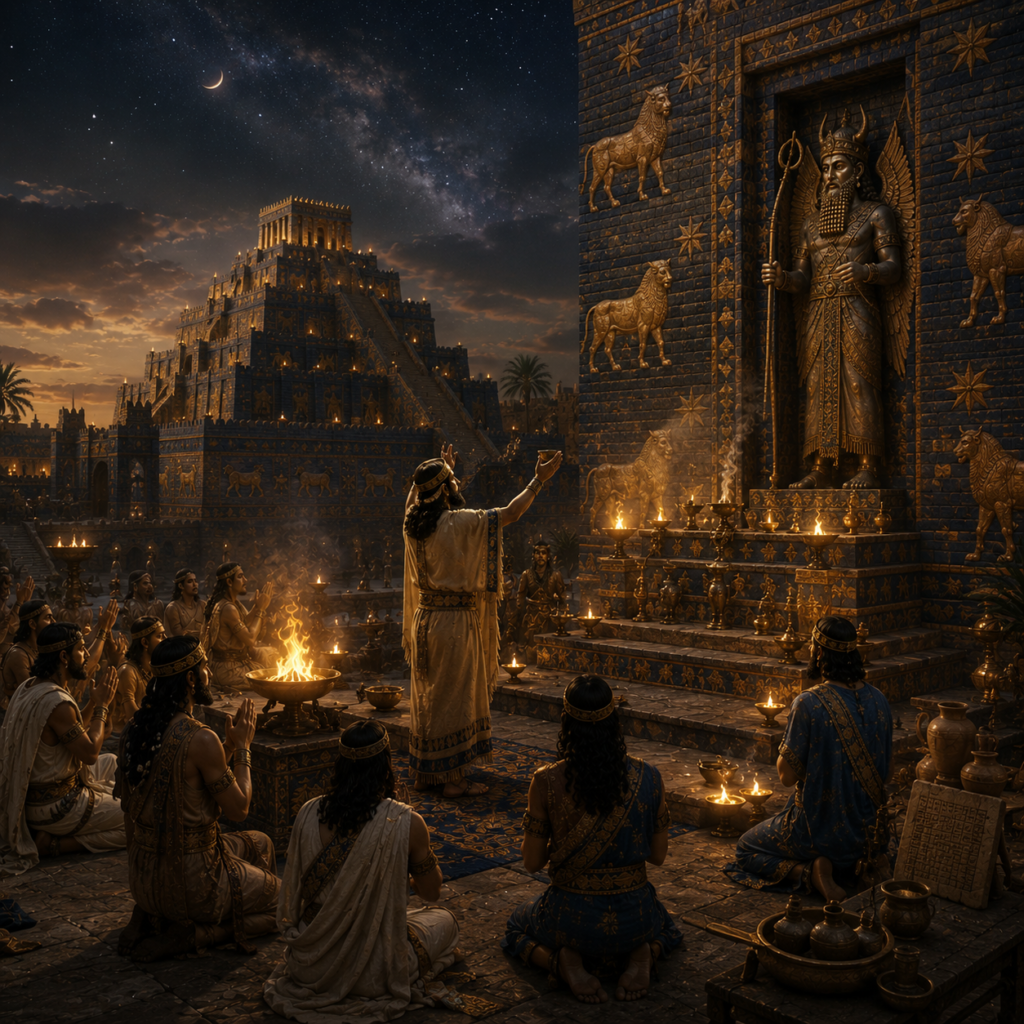
Babylonian Religion
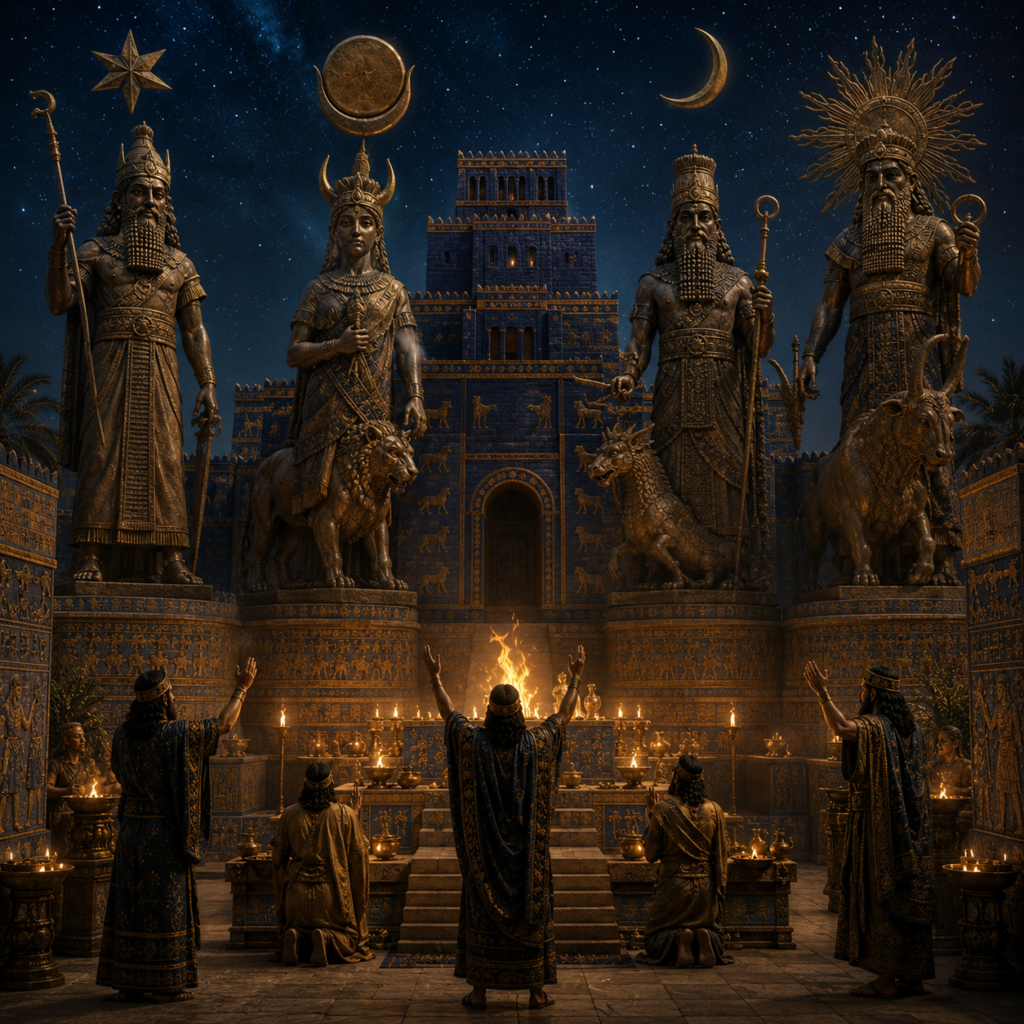
Babylonian Gods
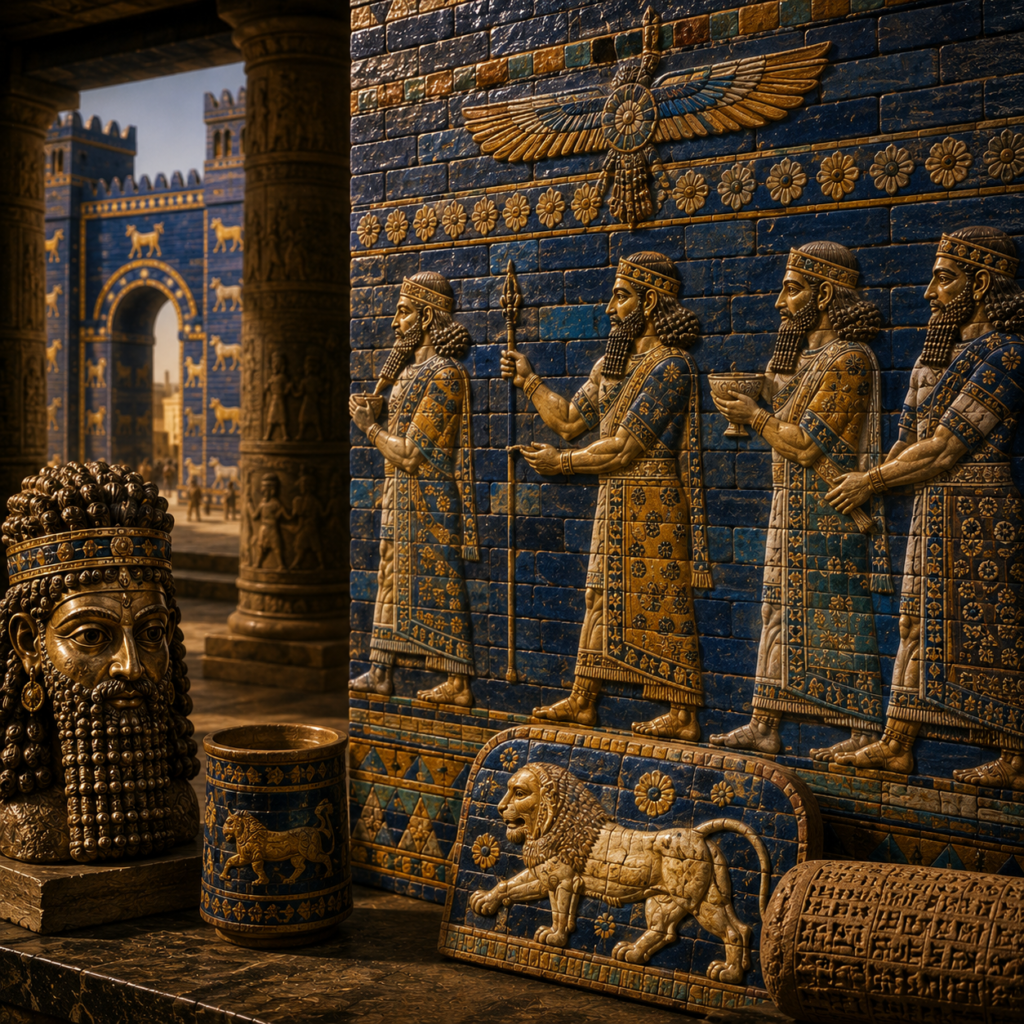
Babylonian Art
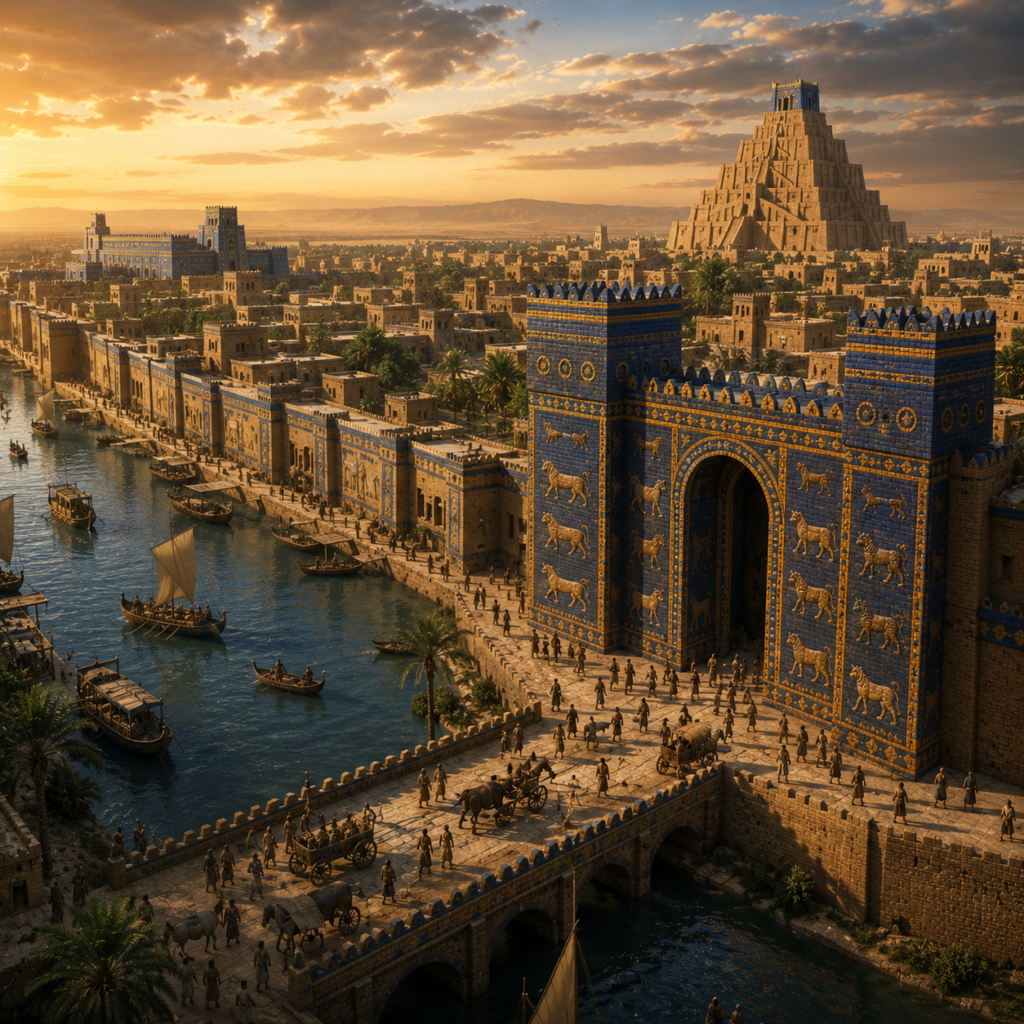
Babylonian Cities
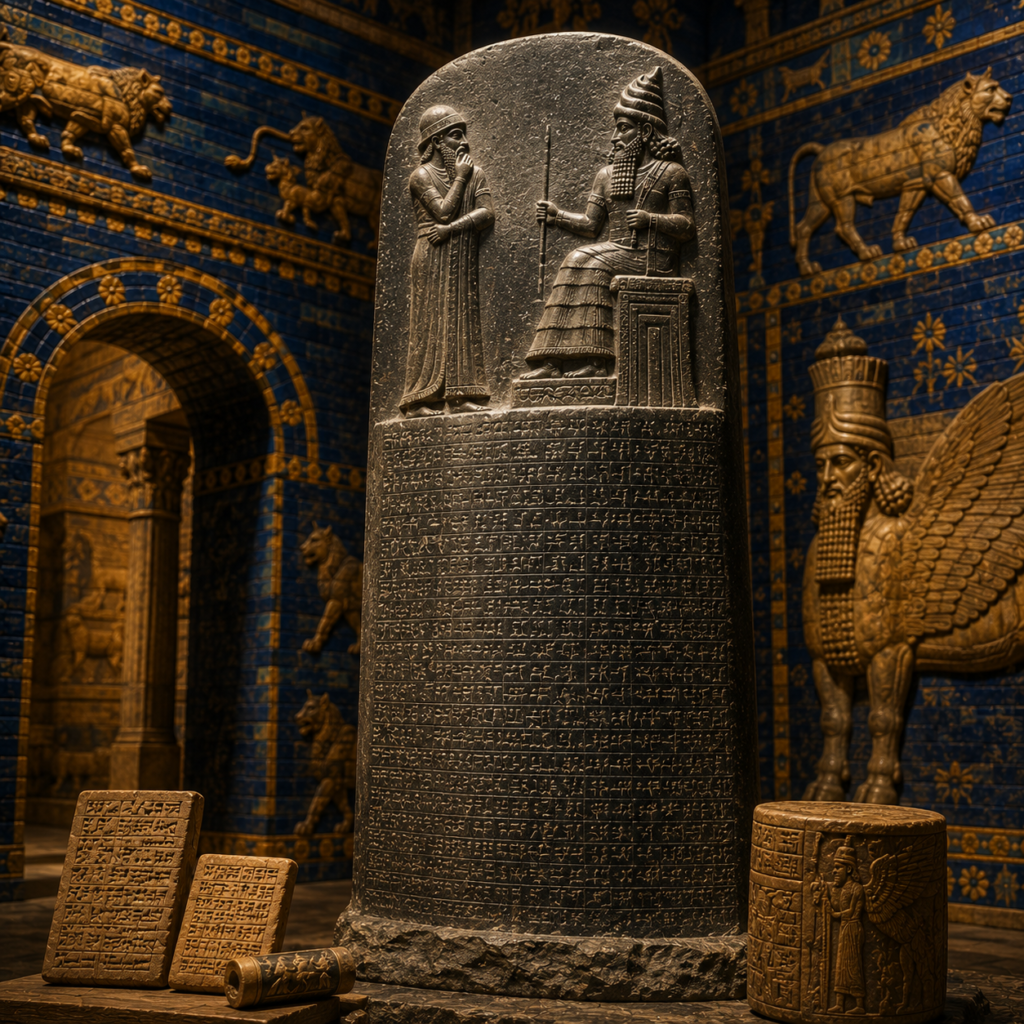
Code of Hammurabi
Babylonian Civilization Timeline
| Period | Key development | Why it matters |
|---|---|---|
| Early 2nd millennium BCE | Babylon emerges as an important city-state | Babylon begins to gain political importance in southern Mesopotamia. |
| c. 1894 BCE | Amorite dynasty established in Babylon | The dynasty provides the political foundation for Babylon’s later expansion. |
| 18th century BCE | Hammurabi expands Babylonian power | Babylon develops from a regional kingdom into a major Mesopotamian power. |
| c. 1750 BCE | Hammurabi’s reign ends | His territorial expansion leaves Babylon as one of the dominant kingdoms of Mesopotamia. |
| Late 2nd millennium BCE | Babylon experiences political instability and foreign domination | Babylon remains an important cultural and religious center despite changes in political control. |
| 1st millennium BCE | Babylon remains a major Mesopotamian center | The city continues to play an important role in the political and cultural history of the region. |
| 626 BCE | Nabopolassar establishes Babylonian independence | Babylon breaks away from Assyrian domination and begins the Neo-Babylonian period. |
| 612 BCE | Fall of Nineveh | The collapse of Assyria creates the conditions for Babylonian expansion. |
| 605 BCE | Nebuchadnezzar II becomes king | Babylon enters one of the most powerful phases of its history. |
| 6th century BCE | Babylon reaches its monumental peak | Major construction projects transform Babylon into one of the most impressive cities of the ancient Near East. |
| 539 BCE | Cyrus the Great conquers Babylon | Babylonian political independence ends and the city becomes part of the Persian Empire. |
The Main Phases of Babylonian Civilization
The history of Babylonian civilization can be broadly divided into several periods:
Old Babylonian period: Babylon rises to prominence, reaching its greatest territorial power under Hammurabi.
Post-Old Babylonian period: Babylon remains culturally important while experiencing political instability and periods of foreign domination.
Neo-Babylonian period: Babylon regains political independence and becomes the center of a powerful empire, reaching its architectural and political height under Nebuchadnezzar II.
Persian period: Cyrus the Great conquers Babylon in 539 BCE, bringing independent Babylonian rule to an end while Babylon itself remains an important city.
This long chronology shows that Babylonian civilization was not a single political state lasting unchanged for centuries. It was a changing Mesopotamian civilization whose political fortunes shifted repeatedly while many cultural traditions continued across different periods.
The Evolution of Babylonian Civilization
Babylonian civilization developed through several political phases, while many Mesopotamian cultural traditions continued across changing kingdoms and empires.
Babylon Emerges
Babylon develops from a relatively minor Mesopotamian city into an increasingly important political center.
Amorite Dynasty
An Amorite dynasty establishes itself at Babylon, providing the political foundation for the city’s later expansion.
Hammurabi’s Babylon
Babylon expands through warfare, diplomacy, and administration and becomes one of the major powers of southern Mesopotamia.
Political Change
Babylon experiences periods of foreign domination and political instability while remaining an important cultural center.
Babylonian Continuity
Babylon remains a major center within the changing political landscape of Mesopotamia and preserves important intellectual and cultural traditions.
Babylonian Independence
Nabopolassar establishes Babylonian independence, beginning the Neo-Babylonian period.
Neo-Babylonian Peak
Under Nebuchadnezzar II, Babylon reaches a new political and monumental height and becomes one of the great cities of the ancient Near East.
Persian Conquest
Cyrus the Great conquers Babylon, ending independent Babylonian rule while the city continues to play an important role under Persian authority.
Babylonian civilization was not a single unchanging kingdom. Its political fortunes shifted repeatedly, but writing, scholarship, literature, religious traditions, and other elements of Mesopotamian culture continued across different historical periods.
Babylon and the Mesopotamian World
Babylonian civilization developed within the wider cultural landscape of ancient Mesopotamia. Babylon was not an isolated civilization that suddenly appeared in the region; it emerged from a much older world of cities, kingdoms, languages, religious traditions, and intellectual practices that had developed between the Tigris and Euphrates rivers.
This broader context is essential for understanding what made the Babylonians distinctive. They inherited many traditions from earlier Mesopotamian societies, especially the Sumerians and Akkadians, but they also adapted those traditions around the growing political and cultural importance of Babylon.
What Was Mesopotamia?
Mesopotamia refers broadly to the lands between and around the Tigris and Euphrates rivers, corresponding largely to modern-day Iraq and extending into parts of present-day Syria and Turkey.
It was not a single country or civilization. Instead, Mesopotamia was a constantly changing cultural and political environment in which different peoples and kingdoms rose and declined.
Sumerian city-states, Akkadian rulers, the rulers of Ur, Assyria, and Babylon all belonged to this wider Mesopotamian history.
This is why describing Babylonian civilization simply as “Babylon” can be misleading. Babylon was both a city and the political center of kingdoms that participated in a much older Mesopotamian cultural tradition.
Babylon’s Place in Mesopotamian History
Babylon was located in central-southern Mesopotamia on the Euphrates.
Its geographical position helped connect it with other important settlements and routes across the region. Over time, the city became increasingly important until it developed into one of the most influential political and cultural centers of the ancient Near East.
The rise of Babylon occurred after centuries of political change in Mesopotamia.
Earlier kingdoms had already established traditions of:
- urban government
- cuneiform writing
- monumental construction
- long-distance exchange
- temple institutions
- literary composition
- mathematical and administrative record keeping
The Babylonians inherited this cultural foundation rather than creating it from nothing.
From Sumerian and Akkadian Traditions to Babylonian Culture
One of the defining characteristics of Babylonian civilization was its ability to preserve and transform older traditions.
Sumerian literary and religious traditions continued to influence later Mesopotamian culture even after Sumerian ceased to function as the main spoken language of southern Mesopotamia.
Akkadian became the dominant Semitic language of the region, and Babylonian developed as a major dialect of Akkadian.
This created an important form of cultural continuity.
Texts could be copied, adapted, translated, and reinterpreted over generations, allowing knowledge produced centuries earlier to remain relevant in Babylonian intellectual culture.
Babylonian Identity and Cultural Change
The term “Babylonian” therefore describes more than a population living in one city.
It can refer to the political, linguistic, and cultural traditions associated with Babylonia, particularly southern Mesopotamia.
Babylonian identity developed through interaction with the older cultures of the region and with neighboring peoples.
The result was neither complete continuity nor complete rupture.
Babylonian civilization preserved much of the intellectual and cultural inheritance of earlier Mesopotamia while adapting it to new political circumstances.
This combination of continuity and transformation is one of the most important features of Babylonian history.
Babylon as a Cultural Center
The growing importance of Babylon gave the city a role that extended beyond political power.
It became a center in which older Mesopotamian traditions could be preserved and developed.
Scribes copied earlier compositions, scholars studied established bodies of knowledge, and new texts were produced within an intellectual environment that had deep historical roots.
This helps explain why Babylonian civilization is associated with achievements in areas such as mathematics, astronomy, literature, law, and scholarship.
These achievements should not be understood as isolated inventions. They were part of a cumulative Mesopotamian tradition that Babylonian scholars inherited, reorganized, and expanded.
A Civilization Built on Continuity
The history of Babylon illustrates an important pattern in the ancient Near East.
Political power could change relatively quickly, while cultural traditions could survive for centuries.
Babylonian civilization emerged from this process.
The Babylonians inherited the written traditions of earlier Mesopotamian societies, adopted established forms of administration and scholarship, and incorporated older stories and concepts into new Babylonian contexts.
At the same time, Babylon became important enough to give these traditions a distinctive political and cultural identity.
From my perspective as a historian of the ancient Near East, this is what makes Babylon particularly interesting: Babylonian civilization was both heir to Mesopotamia’s past and an active force in reshaping that past for later generations.
The Rise of Babylon
Babylon did not begin as the dominant power of southern Mesopotamia. Its rise was the result of a long process of political competition, territorial expansion, and cultural development that gradually transformed the city into the center of one of the most important kingdoms of the ancient Near East.
The city’s transformation became particularly significant during the early second millennium BCE, when political authority in Mesopotamia was increasingly divided among competing kingdoms.
Babylon Before Its Great Expansion
Babylon had existed for centuries before becoming a major political power.
Its position on the Euphrates gave it access to important routes through southern and central Mesopotamia, while its surrounding agricultural lands provided an economic foundation for urban development.
However, Babylon initially competed with much more established centers.
Cities such as Isin, Larsa, Ur, Nippur, and other Mesopotamian political centers had already played major roles in regional history.
Babylon’s eventual rise was therefore part of a wider period of political fragmentation rather than an isolated event.
The Amorite Dynasty
A major turning point came with the establishment of an Amorite dynasty at Babylon.
Amorite rulers became prominent in several Mesopotamian kingdoms during the early second millennium BCE, following the political changes that accompanied the decline of the Ur III state.
The dynasty established at Babylon gradually strengthened the city’s political position.
This period is often associated with the Old Babylonian period, when Babylon developed from a regional center into a kingdom capable of competing with its neighbors.
A Competitive Political Landscape
Early second-millennium Mesopotamia was characterized by competition between multiple kingdoms.
No single ruler permanently controlled the entire region.
Babylon therefore had to compete diplomatically and militarily with neighboring powers while building its own administrative resources.
This environment encouraged rulers to form alliances, negotiate treaties, wage wars, and reorganize territories.
The rise of Babylon should consequently be understood within this competitive political system.
Its expansion was gradual, and its position changed repeatedly as alliances and rivalries developed.
Hammurabi and the Transformation of Babylon
The most important turning point came during the reign of Hammurabi in the 18th century BCE.
Hammurabi inherited a kingdom that was already significant but not yet dominant over southern Mesopotamia.
During his reign, Babylon expanded its territorial influence and defeated several competing powers.
By the later part of his reign, Babylon had become one of the most powerful kingdoms in Mesopotamia.
This transformation established Babylon as a political center whose influence extended well beyond the immediate area surrounding the city.
The details of Hammurabi’s reign, however, belong to the broader history of Babylonian kings and are best explored separately.
From Regional Kingdom to Babylonian Civilization
The political expansion of Babylon had consequences beyond the territory directly controlled by its rulers.
As Babylon became more influential, the city’s language, administrative practices, literary traditions, and political institutions gained wider importance.
This helped create a recognizable Babylonian cultural framework.
The process was not simply one of conquest.
Babylonian civilization continued to absorb older Mesopotamian traditions while adapting them to the needs of an expanding kingdom.
Political authority and cultural influence therefore developed alongside one another.
The Importance of the Old Babylonian Period
The Old Babylonian period is fundamental to understanding the later history of Babylon.
It established many of the characteristics that would become associated with Babylonian civilization: a powerful urban center, an extensive written tradition, sophisticated administration, and a political identity centered on Babylon.
The period also produced an exceptionally rich documentary record.
Administrative documents, legal texts, letters, literary works, and other cuneiform sources provide historians with detailed evidence for the institutions and culture of the time.
A New Center of Mesopotamian Power
By the end of Hammurabi’s expansion, Babylon had achieved something that earlier generations of its rulers could not have taken for granted.
It had become a major center of Mesopotamian political power.
The city’s later fame would be shaped by other periods of Babylonian history, including the Neo-Babylonian Empire, but the foundations had already been established during the Old Babylonian period.
From my perspective as a historian of the ancient Near East, this is the crucial point: Babylonian civilization did not emerge fully formed under one famous king. Its rise was the result of generations of political competition and cultural accumulation, with Hammurabi providing the decisive transformation from regional kingdom to major Mesopotamian power.
Babylonian Civilization After Hammurabi
The rise of Babylon under Hammurabi established the city as a major power in Mesopotamia, but Babylonian civilization did not remain politically dominant throughout the following centuries.
After Hammurabi’s reign, Babylon faced new challenges from neighboring kingdoms and external powers. Its political influence fluctuated, yet the city continued to play an important role in the cultural and intellectual history of Mesopotamia.
This distinction is important because the history of Babylonian civilization cannot be reduced to periods of imperial expansion. Babylon could lose political power while remaining culturally significant.
The Fragmentation of Babylonian Power
After the death of Hammurabi, the territory brought together under Babylonian rule proved difficult to maintain.
Several regions gradually regained their independence, while neighboring powers challenged Babylonian authority.
The kingdom became smaller and less dominant than it had been during the height of Hammurabi’s expansion.
Political fragmentation was a recurring feature of Mesopotamian history, and Babylon was not immune to the pressures that had affected earlier kingdoms.
Babylon and the Kassites
One of the most important developments in Babylonian history was the establishment of Kassite rule in Babylonia.
The Kassites governed southern Mesopotamia for several centuries and adopted Babylon as their political center.
Their rule demonstrates an important characteristic of Babylonian civilization: political authority could change while Babylon itself remained a major center of Mesopotamian culture.
Rather than simply replacing Babylonian traditions, Kassite rulers adopted many elements of the existing political and cultural system.
They maintained Babylon’s importance and contributed to its long-term development.
Cultural Continuity Under Changing Rulers
The centuries following Hammurabi demonstrate how cultural traditions could survive changes in political leadership.
Cuneiform writing continued to be used.
Older literary and scholarly traditions were preserved.
Babylonian language and scribal practices remained important.
Religious institutions and established forms of scholarship also continued to connect later generations with the Mesopotamian past.
This continuity is one reason why Babylonian civilization remained influential even when Babylon itself was not the dominant military power in the region.
Babylon as a Center of Learning
Babylon’s importance increasingly extended beyond political authority.
The city became associated with scribal learning and the preservation of Mesopotamian intellectual traditions.
Scholars copied older compositions, maintained established methods of writing and calculation, and transmitted knowledge from earlier periods.
This long process of transmission eventually contributed to Babylon’s reputation as one of the great intellectual centers of the ancient Near East.
The famous achievements associated with Babylonian mathematics and astronomy were therefore the product of a much longer tradition rather than a sudden development during one particular reign.
The Importance of Written Tradition
Cuneiform tablets provide particularly valuable evidence for Babylonian civilization during periods of political change.
Administrative documents, letters, legal records, literary compositions, and scholarly texts reveal a society in which writing served many different purposes.
The continued production and copying of texts helped preserve knowledge across political transitions.
This also means that Babylonian civilization can be studied as a long cultural tradition rather than simply as a sequence of kingdoms.
Babylon’s Changing Political Position
Babylon experienced repeated changes in political status.
At different moments it was:
- the capital of a powerful kingdom
- a regional political center
- a city under foreign rule
- a major religious and intellectual center
- the capital of a renewed Babylonian empire
These different phases should not be treated as completely separate civilizations.
They form part of a longer history in which Babylonian traditions were repeatedly adapted to new political circumstances.
From Political Decline to Cultural Survival
The experience of Babylon after Hammurabi reveals an important pattern in ancient history.
Political power was temporary, but cultural institutions could prove much more durable.
Babylon’s rulers changed, its territorial influence expanded and contracted, and foreign dynasties governed the region. Yet the city remained connected to the wider Mesopotamian traditions that had developed over thousands of years.
From my perspective as a historian of the ancient Near East, this continuity is one of the defining characteristics of Babylonian civilization.
Its importance cannot be measured only by the size of its empire or the military achievements of its rulers. Babylon’s lasting influence also came from its ability to preserve, develop, and transmit Mesopotamian knowledge across periods of profound political change.
This long cultural continuity would become particularly important when Babylon later experienced another major political revival.
The Cultural Legacy of Babylonia
The lasting importance of Babylonian civilization was not determined only by the political power of its rulers. Its influence also came from the preservation and development of traditions that had been accumulating in Mesopotamia for thousands of years.
Babylonian scholars, scribes, and institutions inherited older forms of knowledge and continued to adapt them to changing historical circumstances. As a result, Babylon became associated with a particularly durable intellectual and literary tradition.
A Civilization of Written Knowledge
Writing was fundamental to the transmission of Babylonian knowledge.
Scribes recorded information on clay tablets using cuneiform, a writing system with roots extending back to the earliest cities of Mesopotamia.
Babylonian texts covered an extraordinary range of subjects, including administrative records, legal documents, literary compositions, lexical lists, mathematical calculations, astronomical observations, and scholarly commentaries.
The survival of thousands of these tablets allows historians to reconstruct aspects of Babylonian civilization that would otherwise be almost completely unknown.
Preserving Older Mesopotamian Traditions
Babylonian culture was deeply connected to the civilizations that came before it.
Scribes copied older compositions and maintained traditions that originated in Sumerian and earlier Akkadian contexts.
This process was not simply passive preservation.
Texts could be reorganized, expanded, translated, or interpreted in new ways. Older traditions were therefore continually incorporated into later Babylonian intellectual culture.
This helps explain why Babylonian civilization can simultaneously appear both ancient and innovative.
Literature and Storytelling
Babylonian literary traditions included some of the most important surviving works from ancient Mesopotamia.
Epic narratives, myths, wisdom compositions, hymns, and scholarly texts reveal how ancient Mesopotamians thought about kingship, mortality, justice, human existence, and the relationship between humanity and the divine.
Works such as the Epic of Gilgamesh survived through long processes of copying and adaptation, demonstrating the extraordinary longevity of Mesopotamian literary traditions.
Babylonian literature therefore provides more than stories about the ancient world.
It preserves ideas and intellectual traditions that were transmitted across generations.
Mathematics and the Measurement of Time
Babylonian scholars also developed sophisticated mathematical traditions.
Their calculations made extensive use of the sexagesimal, or base-60, system, inherited from earlier Mesopotamian traditions.
This system had practical applications in measurement and calculation and contributed to conventions that remain familiar today.
The division of the hour into 60 minutes and the minute into 60 seconds reflects the much later survival of a broader tradition of sexagesimal measurement.
Babylonian mathematical texts demonstrate that numerical knowledge was not merely theoretical. It was part of a wider scholarly culture concerned with calculation, measurement, prediction, and the organization of information.
Observing the Heavens
The careful observation of the sky became another important element of Babylonian scholarly tradition.
Observers recorded celestial phenomena over long periods, creating extensive bodies of accumulated data.
These records supported increasingly sophisticated attempts to identify regular patterns in the movement of celestial bodies.
Babylonian astronomical traditions are particularly important because they demonstrate how systematic observation could accumulate across generations.
Rather than relying on isolated observations, scholars could consult earlier records and build upon information preserved by their predecessors.
Knowledge Across Generations
One of the most remarkable characteristics of Babylonian civilization was therefore the transmission of knowledge.
A scholar working in a later period could encounter a text that had originated centuries earlier.
The copying of tablets created a form of intellectual continuity that allowed ideas, terminology, calculations, stories, and observations to survive political upheavals.
This does not mean that Babylonian scholars simply repeated the past.
They worked within inherited traditions while modifying and expanding them according to the needs and interests of their own period.
Babylonian Civilization as a Living Tradition
The cultural history of Babylonia is consequently best understood as a process of inheritance, adaptation, and transmission.
Earlier Mesopotamian traditions provided the foundations.
Babylonian scholars preserved many of those traditions while producing new works and interpretations.
Later generations inherited this accumulated body of knowledge and continued to develop it.
From my perspective as a historian of the ancient Near East, this intellectual continuity is one of the strongest reasons why Babylonian civilization remains so important today.
The political history of Babylonia changed repeatedly, but the written and scholarly traditions associated with it created a cultural legacy that survived far beyond the periods when Babylon exercised political dominance.
The Main Characteristics of Babylonian Civilization
What made Babylonian civilization distinctive was not a single invention or institution, but the combination of political organization, urban development, written knowledge, long-established traditions, and intellectual activity.
The following overview brings together the main characteristics that defined Babylonia within the wider history of ancient Mesopotamia:
| Characteristic | Role in Babylonian civilization | Historical significance |
|---|---|---|
| Mesopotamian heritage | Babylon inherited traditions developed by earlier Sumerian and Akkadian cultures. | Created strong cultural continuity across different periods of Mesopotamian history. |
| Babylon as a political center | The city became the focal point of several major Babylonian kingdoms. | Gave Babylonia a distinctive political identity and regional influence. |
| Cuneiform writing | Scribes used clay tablets to record administration, literature, scholarship, and legal information. | Preserved an exceptionally rich body of evidence about ancient Mesopotamia. |
| Scholarly tradition | Babylonian scholars collected, copied, interpreted, and expanded earlier knowledge. | Allowed intellectual traditions to survive across many generations. |
| Mathematical knowledge | Scholars used sophisticated numerical methods based largely on the sexagesimal system. | Contributed to long-lasting traditions of measurement and calculation. |
| Astronomical observation | Observers systematically recorded celestial phenomena and searched for recurring patterns. | Created one of the ancient world’s most important traditions of astronomical record keeping. |
| Literary tradition | Myths, epics, wisdom texts, hymns, and scholarly compositions were copied and adapted. | Preserved ideas about humanity, kingship, mortality, justice, and the cosmos. |
| Urban civilization | Major settlements functioned as centers of administration, production, exchange, and learning. | Made Babylonia part of a long Mesopotamian tradition of urban life. |
| Political transformation | Babylonian power expanded, contracted, and later revived under different ruling dynasties. | Shows that Babylonian civilization was a changing historical process rather than a static kingdom. |
| Cultural continuity | Older traditions were repeatedly preserved and adapted to new circumstances. | Explains why Babylonian culture remained influential beyond individual political periods. |
Continuity and Transformation
These characteristics reveal two forces that operated simultaneously throughout Babylonian history.
Continuity connected Babylon with the much older civilizations of Mesopotamia. Writing systems, literary compositions, scholarly methods, and intellectual traditions could survive for centuries.
Transformation occurred whenever new political circumstances, rulers, institutions, or intellectual developments changed how those traditions were used.
This combination helps explain why Babylonian civilization lasted as a recognizable cultural tradition even when Babylon’s political power fluctuated.
Why This Combination Was Important
Babylon’s historical importance came partly from its ability to bring together traditions that had developed over a very long period.
The civilization was therefore neither simply a continuation of Sumer nor an entirely new beginning.
Instead, Babylonian culture represented another stage in the development of Mesopotamian civilization.
Its scholars preserved ancient knowledge, its rulers adapted existing political traditions, and its institutions provided environments in which written and intellectual culture could continue.
From my perspective as a historian of the ancient Near East, this mixture of inheritance and innovation is more useful for understanding Babylonian civilization than focusing exclusively on its most famous rulers or monuments.
Babylon’s importance lies not only in what it created, but also in how effectively it transmitted and transformed the cultural inheritance of Mesopotamia.
How Babylonian Civilization Was Organized
Babylonian civilization depended on a complex network of settlements, institutions, agricultural territories, and administrative structures rather than on Babylon alone.
The city of Babylon was the most famous center, but the wider civilization included numerous communities connected through political authority, agriculture, exchange, religious institutions, and systems of written administration.
This organization allowed Babylonian kingdoms to govern substantial territories while maintaining connections between local communities and larger centers of power.
A Network of Settlements and Institutions
Babylonian territory was organized around settlements of different sizes and functions.
Large urban centers concentrated political and institutional activity, while smaller communities supported agriculture and local production.
These settlements were connected by roads, waterways, and systems of communication that allowed people, goods, and information to move across the region.
The result was a civilization that combined highly developed urban centers with a much larger rural landscape.
The Role of Administration
Written administration was essential to maintaining this system.
Officials and scribes recorded information about land, resources, obligations, transactions, and other aspects of public and institutional life.
Clay tablets provided a durable medium for storing this information.
This administrative culture allowed authorities to organize resources over considerable distances and created an extensive documentary record that survives to the present day.
Centers of Authority
Political authority was concentrated around royal institutions and major administrative centers.
However, Babylonian rule was not simply a matter of direct control from one palace.
Local officials and institutions played important roles in managing communities and implementing decisions.
This combination of central authority and local administration helped Babylonian kingdoms govern territories that were larger and more diverse than the city of Babylon itself.
Agriculture and the Urban System
The relationship between settlements and their surrounding agricultural territories was fundamental.
Mesopotamian cities depended on the productive capacity of the countryside around them.
Canals and irrigation systems helped make agricultural production possible in a region where controlling water was essential.
Agricultural production, in turn, supported urban populations and the institutions that operated within major centers.
This created a close relationship between countryside and city that had characterized Mesopotamian civilization for thousands of years.
Movement Across Babylonia
The civilization was also connected through the movement of people, goods, and information.
The Euphrates and its associated waterways provided important routes through the region, while established land routes connected Babylonia with neighboring areas.
These connections helped integrate communities and facilitated interaction between different parts of the wider Mesopotamian world.
Babylon’s location therefore contributed to its long-term importance.
A Flexible Political Structure
Babylonian civilization changed considerably depending on the political period.
The territory controlled by Babylon could expand or contract, and different dynasties exercised authority under different circumstances.
Yet the underlying cultural framework could survive these political changes.
Written traditions, administrative practices, established settlements, and institutional structures created continuity even when rulers and political boundaries changed.
This explains why it is more useful to think of Babylonian civilization as a long historical process than as a single empire with fixed borders.
From Local Communities to a Civilization
The strength of Babylonian civilization ultimately came from the interaction between its different parts.
Urban centers provided political and institutional coordination.
The surrounding countryside supplied essential resources.
Scribes preserved information and knowledge.
Local communities maintained production and settlement.
Rulers attempted to coordinate these different elements within changing political frameworks.
Together, these connections created a civilization capable of surviving major transformations.
From my perspective as a historian of the ancient Near East, Babylonian civilization is best understood as a connected system rather than simply as the history of one famous city.
Babylon gave the civilization its name and became its most celebrated center, but the wider network of communities and institutions made its long historical development possible.
Babylon’s Last Great Revival
After centuries of political change, Babylon experienced a remarkable revival during the final centuries of the first millennium BCE.
The city once again became the center of a powerful Mesopotamian state and reached a level of political and monumental prominence that rivaled its earlier achievements.
This revival was closely connected with the weakening of Assyrian power and the emergence of a new Babylonian dynasty.
From Assyrian Rule to Babylonian Independence
During the seventh century BCE, Babylon had spent periods under Assyrian domination.
The situation changed dramatically as opposition to Assyria grew stronger.
Babylonian forces joined with the Medes in the campaigns that eventually destroyed the Assyrian imperial system.
The capture of Nineveh in 612 BCE transformed the political balance of the ancient Near East.
Babylon was no longer simply a city operating within a larger imperial system.
It was once again becoming the center of an independent Mesopotamian power.
A New Phase of Babylonian Power
Under the new dynasty established by Nabopolassar, Babylon regained political independence and expanded its influence across much of Mesopotamia.
This period is usually known as the Neo-Babylonian period.
It represented a major revival of Babylonian political identity after centuries of foreign domination and shifting regional power.
The new rulers presented Babylon as the legitimate center of Mesopotamian civilization, drawing heavily on the city’s ancient traditions and prestige.
Babylon as a Monumental Capital
The revival was visible not only in politics but also in the physical appearance of Babylon.
Large-scale construction transformed important parts of the city.
Walls, gates, temples, processional routes, and other monumental structures were restored or expanded.
The result was a city designed to communicate power and prestige on an enormous scale.
The famous Ishtar Gate, decorated with glazed bricks and representations of animals associated with the city’s religious traditions, became one of the most recognizable expressions of this monumental program.
The Importance of Urban Image
The rebuilding of Babylon served more than a practical purpose.
Monumental architecture communicated political authority and connected contemporary rulers with the city’s ancient past.
A visitor entering the monumental core of Babylon would encounter an environment designed to demonstrate the wealth, antiquity, and importance of the city.
This use of architecture as historical messaging was particularly significant.
Babylon was presenting itself not simply as a successful capital, but as the continuation of a much older Mesopotamian tradition.
A Second Golden Age?
The Neo-Babylonian period is often regarded as the final major phase of Babylonian political prominence.
The city became an important center of power, scholarship, monumental construction, and cultural prestige.
Its influence extended far beyond southern Mesopotamia, and Babylon once again occupied a central position in the politics of the ancient Near East.
Yet this period was relatively short.
The political independence restored in the late seventh century BCE ended with the Persian conquest of Babylon in 539 BCE.
The End of Independent Babylonian Rule
Cyrus the Great incorporated Babylon into the expanding Persian Empire in 539 BCE.
This brought an end to Babylonian political independence, but it did not immediately turn Babylon into an insignificant settlement.
The city continued to exist and remained important under Persian rule and during later periods.
This distinction matters.
The end of independent Babylonian government was not the same as the physical destruction or immediate disappearance of Babylon itself.
Why the Revival Matters
The final revival demonstrates how deeply rooted Babylonian identity had become.
After centuries of political disruption, Babylon could once again become the center of a powerful state.
Its rulers drew upon the city’s ancient reputation, while monumental construction made that historical identity visible.
The result was a final period in which Babylon became one of the most spectacular political and cultural centers of the ancient Near East.
From my perspective as a historian of the ancient Near East, the significance of this revival lies in the combination of political restoration and historical memory.
The rulers of this period were not simply building a new capital. They were presenting Babylon as the heir to a civilization whose traditions stretched back many centuries.
The Lasting Legacy of Babylonian Civilization
The political history of Babylonian civilization eventually came to an end as an independent tradition of state power, but its cultural influence lasted much longer.
The conquest of Babylon by Cyrus the Great in 539 BCE changed the political status of the city and its surrounding territories. It did not erase the traditions that had developed there over centuries.
Writing, scholarship, literature, mathematical knowledge, astronomical observation, and established intellectual practices continued to form part of the wider cultural history of Mesopotamia.
A Legacy Built Over Centuries
Babylonian civilization inherited traditions that were already ancient when Babylon became a major power.
Sumerian and Akkadian traditions had provided important foundations, while successive generations of Babylonian scholars preserved and adapted them.
This created a cumulative cultural tradition.
Knowledge was not simply replaced whenever political authority changed. Instead, older texts and methods could be copied, studied, reorganized, and incorporated into later scholarship.
That process helps explain why Babylonian intellectual culture remained significant even after Babylon lost political independence.
The Written Record
One of the greatest legacies of Babylonian civilization is the surviving written record.
Clay tablets preserve information about many aspects of Mesopotamian life and thought.
They include literary compositions, mathematical calculations, astronomical observations, administrative records, legal documents, lexical lists, and scholarly works.
Without these tablets, much of what is known about ancient Mesopotamia would have been lost.
The written tradition therefore makes Babylonian civilization particularly important for modern historians.
Knowledge That Outlived Political Power
The disappearance of an independent Babylonian kingdom did not mean that Babylonian knowledge suddenly ceased to exist.
Scholarly traditions continued under successive political authorities, and Babylon itself remained an important center for intellectual activity.
This is an important historical distinction.
Political power can disappear much faster than cultural traditions.
Babylon provides a particularly clear example of this process.
Its rulers changed, imperial structures disappeared, and new powers took control of Mesopotamia, yet established traditions of scholarship could continue across these political transitions.
Babylon in the History of Civilization
Babylon became one of the most recognizable names associated with ancient Mesopotamia.
Its reputation was shaped by its monumental architecture, famous rulers, ancient texts, and association with learning.
For modern audiences, however, it is important to look beyond the legendary image of Babylon.
The historical civilization was not simply a city of enormous walls and spectacular monuments.
It was the product of centuries of interaction between people, institutions, written traditions, political systems, and intellectual communities.
Why Babylonian Civilization Still Matters
Babylonian civilization matters because it represents one of the clearest examples of how an ancient society could preserve and transform knowledge over very long periods.
Its history connects several major stages of Mesopotamian civilization.
Earlier traditions were inherited.
Babylonian institutions developed them.
Scholars recorded and transmitted them.
Later generations preserved parts of that accumulated knowledge.
This makes Babylonia an essential part of the broader history of the ancient Near East.
From my perspective as a historian of the ancient Near East, Babylon’s greatest legacy may not be any individual king, monument, or text, but the extraordinary continuity of knowledge that developed around the city and its wider cultural world.
The independent political history of Babylonia eventually ended, but the intellectual and cultural traditions associated with it became part of the much longer history of Mesopotamia.
And that is why Babylonian civilization continues to matter long after Babylon ceased to be the center of an independent kingdom.for centuries.
A Step into the Ancient World
Imagine approaching Babylon from the surrounding plains of Mesopotamia.
The landscape is dominated by the broad Euphrates and by an intricate network of cultivated fields and waterways. In the distance, the city rises above the flat landscape, marked by monumental buildings, defensive walls, temples, and busy routes connecting different parts of the settlement.
You are not entering an isolated city.
You are stepping into a world that had been developing for thousands of years.
Entering Babylon
As you approach the city, its scale would immediately stand out.
Babylon was designed to make an impression. Monumental architecture, decorated gateways, processional routes, and large public structures communicated the importance of the city and the authority of its rulers.
The famous Ishtar Gate, with its brightly colored glazed bricks and animal reliefs, gives modern visitors an idea of how striking parts of the city could have appeared.
But Babylon was more than its monuments.
Behind the monumental spaces was a living city populated by people carrying out ordinary activities: producing goods, preparing food, trading, working, writing, traveling, and maintaining the institutions that allowed urban life to function.
A World of Clay and Writing
One of the most characteristic sights of ancient Babylonia would have been clay tablets.
Wet clay was widely available in Mesopotamia, and scribes could impress wedge-shaped signs into its surface using a stylus.
A small tablet could contain an administrative record.
Another might preserve a mathematical calculation.
Another could transmit a literary composition that had already been copied for generations.
This makes the Babylonian world unusually tangible.
Instead of relying entirely on monumental inscriptions, historians can sometimes encounter the ancient civilization through the actual records produced by its scribes.
The Landscape Beyond the City
The monumental center of Babylon represented only one part of the wider civilization.
Beyond the city were agricultural communities, canals, smaller settlements, roads, and waterways.
The relationship between the urban center and its surrounding landscape was essential.
Fields supplied food and raw materials.
Waterways supported agriculture and movement.
Smaller communities connected the countryside with larger centers.
The civilization therefore extended far beyond the walls of Babylon itself.
A Civilization in Motion
People and information were constantly moving through this world.
Merchants traveled between different regions.
Officials communicated through written documents.
Scribes copied older texts.
Travelers followed established routes.
Rulers and armies changed political boundaries.
Ideas, traditions, and knowledge moved with them.
This helps explain why Babylonian civilization should not be imagined as static.
It was a constantly changing society embedded in a much larger Mesopotamian world.
Seeing Babylon Through Its People
Perhaps the most interesting way to imagine Babylon is to look beyond the famous names.
Hammurabi and Nebuchadnezzar II are remembered because their reigns left a particularly strong historical imprint.
But civilization depended on thousands of people whose names were never recorded.
Scribes produced tablets.
Farmers cultivated the land.
Craft workers produced objects and tools.
Merchants connected communities.
Officials organized resources.
Families maintained households and passed traditions between generations.
These ordinary activities were what allowed Babylonian civilization to function over centuries.
A City With a Very Long Memory
Standing in Babylon would also mean standing inside a place with an extraordinary historical memory.
The city had already existed for centuries before it became one of the most powerful centers of Mesopotamia.
Later generations continued to build upon its earlier traditions.
Old texts could be copied.
Older ideas could be reinterpreted.
Ancient monuments could be restored.
The past was therefore not simply something that had disappeared.
It remained present within the cultural world of Babylon.
That sense of continuity is one of the most fascinating aspects of the civilization.
From my perspective, this is what makes Babylonian history so compelling: you are not looking at a civilization that appeared suddenly and vanished overnight, but at a long cultural tradition that accumulated layer after layer of history.
The city of Babylon eventually lost its political independence, but the world it represented left an enduring mark on the history of Mesopotamia.
Frequently Asked Questions
What was the Babylonian civilization?
Babylonian civilization was an ancient Mesopotamian civilization centered on Babylon in southern Mesopotamia, in present-day Iraq. It developed from older Sumerian and Akkadian traditions and became one of the most influential cultural and political traditions of the ancient Near East.
Where was Babylonian civilization located?
Babylonian civilization was centered in southern Mesopotamia, mainly in the region between the Tigris and Euphrates rivers. Its core territory corresponds largely to modern-day Iraq.
When did Babylonian civilization begin?
Babylon existed before it became a major political power, but Babylonian civilization became particularly prominent during the early second millennium BCE. Its first major period of political expansion occurred during the Old Babylonian period, especially under Hammurabi in the 18th century BCE.
What is Babylonian civilization known for?
Babylonian civilization is known for its cuneiform writing, literature, mathematics, astronomy, law, scholarship, monumental architecture, and its preservation of older Mesopotamian traditions.
What was Babylonian culture like?
Babylonian culture was strongly connected to the wider Mesopotamian tradition. It combined older Sumerian and Akkadian influences with Babylonian developments in writing, literature, scholarship, mathematics, astronomy, and urban life.
Were the Babylonians Mesopotamian?
Yes. The Babylonians were part of the broader cultural and historical world of ancient Mesopotamia. Babylonian civilization developed in southern Mesopotamia and inherited many traditions from earlier societies in the region.
How did Babylonian civilization develop?
Babylonian civilization developed gradually as Babylon grew from a relatively minor city into a major political and cultural center. Its development was influenced by earlier Mesopotamian traditions and by periods of political expansion, fragmentation, foreign rule, and revival.
Who founded Babylonian civilization?
There was no single founder of Babylonian civilization. Babylon existed for centuries before becoming a major power, while the Amorite dynasty established at Babylon provided an important political foundation for its later expansion. Hammurabi subsequently transformed Babylon into a dominant Mesopotamian kingdom.
Was Babylon the first civilization?
No. Babylonian civilization was not the first civilization of Mesopotamia. Earlier civilizations and political cultures, including the Sumerians and Akkadians, had already developed cities, writing, administration, and complex states centuries before Babylon became dominant.
How long did Babylonian civilization last?
Babylonian civilization developed over many centuries rather than existing as one continuous political state. Independent Babylonian rule ended with the Persian conquest of Babylon in 539 BCE, but Babylonian cultural and intellectual traditions continued beyond that date.
What happened to Babylonian civilization?
Babylonian political independence ended when Cyrus the Great conquered Babylon in 539 BCE. However, the city and many Babylonian cultural and scholarly traditions continued under Persian and later rulers, so the end of independent rule did not mean the immediate disappearance of Babylonian culture.
Why is Babylonian civilization important?
Babylonian civilization is important because it preserved and developed many traditions of ancient Mesopotamia. Its surviving texts provide valuable evidence for the history of writing, literature, mathematics, astronomy, law, and scholarship in the ancient Near East.
Further Readings
If you want to explore Babylonian civilization in greater depth, these resources provide reliable historical, archaeological, and scholarly perspectives:
- Babylon – The Metropolitan Museum of Art — A detailed overview of Babylon’s history, archaeology, political development, temples, scholarship, and cultural importance.
- The Isin-Larsa and Old Babylonian Periods – The Metropolitan Museum of Art — Particularly useful for understanding the political environment in which Babylon rose to prominence during the early second millennium BCE.
- Mesopotamia – British Museum — The British Museum’s Mesopotamian collections provide access to archaeological objects and contextual material covering the Sumerian, Akkadian, Babylonian, and later periods.
- Babylonian cuneiform cylinder of Nebuchadnezzar II – The Metropolitan Museum of Art — A primary-source example of Babylonian royal inscriptions and the monumental building activity of the Neo-Babylonian period.
- Babylonian cuneiform cylinder from Sippar – The Metropolitan Museum of Art — Useful for exploring Babylonian written records, cuneiform, and the preservation of Mesopotamian knowledge.
- Babylonian judicial tablet – The Metropolitan Museum of Art — A surviving cuneiform document that provides a tangible example of Babylonian administrative and legal records.
Recommended Books
For deeper academic research, particularly useful titles include A History of Babylon, 2200 BC–AD 75 by Paul-Alain Beaulieu and The City of Babylon: A History, c. 2000 BC–AD 116 by Stephanie Dalley. Both are included in the Metropolitan Museum’s own bibliography on Babylon.
Related topics