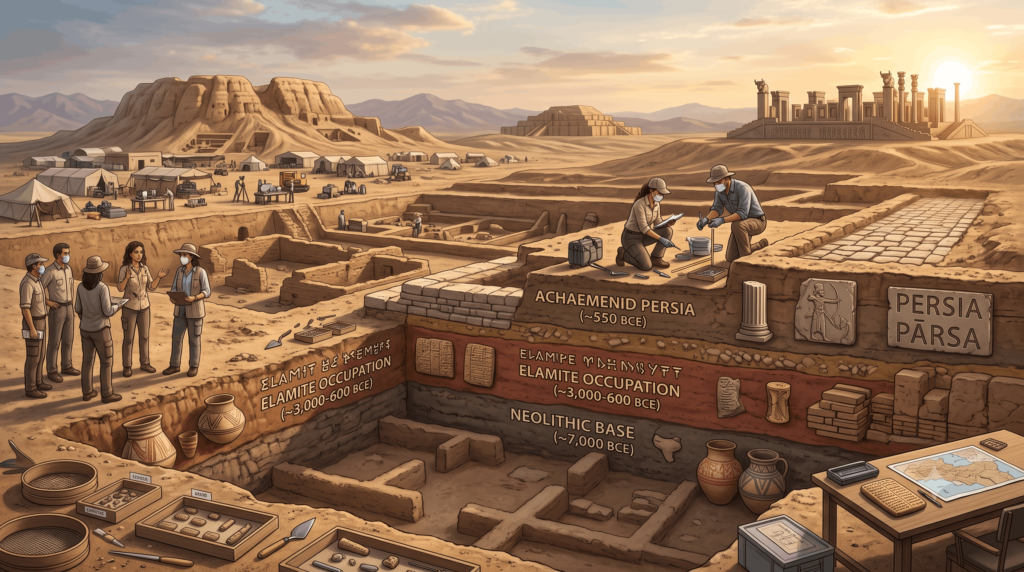
A popular claim frequently surfaces across social media, tourism campaigns, and nationalist discussions: “Persian civilization is over 7,000 years old.”
While the Iranian plateau undeniably preserves some of the oldest settled farming communities, painted pottery traditions, and urban experiments on Earth, conflating these ancient prehistoric cultures with the historical emergence of Persian identity is an archaeological misconception.
What does real stratigraphy, linguistics, and material culture reveal about the true age of ancient Persia?
┌─────────────────────────────────────────────────────────────────────────────┐
│                          CHRONOLOGICAL REALITY                              │
├────────────────────────────┬────────────────────────────────────────────────┤
│ 7,000–5,000 BCE            │ Pre-Indo-European Neolithic Cultures           │
│ (Tepe Sialk, Chogha Mish)  │ • Proto-agricultural communities & ceramics    │
│                            │ • NOT linguistically or culturally "Persian"   │
├────────────────────────────┼────────────────────────────────────────────────┤
│ 3,200–539 BCE              │ The Elamite Civilizations                      │
│ (Susa, Anshan, Chogha Zanbil)│ • Urban literate state in southwestern Iran  │
│                            │ • Foundational cultural & administrative substrate│
├────────────────────────────┼────────────────────────────────────────────────┤
│ c. 1000–550 BCE            │ Iranian Migration & Ethnogenesis               │
│ (First Assyrian records)   │ • Arrival of Iranian-speaking tribes (Pārsa)   │
│                            │ • Foundation of the Achaemenid Empire          │
└────────────────────────────┴────────────────────────────────────────────────┘
1. The 7,000-Year-Old Substrate: Neolithic Settlements of the Iranian Plateau
The claim of “7,000 years” originates from remarkable Neolithic and Chalcolithic excavations across the central plateau:
- Tepe Sialk (Near modern Kashan): Stratigraphic layers date continuous human occupation back to roughly 6,000–5,500 BCE. Excavations uncovered sophisticated early mud-brick architecture, kiln-fired painted pottery with geometric motifs, and copper metallurgy.
- Chogha Mish (Khuzestan Plain): Yielded administrative stamp seals and proto-cuneiform accounting tokens dating to the 5th millennium BCE.
                  NEOLITHIC TEPE SIALK STRATIGRAPHY

                     [ Sialk IV: Proto-Elamite ]  ~ 3000 BCE
                                 ▲
                     [ Sialk III: Chalcolithic ]  ~ 4000 BCE
                                 ▲
                     [ Sialk II: Advanced Neo ]   ~ 5000 BCE
                                 ▲
                     [ Sialk I: Basal Layer ]     ~ 6000 BCE
The Archaeological Reality: The people who lived in basal Tepe Sialk were not Persians. They spoke unknown pre-Indo-European languages and predated the migration of Iranian-speaking peoples onto the plateau by several millennia. They are the geographic ancestors of Iranian territorial archaeology, but not the ethnolinguistic ancestors of the Persians.
2. The Missing Link: The Elamite Foundation
Before any historical record of a “Persian” people appears, southwestern Iran was dominated for over two millennia by the Elamite civilization (c. 3200–539 BCE), centered on Susa and the highland stronghold of Anshan.
The Elamites developed their own unique cuneiform writing, constructed monumental zigguarts (such as Chogha Zanbil), and maintained complex diplomatic relations with Sumer, Akkad, and Babylon.
       ELAMITE INHERITANCE          ➔         PERSIAN IMPERIAL SYNTHESIS
 ─────────────────────────────────          ────────────────────────────────────
 • Susa as administrative hub               • Susa made primary Achaemenid winter capital
 • Elamite cuneiform chancellery            • Administrative tablets written in Elamite
 • Royal court garments & iconography       • Achaemenid royal dress adapted from Elam
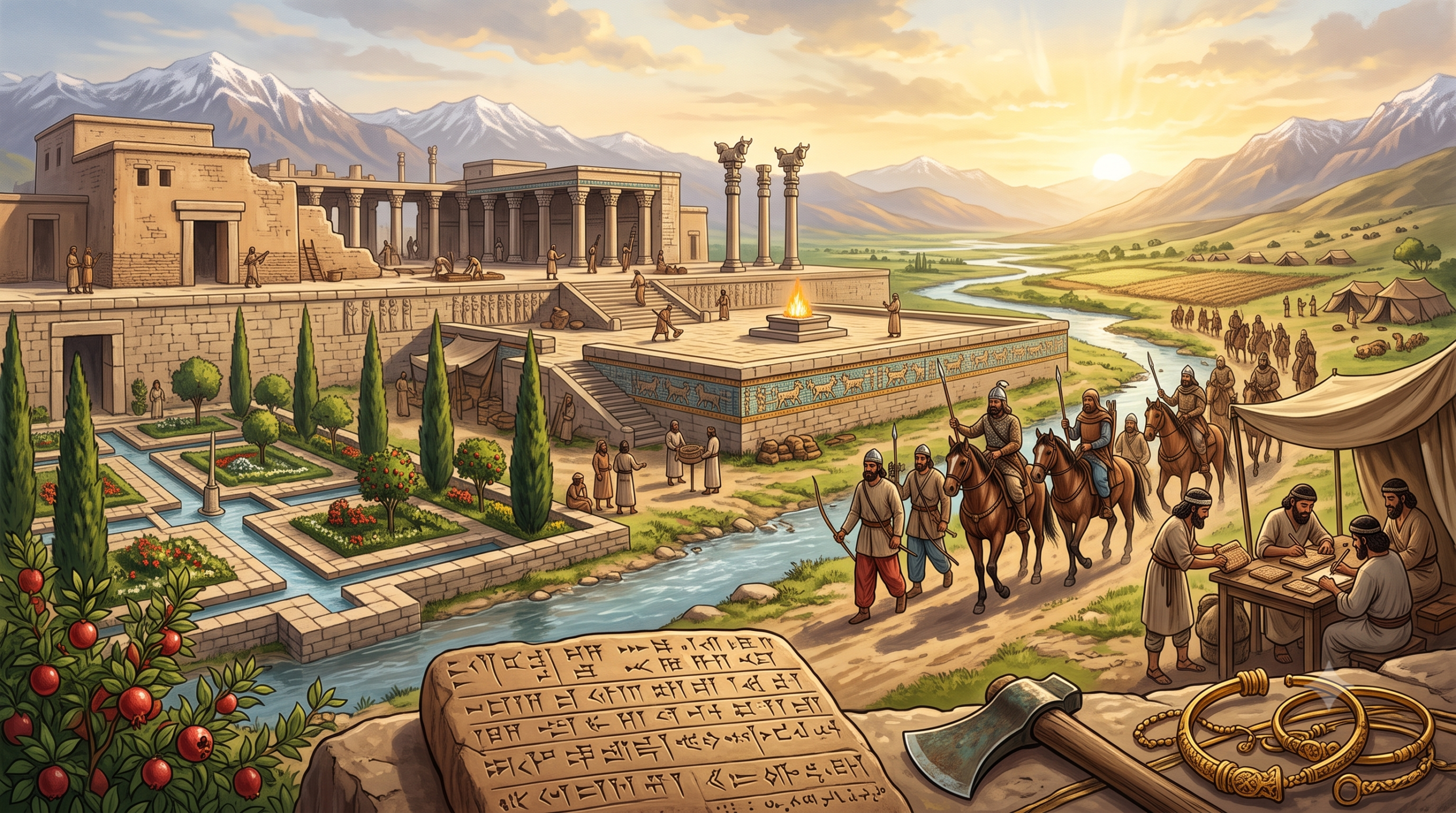
When Iranian-speaking pastoralist groups migrated into Fars (ancient Anshan), they settled directly atop this sophisticated Elamite infrastructure. The early Persian kings—including Cyrus the Great—proudly claimed the ancient title “King of Anshan,” adopting Elamite scribes, cylinder seals, and bureaucratic systems.
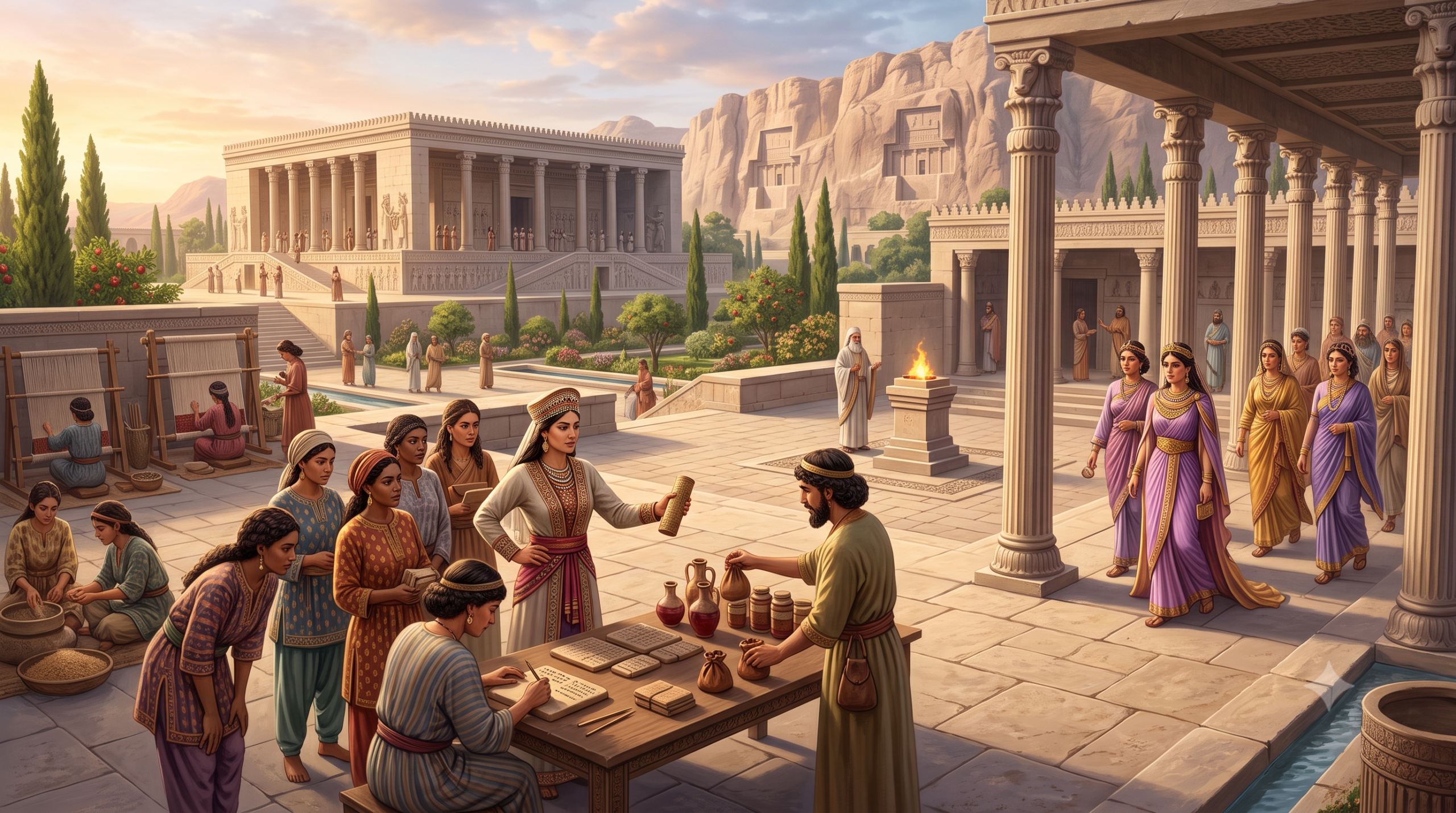
This sophisticated imperial administration also fostered remarkable socioeconomic structures; discover how cuneiform ration tablets reveal: the true autonomy and maternity rights of women in ancient Persia
3. When Did “Persian” Actually Begin?
The emergence of the Persians (Pārsa) as an identifiable linguistic, cultural, and political entity follows a very clear historical and archaeological timeline:
The Linguistic Arrival (c. 1200–900 BCE)
During the late 2nd and early 1st millennium BCE, Indo-Iranian speaking tribes migrated southward across the Iranian plateau from Central Asia. They split into two primary branches:
- The Medes (Mada): Settling in the Zagros Mountains (Ecbatana / Hamadan).
- The Persians (Pārsa): Settling in the southern Zagros and southwestern lowlands (Fars province).
The First Historical Mention (844 BCE)
The earliest undisputed written mention of the Persians appears not in Iranian records, but in the Black Obelisk of Shalmaneser III, an Assyrian king. In his 16th regnal year annals, he records receiving tribute from the chiefs of the “Parsua” in the Zagros Mountains.
 844 BCE ─── First mention of "Parsua" in Assyrian annals
 675 BCE ─── Rise of the Teispid dynasty in Anshan
 559 BCE ─── Cyrus II (The Great) ascends the regional throne
 550 BCE ─── Cyrus defeats Astyages of Media; Birth of the Achaemenid Empire
4. Why the Distinction Matters
Accurately dating Persian civilization does not diminish its historical grandeur—it clarifies its genius:
| Concept | The 7,000-Year Myth | The Stratigraphic Reality |
| Identity | Monolithic, unchanging culture lasting 70 centuries. | A dynamic ethnogenesis emerging around 1000–550 BCE. |
| Material Culture | Attributes prehistoric pottery directly to Persian kings. | Acknowledges the Neolithic & Elamite foundations that Persians assimilated. |
| Imperial Achievement | Ignores outside contributions. | Demonstrates how the Achaemenids unified disparate Near Eastern traditions into the world’s first true superpower. |
The Persian Empire was not created out of a 7,000-year vacuum; it was the ultimate administrative and architectural culmination of 4,000 years of Elamite, Mesopotamian, and Indo-Iranian synthesis.
Summary: How Old Is Ancient Persia?
- Archaeology of Iranian Soil: Settled agricultural life spans ~7,000 to 8,000 years (Tepe Sialk, Ganj Dareh).
- Elamite Urban Civilization: Spans ~5,000 years (Proto-Elamite to Late Elamite periods).
- Persian Ethnolinguistic Identity: Approximately 2,800 years (First historical records c. 844 BCE).
- The Imperial Persian State: Approximately 2,570 years (Established by Cyrus the Great in 550 BCE).