Persian

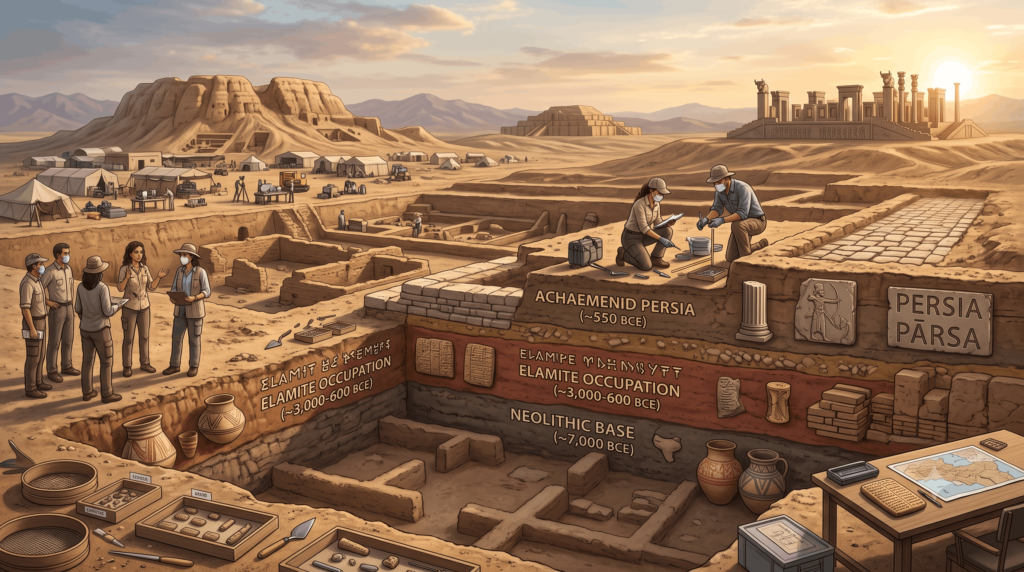
Archaeological excavation trench showing distinct stratigraphic layers from Neolithic base and Elamite occupation up to the Achaemenid Persian period.

Is Persian Civilization Really 7,000 Years Old? What Archaeological Stratigraphy Actually Proves

A popular claim frequently surfaces across social media, tourism campaigns, and nationalist discussions: “Persian civilization is over 7,000 years old.” While the Iranian plateau undeniably preserves some of the oldest settled farming communities, painted pottery traditions, and urban experiments on Earth, conflating these ancient prehistoric cultures with the historical emergence of Persian identity is an […]
Is Persian Civilization Really 7,000 Years Old? What Archaeological Stratigraphy Actually Proves Read More »

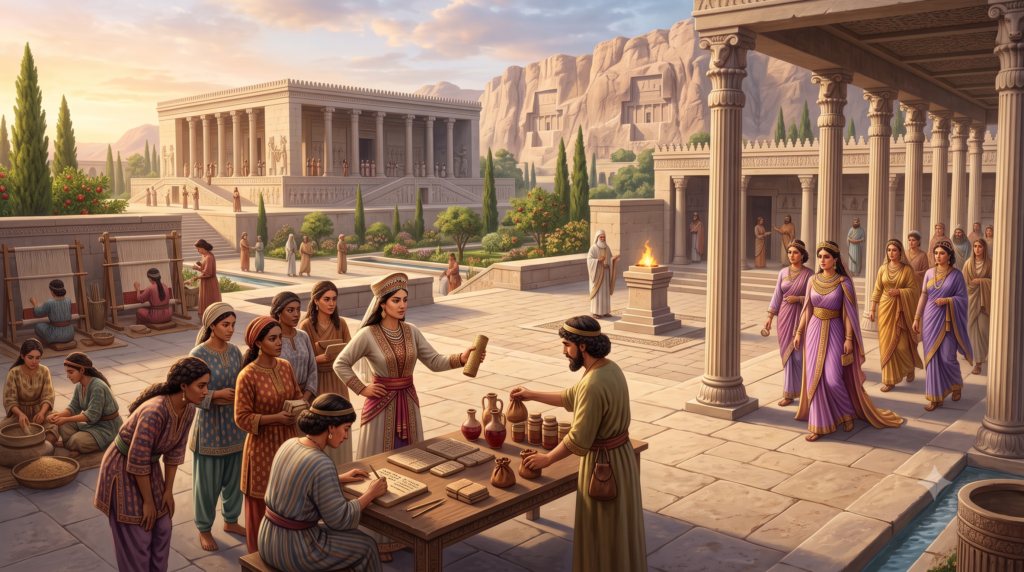
Achaemenid female workshop chief supervising textile artisans while imperial scribes record maternity wine and grain rations on cuneiform clay tablets in Persepolis.

Maternity Rations, Landed Estates, and Female Chiefs: The Unspoken Reality of Women in Ancient Persia

For centuries, Western historical imagination has reduced the women of the ancient Persian court to silent, exoticized figures confined behind palace walls—a biased literary trope primarily inherited from classical Greek playwrights and historians like Herodotus, Ctesias, and Xenophon. However, twentieth-century archaeological excavations in southwestern Iran completely shattered this narrative. The discovery and translation of thousands

Maternity Rations, Landed Estates, and Female Chiefs: The Unspoken Reality of Women in Ancient Persia Read More »

Persepolis: The Ceremonial Capital, Architecture, and Fall of the Achaemenid Metropolis

Persepolis (Old Persian: Pārsa; modern Takht-e Jamshid) represents the pinnacle of ancient Persian engineering, monumental art, and imperial ideology. Founded around 518 BCE by Darius I (the Great) in the rugged highland heartland of Fars (southwestern Iran), the city was conceived not as a routine military garrison or mundane commercial hub, but as the supreme

Persepolis: The Ceremonial Capital, Architecture, and Fall of the Achaemenid Metropolis Read More »

Xerxes I: The Great King of Persia, The Greco-Persian Wars, and the Master Builder of Persepolis

Xerxes I (Old Persian: Xšayāršā, meaning “Ruling Over Heroes”; reigned 486–465 BCE), commonly known as Xerxes the Great, was the fourth King of Kings (Xšāyaθiya Xšāyaθiyānām) of the Achaemenid Persian Empire. Ascending the throne at the absolute zenith of Persian geopolitical dominance, he governed an imperial expanse encompassing over five million square kilometers—stretching from the

Xerxes I: The Great King of Persia, The Greco-Persian Wars, and the Master Builder of Persepolis Read More »

Darius I (Darius the Great): The Architect of the Achaemenid Empire, Satrapal Reforms, and Global Vision

Darius I (Old Persian: Dārayavahuš, meaning “Holding Firm the Good”; c. 550–486 BCE), universally known as Darius the Great, was the third King of Kings (Xšāyaθiya Xšāyaθiyānām) of the Achaemenid Persian Empire. While Cyrus the Great founded the empire through rapid military conquest and Cambyses II annexed Egypt, it was Darius I who transformed a

Darius I (Darius the Great): The Architect of the Achaemenid Empire, Satrapal Reforms, and Global Vision Read More »

Cyrus the Great (Cyrus II): Founder of the Achaemenid Persian Empire, Imperial Conquests, and Historical Legacy

Cyrus II of Persia (Old Persian: Kūruš; c. 600–530 BCE), historically recognized as Cyrus the Great, was the visionary founder of the Achaemenid Empire—the first Persian Empire and the largest geopolitical superpower the ancient world had ever witnessed. Ascending the regional throne of Anshan around 559 BCE, Cyrus transformed Persia from a minor tributary highland

Cyrus the Great (Cyrus II): Founder of the Achaemenid Persian Empire, Imperial Conquests, and Historical Legacy Read More »