Cyrus II of Persia (Old Persian: Kūruš; c. 600–530 BCE), historically recognized as Cyrus the Great, was the visionary founder of the Achaemenid Empire—the first Persian Empire and the largest geopolitical superpower the ancient world had ever witnessed.
Ascending the regional throne of Anshan around 559 BCE, Cyrus transformed Persia from a minor tributary highland kingdom into a continent-spanning empire that united the ancient Near East. Through a synthesis of strategic mobility, flexible diplomacy, and an unprecedented policy of cultural and administrative accommodation, Cyrus laid the institutional foundations of global statecraft that endured for centuries.
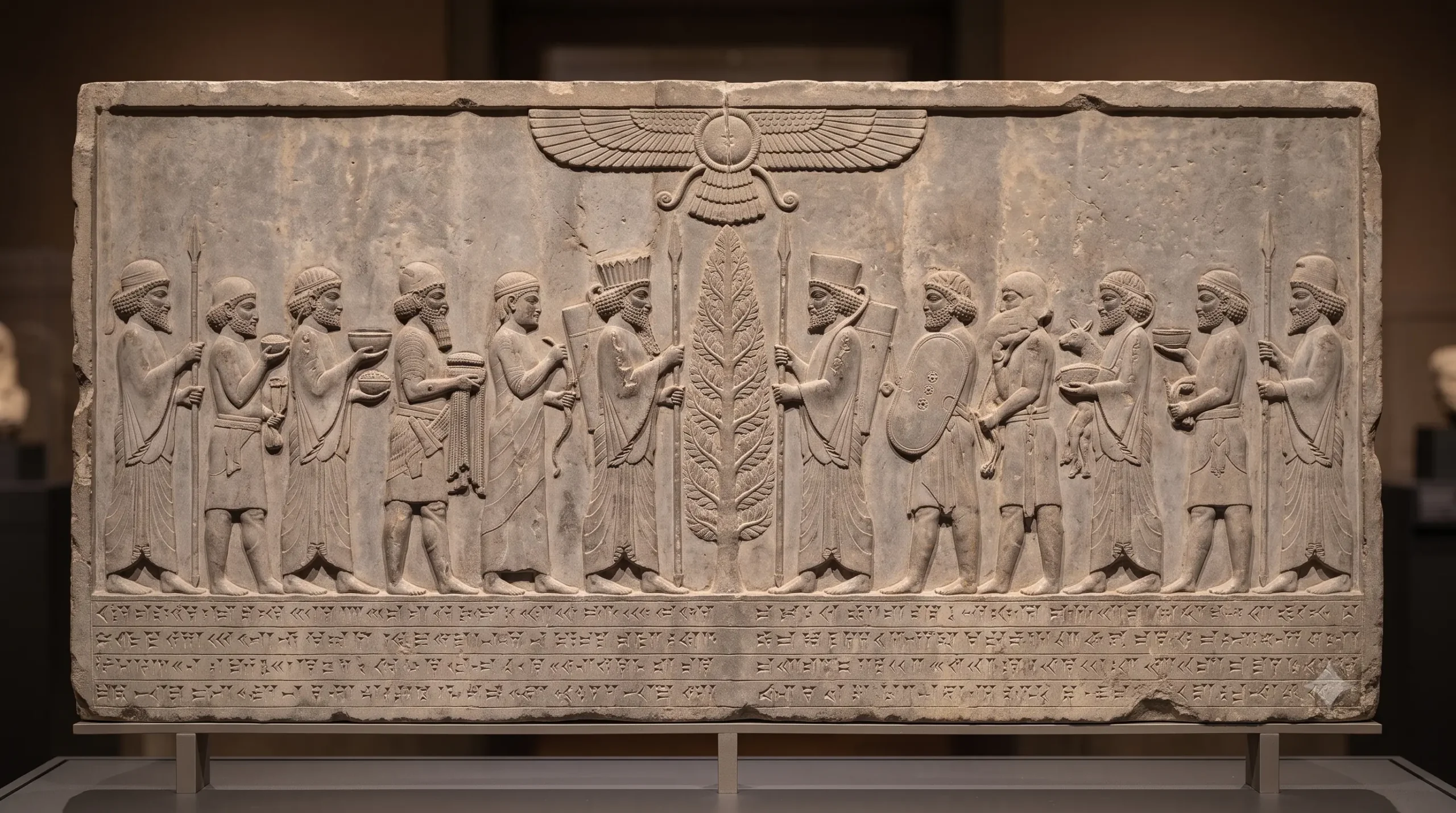
Early Life, Dynastic Lineage, and the Rise of Cyrus II to Power
The emergence of Cyrus the Great in the mid-sixth century BCE altered the geopolitical balance of the ancient Near East. Prior to his conquests, the region was dominated by four major powers: the Median Empire, the Neo-Babylonian Empire, the Lydian Kingdom in Anatolia, and the Saite Dynasty of Egypt.
Cyrus did not emerge from obscurity; he belonged to the hereditary royal house of Anshan, an ancient Elamite-Persian realm located in the highland region of modern Fars Province, southwestern Iran.
The Kingdom of Anshan and the Line of Teispes
The lineage of Cyrus II is documented directly in primary cuneiform records, most notably on the Cyrus Cylinder discovered in Babylon, where the king details his royal ancestry through the Teispid line:
- Royal Genealogy (The Line of Teispes): In line 20 of the Cyrus Cylinder, Cyrus explicitly proclaims his hereditary right to rule:“I am Cyrus, king of the world, great king, mighty king, king of Babylon, king of Sumer and Akkad, king of the four quarters of the world, son of Cambyses, great king, king of the city of Anshan, grandson of Cyrus, great king, king of the city of Anshan, descendant of Teispes, great king, king of the city of Anshan, of an enduring royal line, whose reign Bêl and Nabu love.”
| Generation | Ruler | Royal Title (Primary Records) |
| Great-Grandfather | Teispes (Čišpiš) | King of Anshan |
| Grandfather | Cyrus I (Kūruš I) | King of Anshan |
| Father | Cambyses I (Kambūjiya I) | King of the City of Anshan |
| Monarch | Cyrus II the Great (Kūruš) | King of Anshan / Founder of the Empire |
- The Persian-Median Dynastic Alliance: According to classical accounts by Herodotus (Histories, Book I) and Xenophon (Cyropaedia), the marriage between Cambyses I and Cyrus’s mother, Princess Mandane—daughter of the Median King Astyages—was a calculated diplomatic union designed to bind the vassal Persian aristocracy to the Median royal court at Ecbatana.
The Median Overthrow: Defeating King Astyages (c. 550 BCE)
Around 559 BCE, Cyrus succeeded his father as King of Anshan. At this time, the Persians owed political fealty and tribute to the Median Empire, which held dominion across the Iranian plateau and eastern Anatolia.
By 553 BCE, Cyrus initiated an open rebellion against his grandfather, King Astyages. The conflict spanned three years and is corroborated by both Greek narrative histories and contemporary Babylonian epigraphy:
- The Account of the Nabonidus Chronicle: The official Babylonian royal chronicle (Nabonidus Chronicle, Column II) records the decisive turning point of the war in 550 BCE:“King Astyages (Ishtumegu) mustered his army and marched against Cyrus (Kuras), king of Anshan, for conquest. The army of Astyages revolted against him and seized him in fetters; they delivered him to Cyrus. Cyrus marched to the royal city of Ecbatana (Agamtanu); silver, gold, goods, and possessions of Ecbatana he carried off as plunder and brought to Anshan.”
- The Treason of Harpagus: Herodotus explains that Median noble discontent, orchestrated by the senior general Harpagus, played a decisive role in the army’s defection. Astyages’s autocratic rule had alienated the Median aristocracy, prompting them to ally with the energetic young Persian king.
- The Foundation of Pasargadae: To commemorate the exact field where the final battle against Astyages was won, Cyrus founded his first royal capital, Pasargadae (Old Persian: Pāθra-gadā), on the Murghab plain in Fars.
- Geopolitical Consequence: Rather than treating Media as a devastated conquered province, Cyrus adopted a policy of political integration. He spared the life of Astyages, incorporated Median nobles and generals (such as Harpagus and Mazares) into high military commands, and retained Ecbatana (modern Hamadan) as one of the empire’s primary seasonal capitals. The dual identity of the state became known throughout antiquity as the rule of the “Medes and Persians.”
The Military Campaigns of Cyrus the Great: Forging an Empire
The transformation of the Persian realm from a regional highland kingdom into a universal empire was achieved through a series of swift, logistically complex military campaigns. Between 550 BCE and 539 BCE, Cyrus II dismantled the three dominant powers of the Near East—the Median Empire, the Lydian Kingdom, and the Neo-Babylonian Empire—while securing the eastern frontiers of Central Asia.
Rather than relying purely on destructive sieges or terror tactics, Cyrus utilized combined-arms tactics, camel corps adaptations, psychological warfare, and political alliances with disaffected local elites.
The Conquest of the Lydian Empire and King Croesus (c. 547–546 BCE)
The overthrow of Astyages alarmed the neighboring imperial powers. King Croesus of Lydia, renowned for his immense wealth derived from the electrum deposits of the Pactolus River, sought to exploit the transition of power in Media. After consulting the Oracle of Delphi—which famously prophesied that if he crossed the Halys River, “a great empire would fall”—Croesus invaded Persian-controlled Cappadocia, sacking the city of Pteria.
- The Indecisive Clash at Pteria (547 BCE): Cyrus marched rapidly across the Iranian plateau, meeting the Lydian army near Pteria. Following a bloody, inconclusive battle, winter approached. Adhering to traditional ancient Near Eastern military conventions, Croesus disbanded his seasonal levies and retreated to his capital at Sardis, expecting Cyrus to do the same and intending to summon his allies (Sparta, Egypt, and Babylon) for a spring offensive.
- The Winter Blitzkrieg on Sardis: Defying military convention, Cyrus pursued the retreating Lydian king through harsh winter conditions, arriving before the walls of Sardis before Croesus could reassemble his coalition.
- Tactical Innovation at the Battle of Thymbra: On the plains before Sardis, Croesus deployed his formidable cavalry. Herodotus (Histories, I.80) records that upon the advice of General Harpagus, Cyrus formed a frontline composed of the army’s baggage camels (dromedaries). The unfamiliar scent, sight, and sound of the camels panicked the Lydian warhorses, rendering their cavalry useless and forcing the Lydians to fight on foot.
- The Fall of the Sardis Acropolis: Following a fourteen-day siege, Persian mountain infantry scaled an undefended, precipitous section of the Sardis citadel. Sardis fell, Croesus was captured, and Lydia was integrated into the Persian realm.
┌────────────────────────────────────────────────────────────────────────┐
│ PRIMARY SOURCE SPOTLIGHT: THE FATE OF CROESUS                         │
├───────────────────────────────────┬────────────────────────────────────┤
│ SOURCE                            │ RECORDED OUTCOME                   │
├───────────────────┼────────────────────────────────────┤
│ **Herodotus (*Histories*, I.86)** │ Cyrus initially ordered Croesus    │
│                                   │ placed on a pyre, but spared his   │
│                                   │ life after hearing him invoke      │
│                                   │ Solon; Croesus became a counselor. │
├───────────────────────────────────┼────────────────────────────────────┤
│ **Nabonidus Chronicle (Col. II)** │ Fragmentary line indicates Cyrus   │
│                                   │ *"marched to Lydia... killed its   │
│                                   │ king... took its possessions."* │
├───────────────────────────────────┼────────────────────────────────────┤
│ **Bacchylides (Ode 3)** │ Croesus attempted self-immolation  │
│                                   │ but was miraculously delivered     │
│                                   │ by Apollo to the Hyperboreans.     │
└───────────────────────────────────┴────────────────────────────────────┘
Following the conquest of Sardis, Cyrus tasked his generals Mazares and Harpagus with pacifying the Greek city-states of the Ionian coast, using innovative earthwork ramps to capture fortified coastal cities like Phocaea and Teos.
The Central Asian and Eastern Iranian Campaigns (c. 545–540 BCE)
Before committing his armies against the heavily fortified empire of Babylon, Cyrus turned east to secure the vast frontier between the Caspian Sea, the Hindu Kush, and the Jaxartes (Syr Darya) River. This multi-year campaign is documented by classical authors (such as Ctesias in his Persica and Arrian in Anabasis Alexandri):
- Annexation of the Upper Satrapies: Cyrus campaigned across Hyrcania, Parthia, Bactria, Sogdiana, Drangiana, and Arachosia, establishing Persian garrisons in key fertile oases.
- The Northern Frontier Defense: To defend settled agricultural populations against raids by nomadic Saka (Scythian) and Massagetae horse archers, Cyrus established a line of fortified border outposts along the Jaxartes River, culminating in the foundation of the fortress city Cyropolis (Kurushata / modern Khujand, Tajikistan).
- Strategic Significance: Securing these eastern provinces provided Cyrus with immense reserves of elite cavalry, Bactrian infantry, and direct control over critical overland trade routes connecting Central Asia, the Iranian plateau, and the Indus Valley.
The Fall of Babylon (539 BCE): The Nabonidus Chronicle and the Battle of Opis
By 539 BCE, the Neo-Babylonian Empire was geographically encircled and politically fractured. Its last monarch, King Nabonidus, had alienated the powerful priesthood of Marduk (the patron god of Babylon) by promoting the lunar cult of Sîn at Harran and residing for ten years at the desert oasis of Tayma in Arabia, leaving his son Belshazzar to manage daily administration in Babylon.
- The Battle of Opis (Tishri / September 539 BCE): Cyrus crossed the Diyala River and advanced toward the strategic crossing of the Tigris at Opis. The official Babylonian record—the Nabonidus Chronicle (Column III.12–15)—documents the battle:“In the month of Tashritu, when Cyrus did battle at Opis on the bank of the Tigris against the army of Akkad, the people of Akkad revolted. Nabonidus scattered the population with fire; on the fourteenth day, Sippar was seized without battle. Nabonidus fled.”
- The Strategic Surrender of Sippar: Following the rout at Opis, the fortified city of Sippar opened its gates without resistance on the 14th of Tashritu (October 10, 539 BCE), cutting Babylon off from the north.
- The Bloodless Entry into Babylon: Two days later, on the 16th of Tashritu (October 12, 539 BCE), the vanguard of the Persian army under the command of Ugbaru (Gobryas), the Governor of Gutium, entered Babylon without a battle. King Nabonidus was captured inside the city.
┌────────────────────────────────────────────────────────────────────────┐
│ CHRONOLOGY OF THE FALL OF BABYLON (AUTUMN 539 BCE)                    │
├──────────────────────────┬─────────────────────────────────────────────┤
│ DATE (BABYLONIAN CALENDAR)│ HISTORICAL EVENT                           │
├──────────────────────────┼─────────────────────────────────────────────┤
│ **Tashritu (Early Sept)** │ Persian victory at the **Battle of Opis**.  │
├──────────────────────────┼─────────────────────────────────────────────┤
│ **14th Tashritu (Oct 10)**│ Capture of **Sippar** without bloodshed.   │
├──────────────────────────┼─────────────────────────────────────────────┤
│ **16th Tashritu (Oct 12)**│ General **Ugbaru** enters Babylon.         │
├──────────────────────────┼─────────────────────────────────────────────┤
│ **3rd Arahsamna (Oct 29)**│ **Cyrus II enters Babylon in triumph**;     │
│                          │ green twigs laid before him; peace decreed. │
└──────────────────────────┴─────────────────────────────────────────────┘
- The Royal Triumph of Cyrus II: On the 3rd of Arahsamna (October 29, 539 BCE), Cyrus personally entered the metropolis. Cuneiform texts record that branches were laid along his path while he proclaimed peace (šulmu) to the entire city.
- The Rejection of Classical Greek Engineering Myths: Herodotus (I.191) and Xenophon popularized the dramatic story that Cyrus diverted the Euphrates River into an artificial marsh to allow his troops to wade beneath the city walls on the night of a drunken festival. However, contemporary cuneiform records (the Nabonidus Chronicle and the Cyrus Cylinder) contain no mention of river diversion, proving that Babylon fell due to internal political collapse, elite collaboration, and the superior maneuver of Cyrus’s vanguard.
Imperial Governance and Administrative Model of Cyrus the Great
The military triumphs of Cyrus the Great would have produced only a short-lived conquest had he not introduced a revolutionary philosophy of imperial administration. Unlike the Neo-Assyrian and Neo-Babylonian empires—which relied on systematic mass deportations, public terror, and the destruction of local religious sanctuaries to enforce submission—Cyrus established an administrative model predicated on cultural accommodation, regional autonomy, and elite co-optation.
By preserving indigenous legal systems, respecting established priesthoods, and integrating conquered aristocracies into imperial service, Cyrus created a resilient administrative framework that allowed a relatively small Persian ruling class to govern millions of subjects across three continents.
Co-opting Regional Elites and Preserving Local Institutions
Cyrus understood that imperial durability required willing collaboration rather than permanent military occupation. His administrative policy rested on three fundamental pillars:
- Integration of Indigenous Aristocracies: Rather than executing or replacing native leaders, Cyrus retained regional nobles in high administrative positions:
- In Media, prominent Median generals like Harpagus and Mazares were appointed to supreme military commands in Anatolia.
- In Babylonia, local scribes, tax collectors, and temple administrators retained their posts. The influential Babylonian noble Ugbaru (Gobryas) was confirmed as governor (pīḫātu) of the province of Gutium and Babylon.
- Continuity of Local Legal Systems: The Persian crown did not impose a uniform legal code by force. Instead, Cyrus confirmed local customary laws, commercial codes, and traditional judicial courts across Babylonia, Lydia, Phoenicia, and the Levant, intervening only to arbitrate cross-provincial disputes or maintain imperial taxation.
- Economic Non-Disruption: Commercial networks were protected. In Mesopotamia, major private banking and mercantile dynasties, such as the famous House of Egibi (Bīt Egibi) in Babylon, continued their financial, real estate, and trade operations without state confiscation, transitioning seamlessly from Babylonian to Persian rule.
┌────────────────────────────────────────────────────────────────────────┐
│ THE ACHAEMENID ADMINISTRATIVE SHIFT UNDER CYRUS II                    │
├───────────────────────────────────┬────────────────────────────────────┤
│ NEO-ASSYRIAN / BABYLONIAN MODEL   │ IMPERIAL MODEL OF CYRUS THE GREAT  │
├───────────────────────────────────┼────────────────────────────────────┤
│ • Systematic mass deportation of  │ • Return of displaced peoples and  │
│   entire rebellious populations.  │   repatriation of sacred idols.    │
├───────────────────────────────────┼────────────────────────────────────┤
│ • Destruction and looting of      │ • Royal state funding for the      │
│   regional temples and shrines.   │   restoration of local sanctuaries.│
├───────────────────────────────────┼────────────────────────────────────┤
│ • Total replacement of local      │ • Strategic co-optation of native  │
│   elites with imperial governors. │   elites and administrative cadres.│
├───────────────────────────────────┼────────────────────────────────────┤
│ • Monolithic imperial terror as   │ • Multi-ethnic federation bound by │
│   primary instrument of control.  │   fealty, tribute, and mutual gain.│
└───────────────────────────────────┴────────────────────────────────────┘
The Origins of the Satrapy System and Foundation of Pasargadae
While Darius I later standardized and codified the formal taxation rates of the empire, Cyrus II laid the foundational architecture of the satrapy system (Old Persian: xšaçapāvan, meaning “Protector of the Realm”):
- Early Satrapal Appointments: Cyrus established large territorial divisions headed by royal satraps drawn from both Persian royalty and trusted allied nobles. These governors were granted wide latitude over regional defense and revenue collection, provided imperial peace (šulmu) and mandatory tribute were delivered to the crown.
- The Dual Crown of Babylon: To solidify his legitimacy in Mesopotamia, Cyrus initially appointed his eldest son and heir, Cambyses II, as King of Babylon (šar Bābili), while Cyrus retained the universal title of “King of Lands” (šar mātāti), creating a system of dynastic co-regency.
The Architecture of Pasargadae: The First Imperial Capital
On the plains of Murghab in Fars, Cyrus constructed his capital, Pasargadae (Old Persian: Pāθra-gadā), designing it not as a cramped, walled fortress, but as an expansive, open-air park and palace complex that reflected the highland Persian aesthetic.
- The Royal Paradises (Pairidaēza): Pasargadae pioneered the canonical Persian garden design (Chahar Bagh / four-fold garden). Symmetrical limestone water channels, stone basins, and irrigation conduits divided lush orchards and exotic flora, symbolizing the King’s ability to bring fertility and cosmic order to the earth.
- Eclectic Monumental Architecture: The buildings at Pasargadae synthesized the artistic and architectural traditions of the conquered nations:
- Palace P (Residential Palace): Featured a monumental hypostyle hall with stone column bases reminiscent of Ionian Greek masonry.
- The Gatehouse Relief: Displayed the famous Four-Winged Genius, a colossal limestone bas-relief depicting a crowned figure wearing an Egyptian Hemhem crown, an Elamite robe, and Assyro-Babylonian winged iconography—embodying Cyrus’s vision of an all-inclusive, universal empire.
- The Royal Inscription (CMa): Carved in trilingual cuneiform (Old Persian, Elamite, and Babylonian) across the palace pillars, Cyrus left his enduring titular signature:“
I am Cyrus, the King, an Achaemenid.” (adam Kūruš xšāyaθiya Haxāmanišiya)
The Cyrus Cylinder: Royal Propaganda and the Human Rights Debate
The Cyrus Cylinder (often referred to as the Kurash Prism) is widely regarded as one of the most famous and culturally significant epigraphic discoveries from the ancient Near East. Unearthed in March 1879 by the Iraqi-Assyrian archaeologist Hormuzd Rassam during British Museum excavations at the site of Babylon, this barrel-shaped clay cylinder (measuring 22.5 cm long by 10 cm in diameter) provides direct, contemporary textual evidence of Cyrus II’s ideological justification for the annexation of the Neo-Babylonian Empire.
Carved in forty-five lines of sophisticated Babylonian cuneiform script, the artifact was not an international treaty or public legal charter, but a traditional Mesopotamian foundation deposit (temmennu), buried beneath the foundations of the Esagila temple (the sacred sanctuary of Marduk) to consecrate Cyrus’s restoration of the city’s cultic infrastructure.
Cuneiform Inscription, Discovery, and Textual Analysis
The inscription is divided into two primary rhetorical sections: a theological condemnation of the ousted Babylonian king Nabonidus, followed by an autobiographical declaration by Cyrus the Great detailing his genealogy, imperial benevolence, and administrative decrees.
┌────────────────────────────────────────────────────────────────────────┐
│ RHETORICAL STRUCTURE OF THE CYRUS CYLINDER (BM 90920)                  │
├───────────────────────┬────────────────────────────────────────────────┤
│ Textual Section       │ Primary Historical & Ideological Content       │
├───────────────────────┼────────────────────────────────────────────────┤
│ **Lines 1–19** │ Indictment of Nabonidus; Marduk seeks a just   │
│ (Theological Prologue)│ king, chooses Cyrus, and takes him by the hand.│
├───────────────────────┼────────────────────────────────────────────────┤
│ **Lines 20–22** │ Royal Titulary: Lineage of Teispes and Cyrus's │
│ (Imperial Pedigree)   │ ancestral legitimacy as King of Anshan.        │
├───────────────────────┼────────────────────────────────────────────────┤
│ **Lines 23–35** │ Peaceful entry into Babylon; abolition of the  │
│ (Decrees of Peace)    │ corvée (*forced labor*); restoration of cults. │
├───────────────────────┼────────────────────────────────────────────────┤
│ **Lines 36–45** │ Repatriation of displaced gods; prayer formula │
│ (Cultic Restoration)  │ for Cyrus and Cambyses; building repairs.      │
└───────────────────────┴────────────────────────────────────────────────┘
Key Primary Passages from the Cylinder:
- The Divine Selection by Marduk (Lines 11–12):“He [Marduk] searched through all the countries, looking for a righteous king, the king of his heart whom he would take by the hand. He called out his name: Cyrus, king of Anshan; he pronounced his name to be king over all the world.”
- Abolition of Oppression and Respect for Civilians (Lines 24–26):“My numerous troops walked about in Babylon in peace; I did not allow anyone to terrorize the people of Sumer and Akkad… I freed them from their bonds and relieved their weariness.”
- Repatriation of Cult Statues and Deities (Lines 30–32):“From Nineveh, Assur, and Susa, Akkad, Eshnunna, Zamban, Me-Turnu, and Der, as far as the region of Gutium—I returned the gods who resided within them to their places, and I let them dwell in eternal abodes. I gathered all their inhabitants and returned them to their habitations.”
Historiographical Reassessment: Ancient Near Eastern Kingship vs. Modern Human Rights Myth
In 1971, during the 2,500th-anniversary celebrations of the founding of the Persian Empire, the Iranian monarchy presented a replica of the Cyrus Cylinder to the United Nations, promoting it worldwide as the “first declaration of human rights.” While this modern branding cemented Cyrus’s global reputation, modern 20th- and 21st-century Assyriologists (including Amélie Kuhrt, Pierre Briant, and Josef Wiesehöfer) have established a more nuanced, historically accurate interpretation.
| Modern “Human Rights” Myth | Academic Near Eastern Reality (Assyriology) |
| Concept of Universal Human Rights: Assumed to proclaim individual civil liberties, democracy, and freedom of speech. | Royal Legitimation Tradition: Rooted in the ancient genre of royal Mesopotamian restoration texts (paralleling Ashurbanipal, Esarhaddon, and Hammurabi). |
| Complete Religious Freedom: Portrayed as an early charter for secularism and modern religious equality. | Theological Pragmatism: Strategic co-optation of the Marduk priesthood and regional religious elites to prevent anti-Persian rebellions. |
| Abolition of All Slavery: Claimed to have universally outlawed slavery across the ancient world. | Abolition of State Corvée (Forced Labor): Cyrus abolished irregular civic labor levies imposed on Babylonians by Nabonidus, not the institution of domestic slavery. |
| Revolutionary Break from Tradition: Seen as an entirely novel invention of Persian political philosophy. | Continuity of Mesopotamian Statecraft: Composed in Babylonian cuneiform by native Babylonian scribes adhering to standard temple formulaic conventions. |
The Academic Verdict
Recognizing the Cyrus Cylinder as a traditional Mesopotamian royal text does not diminish Cyrus’s historical achievement. On the contrary, it reveals his mastery of political propaganda and diplomacy: rather than imposing Persian religious hegemony, Cyrus deliberately presented himself to the Babylonians as an authentic Babylonian monarch chosen by their own patron god, securing stability through cultural respect and mutual advantage.
Religious Policy and Biblical Impact: Cyrus the Great as the Anointed (Mashiach)
Among all non-Jewish monarchs mentioned in the Hebrew Bible (Old Testament), Cyrus the Great occupies an unparalleled position of theological reverence. Rather than being portrayed as a foreign oppressor or pagan tyrant, biblical texts present the Persian king as an instrument of divine providence, explicitly commissioned by Yahweh to liberate the Jewish people, restore Jerusalem, and rebuild the Temple.
This biblical legacy reflects Cyrus’s broader imperial policy of religious accommodation and cultural repatriation across the ancient Near East—a sharp departure from the forced assimilation and temple desecrations enacted by earlier Neo-Assyrian and Neo-Babylonian rulers.
The Edict of Restoration and the End of the Babylonian Captivity (538 BCE)
In 586 BCE, the Babylonian king Nebuchadnezzar II destroyed Jerusalem, leveled the First Temple (Solomon’s Temple), and deported the Judean political, religious, and artisan elites to Mesopotamia in what became known as the Babylonian Captivity.
Following his conquest of Babylon in 539 BCE, Cyrus issued a formal royal decree—traditionally known as the Edict of Cyrus (538 BCE)—authorizing the exiled Judeans to return to their ancestral homeland in the province of Yehud Medinata (Judah) and rebuild their sacred sanctuary.
- Restitution of Sacred Temple Vessels: According to the Book of Ezra (1:7–11), Cyrus ordered the return of 5,400 gold and silver vessels that Nebuchadnezzar had looted from the Temple of Jerusalem, placing them in the custody of Sheshbazzar, the prince of Judah.
- Imperial Financing: The royal court not only permitted the reconstruction but also ordered provincial treasuries to provide economic subsidies and cedar timber from Mount Lebanon for the building effort.
- The Return (Aliyah): Led initially by Sheshbazzar and later by Zerubbabel (a descendant of the Davidic line) alongside the High Priest Jeshua, thousands of exiled Jews returned across the Fertile Crescent to reconstruct the altar and lay the foundations for the Second Temple period.
Cyrus in the Hebrew Bible: The Title of Mashiach (Messiah)
Cyrus is referenced by name more than twenty times across several biblical books, including Isaiah, Ezra, 2 Chronicles, and Daniel. Most notably, in the prophetic text of Second Isaiah (Deutero-Isaiah), Cyrus receives titles and divine endorsements never granted to any other foreign monarch.
| Biblical Book | Biblical Citation | Theological Title / Role Assigned to Cyrus II |
| Isaiah | Isaiah 45:1 | “His Anointed” (Mashiach / Messiah): “Thus says the Lord to His anointed, to Cyrus, whose right hand I have held…” |
| Isaiah | Isaiah 44:28 | “My Shepherd” (Ro’i): “He is My shepherd, and he shall perform all My pleasure, saying to Jerusalem, ‘You shall be built,’ and to the Temple, ‘Your foundation shall be laid.'” |
| Isaiah | Isaiah 41:2 | The Righteous Warrior from the East: Called by Yahweh to subdue nations and strip kings of their armor. |
| 2 Chronicles | 2 Chronicles 36:22–23 | The Fulfillment of Prophecy: Proclaiming that Yahweh, the God of Heaven, appointed Cyrus to build Him a house in Jerusalem. |
| Ezra | Ezra 1:1–4; Ezra 6:3–5 | The Royal Lawgiver: Preserving the official bilingual Aramaic/Hebrew royal edicts authorizing the Temple reconstruction. |
The Theological Significance of Mashiach:
In ancient Israelite tradition, the title of Mashiach (“Anointed One”) was strictly reserved for:
- The High Priests of Israel.
- The legitimate Kings of the House of David.
By applying this title directly to Cyrus II, the author of Isaiah presented a revolutionary theological concept: the God of Israel exercised sovereign authority over global history, using an uncircumcised Persian king as His chosen instrument of redemption (“though you have not known Me”, Isaiah 45:4).
The Convergence Between Biblical Narrative and Achaemenid Epigraphy
For centuries, historical critics questioned whether the biblical account of Cyrus’s edict was a later pious fabrication. However, 19th- and 20th-century archaeological discoveries confirmed that Cyrus’s policy toward the Jews aligned perfectly with his standard imperial administrative practice across all conquered territories:
- The Cyrus Cylinder Parallels: As recorded in lines 30–32 of the Cyrus Cylinder, Cyrus systematically restored the cults and returned the displaced populations of Mesopotamian and Elamite cities (such as Assur, Susa, and Eshnunna). The Judean restoration was not an isolated favor, but part of a universal imperial policy of religious pacification.
- Strategic Geopolitical Buffer: By facilitating the return of a loyal Judean community to the strategic land bridge of the Levant, Cyrus secured a stable, grateful provincial population along the vital military corridor leading into Egypt—the next major target for Achaemenid expansion.
Classical Greek Reception and Xenophon’s Cyropaedia
One of the most remarkable aspects of Cyrus the Great’s historical legacy is his overwhelmingly positive portrayal among classical Greek historians, philosophers, and statesmen. Despite the bitter geopolitical enmity and military conflicts between the Greek city-states and the Achaemenid Empire throughout the fifth and fourth centuries BCE (the Greco-Persian Wars), Greek intellectuals did not depict Cyrus II as an oriental despot or barbaric tyrant.
Instead, classical authors regarded Cyrus as the supreme embodiment of an enlightened, magnanimous, and virtuous sovereign—a ruler who governed not through fear or terror, but through moral authority, martial discipline, and genuine concern for the welfare of his subjects.
Xenophon’s Cyropaedia (The Education of Cyrus)
The definitive Greek philosophical portrait of the Persian founder was written around 370 BCE by the Athenian soldier, historian, and student of Socrates, Xenophon. His eight-volume masterwork, the Cyropaedia (Greek: Kyrou Paideia, meaning “The Education of Cyrus”), became one of the most influential political treatises of antiquity.
┌────────────────────────────────────────────────────────────────────────┐
│ NATURE OF XENOPHON'S CYROPAEDIA: BIOGRAPHY VS. PHILOSOPHY              │
├───────────────────────────────────┬────────────────────────────────────┤
│ HISTORICAL BIOGRAPHY (LITERARY)   │ PHILOSOPHICAL NOVEL / "MIRROR"     │
├───────────────────────────────────┼────────────────────────────────────┤
│ • Follows the major milestones of │ • Xenophon fictionalized dialogues │
│   Cyrus’s life: youth, education, │   and events to illustrate Socratic│
│   overthrow of Media, conquests.  │   virtues of leadership.           │
├───────────────────────────────────┼────────────────────────────────────┤
│ • Provides valuable insights into │ • Served as the first major Western│
│   Persian court etiquette, royal  │   "Mirror for Princes" (*speculum  │
│   hunts, and military training.   │   principis*) on ideal kingship.   │
└───────────────────────────────────┴────────────────────────────────────┘
Core Leadership Principles in the Cyropaedia:
Xenophon structured Cyrus’s success around several fundamental ethical and administrative qualities:
- The Concept of Enlightened Rule (Philanthropia): Xenophon argued that Cyrus ruled over the largest multi-ethnic empire in history because he genuinely loved his subjects, rewarding merit regardless of social rank and ensuring their economic prosperity.
- Self-Restraint and Moderation (Sophrosyne): Unlike stereotypical portrayals of decadent Eastern monarchs, Cyrus was depicted as practicing strict self-discipline, sharing the physical hardships of his soldiers on campaign, and living uncorrupted by luxury.
- Willing Obedience Over Coercion: Cyrus famously demonstrated that true leadership inspires voluntary submission:“It is better to rule over willing subjects through benevolence and virtue than over unwilling slaves through physical force and terror.” (Cyropaedia, VIII.1.22)
- Mastery of Logistics and Combined Arms: Xenophon provided detailed analyses of Cyrus’s military reforms, highlighting his introduction of scythed chariots, mobile siege towers, standardized field hospitals, and advanced supply-chain management.
Portrayal by Herodotus, Aeschylus, and Plato
Beyond Xenophon, other major Athenian thinkers recognized the unique character of Cyrus the Great:
| Classical Greek Author | Work / Context | Historical & Philosophical Assessment of Cyrus II |
| Herodotus of Halicarnassus | The Histories (Book I & III) | Describes Cyrus as a brave, ambitious, and just leader. Herodotus notes that while Darius I was called a “merchant” (kapelos) and Cambyses a “master” (despotes), the Persians affectionately called Cyrus their “Father” (pater) because he was gentle and provided them with all good things. |
| Aeschylus | The Persians (Tragedy, 472 BCE) | Even in a play celebrating the Greek victory at Salamis, the ghost of Darius speaks of Cyrus with deep reverence: “Cyrus, a fortunate man, brought peace to all his people… For God did not hate him, because he was sensible.” |
| Plato | Laws (Nomoi, Book III.694a–695b) | Presents the reign of Cyrus as the golden age of Persian governance, praising him for balancing monarchical authority with civic freedom and allowing his subjects to speak truthfully without fear of retribution. |
The Enduring Influence of the Cyropaedia on Western Political Thought
The idealized portrait of Cyrus crafted by classical authors shaped centuries of political philosophy, statecraft, and literature across Europe and the Western world:
- Scipio Africanus and Julius Caesar: The Roman orator Cicero (Epistulae ad Quintum Fratrem, I.1.23) noted that Scipio Africanus never went into battle without carrying a copy of Xenophon’s Cyropaedia, using Cyrus as his personal model for military command and civic moderation.
- Niccolò Machiavelli (The Prince, 1532): In Chapter XIV of The Prince, Machiavelli explicitly referenced Cyrus II as the supreme archetype of the self-made ruler (virtù), urging Renaissance princes to study Xenophon’s account of Cyrus’s strategic intelligence and political pragmatism.
- The Founding Fathers of the United States: Thomas Jefferson owned two separate copies of Xenophon’s Cyropaedia (one in Greek and Latin, one in English) and explicitly urged his grandson to study it closely as the foundational text on administrative virtue, religious tolerance, and constitutional leadership.
The Final Campaign, Death in Central Asia, and the Tomb of Cyrus the Great
In 530 BCE, having pacified Mesopotamia and the Levant and leaving the western administration in the capable hands of his son and heir Cambyses II, Cyrus II embarked on his final military expedition. The campaign targeted the perilous northeastern frontier along the Eurasian steppes (modern Kazakhstan and Uzbekistan), where nomadic confederations threatened the settled provinces of Sogdiana and Bactria.
Queen Tomyris and the Battle Against the Massagetae (530 BCE)
The primary classical account of Cyrus’s death is preserved by Herodotus (Histories, Book I.201–214), who details the confrontation between the Persian imperial army and the Massagetae, a fierce confederation of nomadic pastoralists and horse archers led by their warrior queen, Tomyris.
- The Ambush of Spargapises: Crossing the Araxes (likely the Syr Darya / Jaxartes River), Cyrus used a tactical ruse. Leaving an undefended camp stocked with unwatered wine and luxury provisions, a Persian detachment feigned retreat. The vanguard of the Massagetae, led by Tomyris’s son Spargapises, overran the camp, feasted, and became intoxicated. Cyrus’s main force counterattacked, slaughtering the detachment and capturing the prince, who later committed suicide in captivity out of shame.
- The Decisive Battle: Enraged by the loss of her son, Queen Tomyris marshaled the full strength of the Massagetae. Herodotus describes the ensuing clash as the most violent and desperate battle ever fought between non-Greek armies. After exhausting their arrows at long range, the two forces engaged in brutal hand-to-hand combat with spears and daggers.
- The Death of the Great King: The Massagetae gained the upper hand, breaking the Persian lines. Cyrus II fell on the battlefield in December 530 BCE after a reign of twenty-nine years. According to Herodotus’s famous, dramatic narrative, Tomyris recovered Cyrus’s body, severed his head, and dipped it into a wineskin filled with human blood, fulfilling her vow to “give the bloodthirsty king his fill of blood.”
┌────────────────────────────────────────────────────────────────────────┐
│ HISTORIOGRAPHICAL DEBATE: THE CIRCUMSTANCES OF CYRUS'S DEATH          │
├──────────────────────────┬─────────────────────────────────────────────┤
│ HISTORICAL SOURCE        │ RECORDED DEATH ACCOUNT                      │
├──────────────────────────┼─────────────────────────────────────────────┤
│ **Herodotus** │ Killed in battle against **Queen Tomyris** │
│ (*Histories*, I.214)     │ and the Massagetae in Central Asia.         │
├──────────────────────────┼─────────────────────────────────────────────┤
│ **Ctesias of Cnidus** │ Mortally wounded in battle against the      │
│ (*Persica*, Fragments)   │ **Derbices**; died in camp 3 days later.    │
├──────────────────────────┼─────────────────────────────────────────────┤
│ **Xenophon** │ Died peacefully of old age in his palace,   │
│ (*Cyropaedia*, VIII.7)   │ delivering a philosophical farewell address.│
├──────────────────────────┼─────────────────────────────────────────────┤
│ **Berossus** │ Fell fighting in the plains against the     │
│ (Babylonian Historian)   │ Dahae nomadic confederation.                │
└──────────────────────────┴─────────────────────────────────────────────┘
Despite the varying classical traditions, Persian royal forces recovered the King’s remains, transporting them across the empire to his chosen resting place in the highland plains of Fars.
The Monumental Gabled Tomb at Pasargadae
Unlike the rock-hewn cliff tombs favored by subsequent Achaemenid monarchs at Naqsh-e Rostam, the Tomb of Cyrus the Great at Pasargadae is a standalone, megalithic limestone monument that combines simplicity, geometric balance, and monumental dignity.
- Architectural Structure: The tomb consists of two distinct components constructed from high-quality white limestone clamped together without mortar:
- The Stepped Plinth (Base): A tiered pyramidal podium made of six descending stone steps, reflecting Mesopotamian and Elamite ziggurat architectural traditions.
- The Gabled Tomb Chamber (Cella): A rectangular, gabled-roof chamber (measuring 3.17 m long, 2.11 m wide, and 2.11 m high) with thick limestone walls, resembling traditional Urartian and northern Iranian wooden-timbered house structures.
- The Royal Interior: Ancient sources record that Cyrus’s embalmed body was placed inside a solid golden sarcophagus, rested upon a golden couch with silver feet, and adorned with embroidered Babylonian tapestries, royal purple robes, and precious Median jewelry.
Alexander the Great’s Visit and the Epitaph of Cyrus
In 330 BCE, following the defeat of Darius III and the capture of Persepolis, Alexander the Great visited Pasargadae. An ardent admirer of Cyrus since his youth through the teachings of Aristotle and Xenophon, Alexander viewed Cyrus as his ideological predecessor.
- Desecration and Restoration: During Alexander’s campaign in India, the tomb was broken into, looted of its treasures, and Cyrus’s body cast from its golden casket. Upon his return to Persis, an outraged Alexander ordered his architect Aristobulus to restore the monument, re-entomb the king’s remains, seal the stone entrance, and execute the royal guards who allowed the sacrilege.
- The Lost Greek Inscription: Greek historians (Arrian, Anabasis Alexandri, VI.29; Strabo, Geographica, XV.3.7; and Plutarch, Life of Alexander, 69) record that Alexander ordered an inscription placed upon the tomb translated from the original Persian cuneiform:“O man, whoever thou art, and wheresoever thou comest, for I know thou wilt come, I am Cyrus, who founded the Empire of the Persians. Grudge me not therefore this little earth that covers my body.”
Plutarch notes that these solemn words deeply moved Alexander, reminding the young conqueror of the transience of all earthly glory and imperial power.
❓ Frequently Asked Questions About Cyrus the Great (Cyrus II)
What was Cyrus the Great most famous for?
Cyrus the Great (Cyrus II) is most famous for founding the Achaemenid Persian Empire, conquering the Median, Lydian, and Neo-Babylonian empires, and creating the largest state the ancient world had ever seen. Beyond his military triumphs, he is internationally celebrated for his unprecedented policies of cultural and religious tolerance, the repatriation of displaced peoples, and the administrative model recorded on the Cyrus Cylinder.
Who came first, Cyrus the Great or Alexander the Great?
Cyrus the Great came first. Cyrus founded the Achaemenid Empire in the 6th century BCE (reigned c. 559–530 BCE). Alexander the Great lived two centuries later in the 4th century BCE (reigned 336–323 BCE). Alexander was an outspoken admirer of Cyrus, studied Xenophon’s Cyropaedia, and personally visited and restored Cyrus’s desecrated tomb at Pasargadae after conquering Persia in 330 BCE.
Why do Jews hold Cyrus the Great in such high regard?
In Jewish tradition and the Hebrew Bible, Cyrus is revered because he issued the Edict of Restoration (538 BCE), ending the fifty-year Babylonian Captivity. He permitted the exiled Jewish people to return to Judah (Yehud Medinata), returned the sacred vessels looted by Nebuchadnezzar II, and funded the reconstruction of the Second Temple in Jerusalem. In the Book of Isaiah (45:1), Cyrus is uniquely designated as Yahweh’s “Anointed” (Mashiach / Messiah)—the only non-Jew in the Bible to receive this title.
Which language did Cyrus the Great speak?
Cyrus the Great spoke Old Persian (an early Iranian language belonging to the Indo-European family). For international diplomacy, administration, and imperial correspondence across his multi-ethnic realm, Cyrus’s chancery utilized Imperial Aramaic as the lingua franca, while regional records were kept in indigenous languages such as Elamite, Babylonian (Akkadian), and Greek.
What is the Cyrus Cylinder, and is it really the first declaration of human rights?
The Cyrus Cylinder is a 6th-century BCE barrel-shaped clay foundation deposit inscribed in Babylonian cuneiform, discovered in Babylon in 1879. While modern political discourse (beginning with the 1971 UN replica) popularized it as the “world’s first charter of human rights,” modern Assyriologists view it as a traditional Mesopotamian royal inscription. It documents Cyrus’s conquest, his restoration of local sanctuaries, the return of sacred cult statues, and the abolition of uncompensated forced labor (corvée) imposed by King Nabonidus.
What is the difference between Cyrus I, Cyrus II, and Cyrus the Younger?
- Cyrus I (Kūruš I): Grandfather of Cyrus the Great; an early regional king of Anshan (c. 600 BCE).
- Cyrus II (Cyrus the Great): Founder of the Achaemenid Persian Empire (reigned c. 559–530 BCE).
- Cyrus the Younger: A Persian prince and satrap who lived a century later (died 401 BCE); famous for hiring the Greek “Ten Thousand” mercenaries (chronicled in Xenophon’s Anabasis) in an unsuccessful attempt to seize the throne from his brother Artaxerxes II.
Where is the tomb of Cyrus the Great located?
Cyrus the Great is buried at Pasargadae (in modern-day Fars Province, Iran), the first capital of the Achaemenid Empire. His tomb is a monumental, six-tiered limestone monument featuring a stepped rectangular base topped by a gabled funerary chamber (cella). It remains a UNESCO World Heritage site and one of the best-preserved monuments of Achaemenid architecture.
Further Reading
- Encyclopaedia Iranica – Cyrus II the Great (Biography, Lineage & Historiography)
- The British Museum – The Cyrus Cylinder: Translation, Context & Curatorial Insights
- World History Encyclopedia – Cyrus the Great and the Rise of the Achaemenid Empire
- Livius.org – The Nabonidus Chronicle: Primary Cuneiform Text & Analysis
- Encyclopaedia Britannica – Cyrus II (King of Persia)