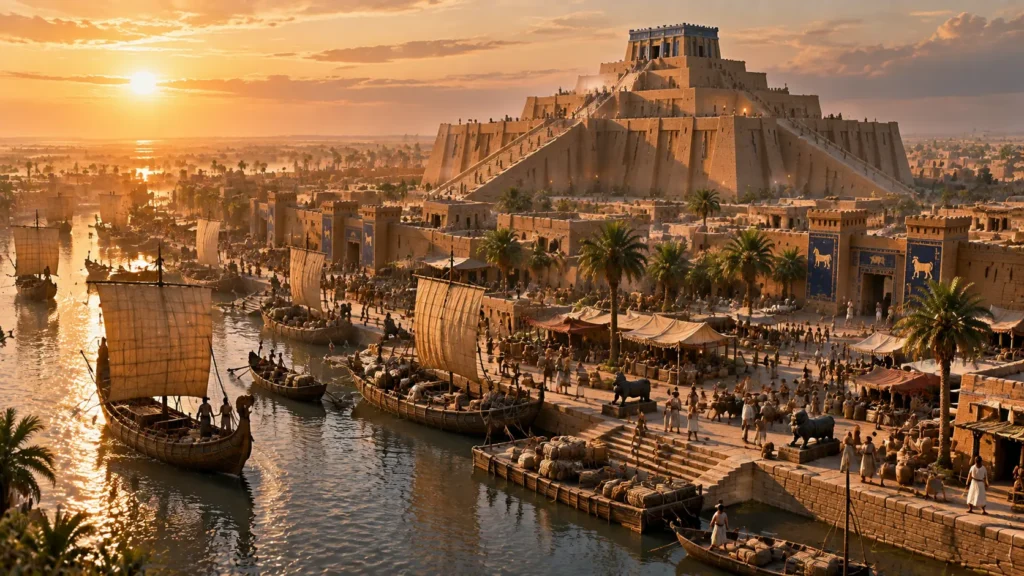
When exploring the origins of civilization, many ask: was Lagash an advanced city? The answer is an emphatic yes, but understanding its true scale requires a slight shift in how we view ancient geography. To ask what is Lagash is to uncover not just a single urban center, but a formidable political empire.
People frequently ask, was Lagash a city-state? and was Girsu a city-state? The reality is that the “State of Lagash” was a massive, unified territory encompassing several major urban centers. The three most important were Lagash (the original namesake city), Girsu (the religious and eventual political capital), and Nina-Sirara. Together, they formed one of the most powerful, heavily militarized, and culturally advanced city-states in southern Mesopotamia during the Early Dynastic period (c. 2900–2350 BCE).
Unlike the sacred neutrality of Nippur or the mythical origins of Eridu, Lagash was defined by its martial prowess and its relentless drive to defend its borders. It was a fiercely independent state, fiercely devoted to its patron deity, the warrior-god Ningirsu. The history of Lagash is carved in stone and written in blood—it is the story of ambitious rulers, monumental architecture, and the earliest recorded military conflicts in human history.
Where is Lagash Located Today? (Tell al-Hiba and Tello)
For modern history enthusiasts tracing the ancient map, a common question is: where is Lagash located today?
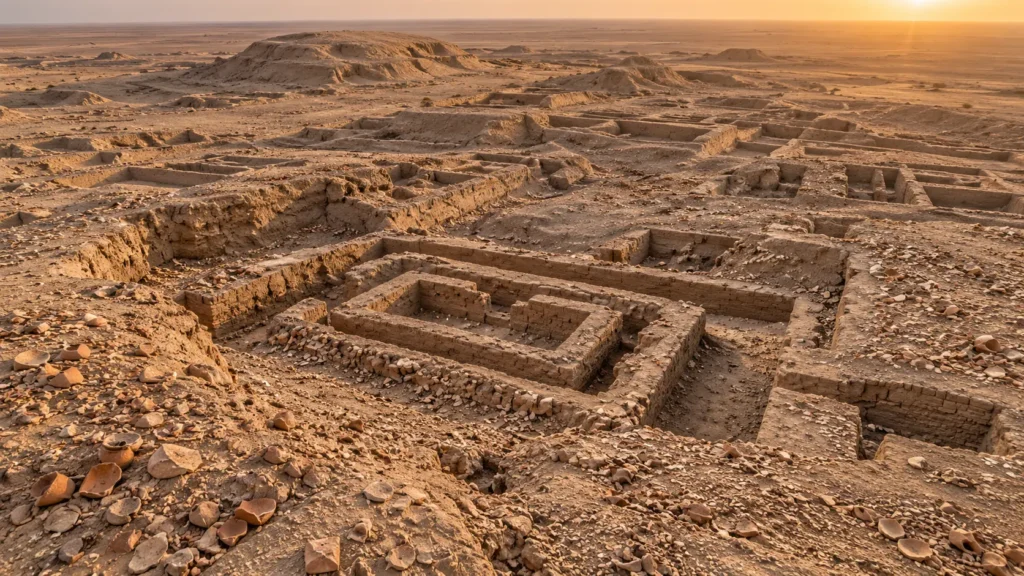
The ruins of the Lagash city-state are situated in the Dhi Qar Governorate of modern-day Iraq, roughly midway between the Tigris and Euphrates rivers, southeast of modern Uruk. Because the ancient state was comprised of multiple urban centers, archaeologists focus on two primary mounds (or tells) to answer what is Lagash called today:
- Tell al-Hiba (Ancient Lagash): Covering over 400 hectares, this is one of the largest archaeological mounds in the entire Middle East. This site was the original ancient city of Lagash. Since the late 1960s, monumental excavation projects, notably led by the University of Pennsylvania (UPenn), the Institute of Fine Arts at NYU, and later Cambridge University, have revealed massive temple platforms, administrative districts, and ancient breweries.
- Tello (Ancient Girsu): Located about 25 kilometers (15 miles) northwest of Tell al-Hiba, Tello was the sacred heart and the administrative capital of the Lagash state. First excavated by the French in the late 19th century, Girsu is where archaeologists discovered the vast majority of cuneiform tablets, royal statues, and monuments that tell the story of the Lagash kings.
The geography of Lagash was its greatest blessing and its biggest curse. It was located on the fertile, marshy plains near the Gu’edena—the “Edge of the Plain”—a highly productive agricultural zone fed by vital irrigation canals. Controlling this water-rich territory made Lagash an incredibly wealthy and advanced city, but it also placed it in a state of perpetual, violent conflict with its neighbors.
The Umma-Lagash War: History’s First Documented Border Conflict
If you ask a military historian, what is Lagash known for?, the answer will almost certainly center on a brutal, centuries-long rivalry. The prolonged conflict of Lagash vs Umma is a monumental milestone in the archaeological record: it is the earliest documented border war in human history.
At the heart of the Umma Lagash war was the Gu’edena (the “Edge of the Plain”). This was a highly fertile, heavily irrigated strip of agricultural land that lay exactly on the border between the two rival city-states. In ancient Sumer, water and arable land were the ultimate currencies of power. Whichever city controlled the canals of the Gu’edena controlled the wealth of the region.
The dispute lasted for generations, punctuated by broken treaties, diverted water sources, and violent skirmishes. However, the conflict reached its legendary climax during the reign of Eannatum, a powerful king (Ensi) of Lagash (c. 2450 BCE). When the ruler of Umma violated a previously established border treaty and marched into the Gu’edena, Eannatum responded with overwhelming force.
The Stele of the Vultures: A Masterpiece of Ancient Propaganda
Eannatum’s crushing victory over Umma was immortalized in one of the most famous artifacts of the ancient Near East: the Stele of the Vultures (discovered at Girsu and now housed in the Louvre).
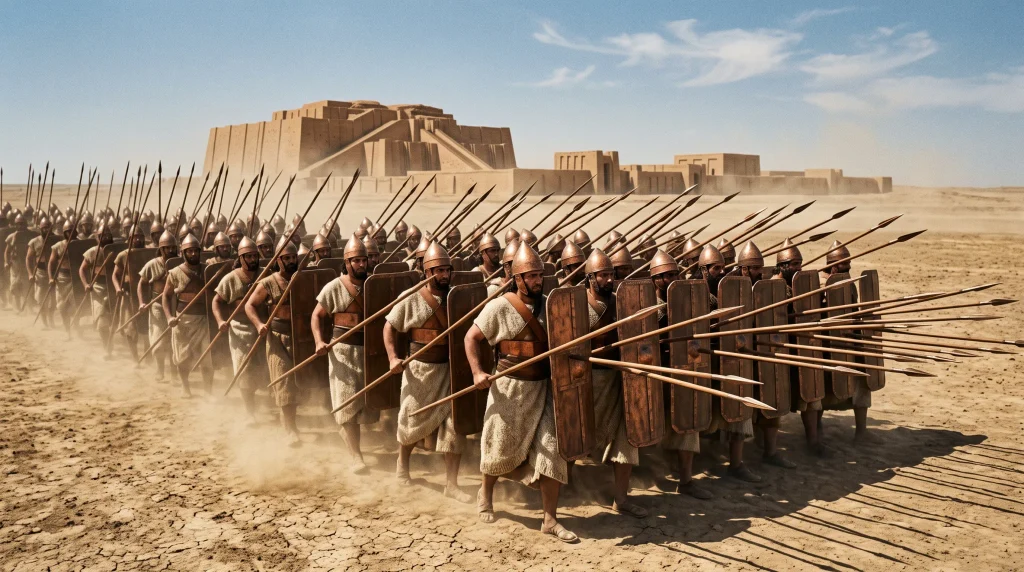
This fragmented limestone monument is the first historical depiction of organized warfare. It shows the army of Lagash advancing in a tightly packed phalanx formation, shields locked and spears protruding, trampling over the bodies of their defeated enemies. Above them, vultures are carved carrying away the severed heads of Umma’s soldiers—a terrifying warning to anyone who would challenge Lagash.
On the mythological side of the stele, the patron god Ningirsu is depicted holding a massive net filled with the squirming, captured enemies of Umma, striking them in the head with a mace. The Stele of the Vultures proves that Lagash was not just an advanced city, but a highly disciplined military superpower capable of executing complex battlefield tactics thousands of years before the Greeks or Romans.
Gudea of Lagash: The Ensi Who Erected and Restored
Following the collapse of the Akkadian Empire, much of Mesopotamia fell into a dark age under the rule of foreign invaders known as the Gutians. Yet, miraculously, the state of Lagash experienced a massive cultural and economic renaissance during this exact period (c. 2144–2124 BCE). This golden age was driven by its most famous ruler, Gudea.
Students of Mesopotamian history often encounter the specific trivia question: who was the ensi of Lagash who erected and restored? The answer is Gudea. Interestingly, he never claimed the title of Lugal (King). Instead, he preferred the humble title of Ensi (Governor), emphasizing that he was merely a servant ruling on behalf of the god Ningirsu.
Rather than pursuing military conquest like his predecessors, Gudea focused his massive wealth on domestic prosperity and monumental construction. He imported cedar wood from Lebanon, copper from Magan (Oman), and diorite stone from distant lands to completely rebuild the religious infrastructure of Girsu. His crowning achievement was the reconstruction of the Eninnu, the great temple complex dedicated to Ningirsu.
Gudea is incredibly famous in archaeology because he commissioned dozens of highly polished diorite statues of himself, placing them in temples across the city to eternally pray to the gods on his behalf.
Want to dive deeper into the life of Mesopotamia’s greatest builder? Read our complete biography of Ensi Gudea.
Urukagina and the World’s First Legal Reforms
Beyond military might and monumental architecture, Lagash is also the birthplace of one of humanity’s most important conceptual breakthroughs: social justice.
When analyzing whether Lagash was an advanced city, historians point to the reign of Urukagina (c. 2350 BCE). Long before the famous Code of Hammurabi was written in Babylon, the citizens of Lagash were suffering under severe economic oppression. Corrupt administrators and wealthy priests were heavily taxing the poor, seizing property, and exploiting widows and orphans.
Upon taking power, Urukagina instituted sweeping reforms to dismantle this corruption. He fired abusive tax collectors, protected the vulnerable from having their property seized by the rich, and cancelled crippling debts. In his inscriptions discovered at Girsu, we find the very first recorded use of the word for “freedom” or “liberty” in human history: the Sumerian word Amagi (literally meaning “return to the mother”).
Urukagina’s reign proved that the administration of Lagash was sophisticated enough to recognize that a city’s strength relied not just on its walls, but on the legal protection of its citizens.
Discover the full story of history’s first social reformer. Read our deep dive into the Reforms of Urukagina.
Frequently Asked Questions (FAQ)
What does Lagash mean and how is it pronounced?
In English, the city is pronounced LAH-gash. The exact translation of the Sumerian cuneiform name (written as LAGAŠ) is still debated by scholars, though some suggest it may have originally referred to a “storehouse” or a place of abundant provisions, fitting for its agriculturally rich location.
Was Lagash a Sumerian city?
Yes, but more accurately, it was a powerful Sumerian city-state. Rather than just a single urban center, the State of Lagash was a political entity that included three major cities: Lagash (the original settlement), Girsu (the religious and administrative capital), and Nina-Sirara, along with numerous smaller agricultural villages.
When was Lagash founded?
The earliest settlement layers at the site of Lagash (Tell al-Hiba) date back to the Ubaid period (around 5000–4000 BCE). However, it rose to true political and military prominence during the Early Dynastic III period (c. 2600–2350 BCE), when kings like Eannatum established it as a dominant military power.
When was Lagash taken over by the Babylonians and abandoned?
After enjoying a golden age under Gudea (c. 2144 BCE), Lagash eventually lost its independence. It was absorbed by the Third Dynasty of Ur, and later fell under the control of the Old Babylonian Empire (around the 18th century BCE) during the time of Hammurabi. As the Tigris and Euphrates rivers shifted and the vital irrigation canals dried up, the city was gradually abandoned by the mid-2nd millennium BCE.
Further Reading and External Resources
To explore the archaeological discoveries, royal inscriptions, and monumental artifacts of Lagash and Girsu in greater detail, we highly recommend consulting the archives of the institutions that excavated the region:
- The British Museum (The Girsu Project): The British Museum is currently leading a major archaeological initiative at Tello (ancient Girsu) to protect the site and uncover new administrative complexes. Explore The Girsu Project
- The Louvre Museum (Mesopotamian Antiquities): The Louvre holds the most important artifacts excavated from Girsu by early French archaeologists, including the famous Stele of the Vultures and the diorite statues of Gudea. View the Stele of the Vultures at the Louvre
- Penn Museum (Tell al-Hiba Excavations): The University of Pennsylvania conducted extensive excavations at the original city of Lagash (Tell al-Hiba), uncovering major architectural features of the Early Dynastic period. Explore Penn’s Lagash Archaeological Reports
- CDLI (Cuneiform Digital Library Initiative): For those interested in the primary sources, this joint project by UCLA and the Max Planck Institute digitizes the cuneiform administrative texts and royal inscriptions of Urukagina and Gudea. Search the CDLI Database for Lagash Texts