Introduction: The Ancient Sumerian City of Umma
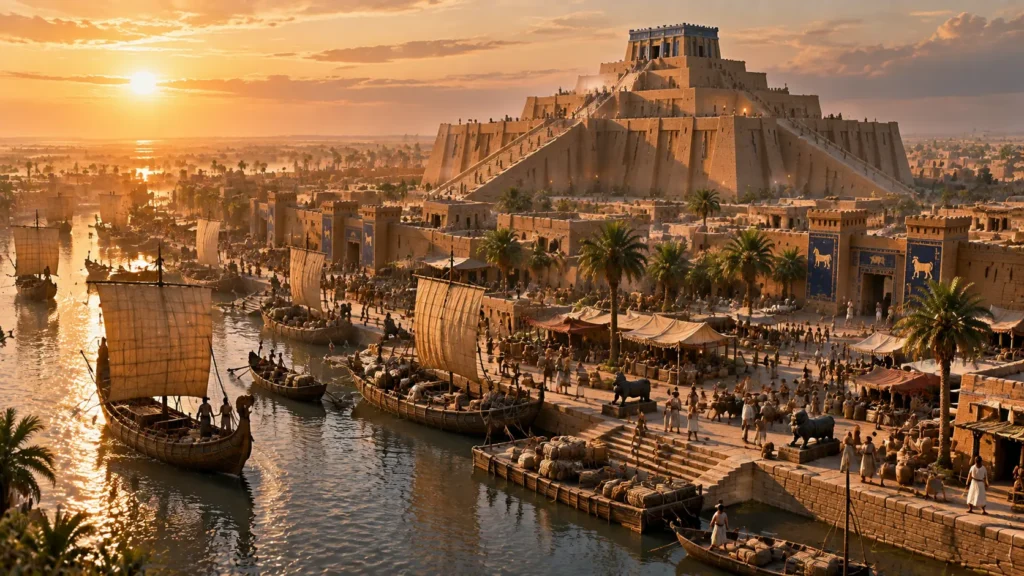
Umma was one of the most important city-states of ancient Sumer, a civilization that developed in southern Mesopotamia more than 5,000 years ago. Located in present-day Iraq, Umma became a major agricultural, political, and economic center during the Early Dynastic Period, when Sumer was divided into numerous independent cities competing for influence.
Unlike cities remembered mainly for monumental temples or royal capitals, Umma is especially known for its role in the complex political landscape of early Mesopotamia. The city became famous for its long rivalry with the neighboring city-state of Lagash, a conflict that represents one of the earliest documented territorial disputes in human history.
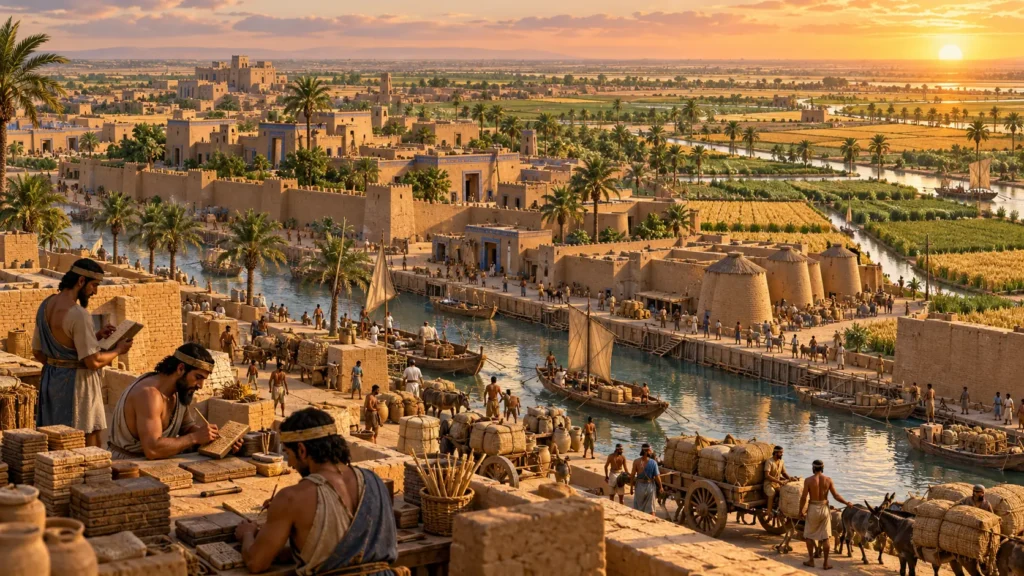
The power of Umma was built on its fertile lands, irrigation networks, and administrative organization. Its rulers controlled important agricultural territories, while thousands of surviving cuneiform tablets provide valuable information about farming, taxation, labor, and daily economic life in ancient Sumer.
Archaeological discoveries from Umma reveal a city deeply connected to the development of early states, showing how competition for resources, political authority, and agricultural land shaped the rise of the world’s first urban civilizations.
Where Was Umma Located in Ancient Mesopotamia?
Umma was located in southern Mesopotamia, in the region known as Sumer, an area between the Tigris and Euphrates rivers that became one of the earliest centers of urban civilization. The ancient city was situated in what is now southern Iraq, within a landscape shaped by fertile plains, irrigation canals, and agricultural settlements.
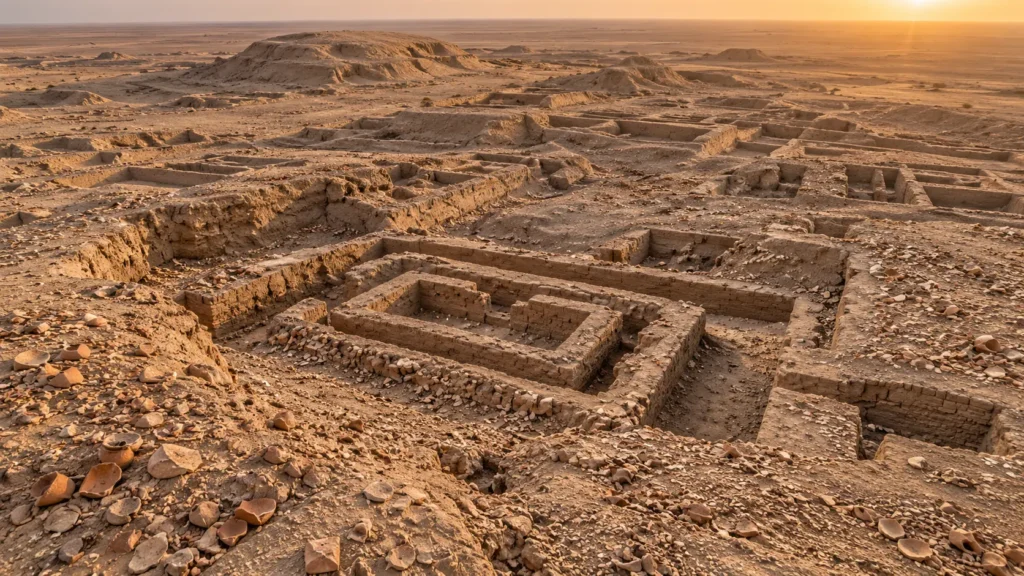
The archaeological remains traditionally associated with Umma are located at the site of Tell Jokha, in modern-day Iraq. The exact identification and boundaries of the ancient city have been the subject of archaeological discussion, as the region contains several important ancient settlements that developed close to one another over thousands of years.
The location of Umma was especially significant because the city controlled valuable agricultural lands and irrigation systems. In ancient Sumer, access to fertile fields and water channels was essential for economic and political power. Cities were not only centers of population but also controlled the agricultural resources that supported their communities.
Umma was located relatively close to other important Sumerian city-states, including:
- Lagash, its main rival and neighboring city-state.
- Uruk, one of the largest urban centers of early Mesopotamia.
- Ur, which later became one of the most powerful cities in southern Mesopotamia.
- Nippur, an important religious center of Sumer.
This strategic position placed Umma within one of the most competitive regions of ancient Sumer, where city-states constantly negotiated, competed, and sometimes fought over land, water, and political influence.
The Rise of Umma as a Powerful Sumerian City-State
During the Early Dynastic Period of Mesopotamia (approximately 2900–2350 BCE), Umma developed into one of the most influential city-states of Sumer. Like other major Sumerian cities, Umma functioned as an independent political entity with its own ruler, religious institutions, administrative system, and economic networks.
The strength of Umma was closely connected to agriculture. The fertile lands surrounding the city allowed its population to produce large quantities of grain and other agricultural goods, while irrigation networks helped transform the challenging environment of southern Mesopotamia into productive farmland.
Control over agricultural territory was one of the main sources of power in Sumer. A city’s wealth depended not only on its temples and population but also on its ability to manage land, labor, and water resources.
Umma developed sophisticated administrative systems to organize these resources. Thousands of surviving clay tablets from different periods provide evidence of:
- Agricultural production.
- Land management.
- Labor organization.
- Distribution of goods.
- Temple and state administration.
These records reveal that Umma was not simply a military rival of neighboring cities but also an important economic center with a highly developed bureaucracy.
The history of Umma demonstrates one of the defining characteristics of early Mesopotamian civilization: cities were independent powers that competed for resources while simultaneously developing the administrative structures that would shape the first states in human history.
Umma and the Struggle for Power in Early Sumer
The history of Umma is closely connected with the political competition that defined early Sumer. Unlike later empires that controlled large territories from a single capital, early Mesopotamia was divided into multiple city-states that constantly sought greater influence.
Umma’s power came from its control of productive agricultural lands, but these same resources also brought it into conflict with neighboring cities. The most famous rivalry was with Lagash, another important Sumerian city-state located nearby.
The dispute between Umma and Lagash centered on control of fertile border territories and irrigation resources. These conflicts provide some of the earliest written evidence of organized disputes between political entities in human history.
Although warfare between cities was common in ancient Sumer, the conflict between Umma and Lagash is especially valuable to historians because it was documented through inscriptions and monuments created by contemporary rulers.
The rivalry shows that early Sumerian cities were already developing:
- Formal political authority.
- Organized armies.
- Administrative systems.
- Written records used to justify claims and preserve historical memory.
The story of Umma is therefore not only the story of a single city, but also an example of how competition between early states helped shape the political landscape of ancient Mesopotamia.
Umma and Lagash: One of the Earliest Recorded Territorial Conflicts
One of the most famous episodes in the history of Umma was its long rivalry with the neighboring city-state of Lagash. Their conflict represents one of the earliest documented territorial disputes in human history and provides important evidence about politics, warfare, and resource management in early Sumer.
The rivalry between Umma and Lagash was mainly connected to the control of a fertile border region known as Gu’edena, an agricultural area located between the two city-states. In southern Mesopotamia, where agriculture depended heavily on irrigation systems, controlling productive land and access to water was essential for maintaining economic and political power.
The dispute was not simply a military confrontation. It reflected the complex relationship between early Sumerian city-states, where rulers used inscriptions, monuments, and administrative records to defend their territorial claims and demonstrate their authority.
The Battle for Gu’edena: Land, Water, and Political Authority
The territory of Gu’edena became the center of repeated conflicts between Umma and Lagash. Both cities claimed control over this valuable agricultural region, which provided resources necessary to support their populations and institutions.
The conflict demonstrates how closely connected agriculture and politics were in ancient Sumer. Land was not only a source of food but also a foundation of state power. A city that controlled more agricultural territory could support larger populations, maintain stronger armies, and strengthen its influence over neighboring regions.
Rulers from both Umma and Lagash recorded their claims through inscriptions, presenting themselves as legitimate defenders of their city’s interests. These records provide historians with some of the earliest examples of political communication and territorial justification in written history.
The Stele of the Vultures and the Memory of the Conflict
The conflict between Umma and Lagash is especially famous because of the Stele of the Vultures, a monument created during the reign of Eannatum of Lagash around the 25th century BCE.
The monument depicts scenes of warfare and religious symbolism, presenting Eannatum’s victory over Umma as a divinely supported achievement. It is one of the earliest known examples of a historical monument combining military events, political messaging, and religious authority.
Although the stele primarily represents the perspective of Lagash, it remains an important source for understanding the rivalry because it shows how early rulers used written and visual records to preserve their version of historical events.
For Umma, the conflict reveals the importance of the city as a powerful regional competitor. The fact that Umma appears as a major rival to Lagash demonstrates that it was not a minor settlement, but one of the influential powers of Early Dynastic Sumer.
Why the Umma–Lagash Conflict Matters in History
The rivalry between Umma and Lagash provides a rare glimpse into the political world of early Mesopotamian cities. It shows that thousands of years before the rise of large empires, independent city-states were already developing systems of government, diplomacy, territorial claims, and organized warfare.
The conflict also highlights a fundamental reality of ancient Sumer: controlling resources was essential for survival and power. Agricultural land, irrigation networks, and economic administration shaped the relationships between cities and influenced the development of the world’s earliest states.
Through its rivalry with Lagash, Umma became one of the most historically significant examples of how competition between early cities shaped Mesopotamian civilization.
The Kings and Rulers of Umma
Like other Sumerian city-states, Umma was governed by rulers who controlled religious institutions, agricultural resources, military forces, and administrative systems. These leaders were responsible for defending the city’s interests, managing its economy, and maintaining the authority of Umma within the competitive political environment of early Mesopotamia.
The rulers of Umma are known through a combination of archaeological evidence, royal inscriptions, and later Mesopotamian traditions. Their records provide valuable insight into how early Sumerian cities were governed and how rulers used writing to establish their legitimacy.
Unlike later kings who ruled large territorial empires, the rulers of Umma were originally city-state leaders whose power depended on controlling local resources, agricultural land, and alliances with neighboring cities.
Early Rulers of Umma and the Rise of City-State Power
The earliest rulers of Umma emerged during the Early Dynastic Period, when southern Mesopotamia was divided into competing independent cities. Their authority was closely connected to the city’s agricultural wealth and its ability to organize labor and resources.
Royal inscriptions from this period often focused on themes that were central to Sumerian political identity:
- Protecting the city’s territory.
- Building and restoring temples.
- Maintaining relationships with the gods.
- Defeating political rivals.
These inscriptions were not simply historical records; they were also statements of power designed to demonstrate that a ruler had the support of both the population and the divine world.
The rulers of Umma used these traditions to reinforce their position as defenders of the city and its resources.
Lugal-Zage-Si: The Most Powerful King of Umma
The most famous ruler associated with Umma was Lugal-Zage-Si, who transformed the city from a regional power into one of the dominant forces in southern Mesopotamia during the late Early Dynastic Period.
Originally the ruler of Umma, Lugal-Zage-Si expanded his influence beyond his home city and eventually gained control over several important Sumerian centers, including Uruk and Ur. His rise represented one of the final stages of independent city-state competition before the creation of the Akkadian Empire under Sargon of Akkad.
Lugal-Zage-Si is significant because his reign shows the changing political landscape of Mesopotamia. The traditional system of competing city-states was beginning to give way to larger territorial kingdoms that sought to unite multiple cities under a single ruler.
Although his reign was relatively short, Lugal-Zage-Si represents the peak of Umma’s political influence and remains one of the most important figures connected with the city’s history.
The Political Legacy of Umma’s Rulers
The rulers of Umma played an important role in the development of early Mesopotamian politics. Through conflicts, alliances, and administration, they contributed to the gradual transformation of Sumer from a collection of independent cities into larger political structures.
The history of Umma’s rulers demonstrates that power in ancient Sumer was built on more than military strength. Successful leaders needed to manage agricultural production, maintain religious legitimacy, organize administration, and compete for influence among neighboring city-states.
Through its rulers, Umma provides an important example of how early political systems developed in one of the world’s first civilizations.
The Archaeology of Umma: Tablets, Temples and Administrative Records
The archaeological remains of Umma provide one of the most valuable sources for understanding how early Sumerian cities functioned. Although the city is not as famous for monumental architecture as Uruk or Ur, the discoveries connected with Umma have transformed historians’ understanding of administration, agriculture, and daily economic life in ancient Mesopotamia.
Much of Umma’s historical importance comes from the thousands of clay tablets associated with the city. These documents preserve information about agricultural production, land management, taxation, labor organization, and the movement of goods, offering a detailed picture of how one of the world’s earliest urban societies operated.
The evidence from Umma shows that Sumerian cities were not only centers of temples and kings but also highly organized administrative systems capable of managing complex economies.
Excavations at the Ancient Site of Umma
The remains traditionally associated with Umma are located at Tell Jokha in modern Iraq, where archaeological investigations have revealed evidence of a long-lived Sumerian settlement.
Unlike some Mesopotamian cities where large monumental structures dominate the archaeological record, Umma’s importance has been revealed largely through its written archives and administrative remains.
Excavations and research in the region have uncovered evidence of:
- Residential areas.
- Religious buildings.
- Administrative spaces.
- Agricultural management systems.
- Clay tablets containing economic records.
These discoveries help reconstruct the organization of Umma as a functioning city-state rather than simply a political name mentioned in ancient texts.
The Umma Tablets: Records of Sumerian Economic Life
The administrative tablets from Umma are among the most important collections of written evidence from ancient Sumer. These clay documents record the everyday activities that supported the city’s economy, including agricultural production, labor assignments, and the distribution of resources.
Many tablets document:
- Grain production and storage.
- Allocation of fields.
- Payments to workers.
- Livestock management.
- Temple and state administration.
Unlike royal inscriptions that often focused on victories and achievements, these administrative documents provide a view of ordinary life in ancient Mesopotamia.
Through the archives of Umma, researchers can study how ancient Sumerians organized farming, managed institutions, and maintained one of the earliest bureaucratic systems in human history.
Umma and the Development of Mesopotamian Administration
The records from Umma demonstrate the extraordinary level of organization achieved by early Mesopotamian societies.
Managing a city-state required systems capable of coordinating thousands of people, including farmers, craftsmen, officials, and workers connected to temples and royal institutions. Written records allowed administrators to track resources and make decisions across complex economic networks.
The administrative traditions preserved at Umma reveal an important aspect of Sumerian civilization: writing developed not only as a means of recording stories or royal achievements but also as a practical tool for managing society.
For this reason, Umma occupies a special place in the study of ancient Mesopotamia. Its tablets provide a rare connection between the political history of Sumer and the everyday activities that sustained its cities.
Why the Discoveries of Umma Matter Today
The archaeological and written evidence from Umma allows historians to understand aspects of ancient life that would otherwise remain unknown.
Through the city’s tablets and remains, researchers can explore:
- How ancient farmers managed agricultural production.
- How early governments organized resources.
- How temples and rulers controlled economic activity.
- How writing supported the growth of complex societies.
Umma’s legacy is therefore not based only on its conflicts with neighboring cities, but also on its contribution to our understanding of how the first urban civilizations were administered.
Umma During the Ur III Period
After the rise and fall of independent Sumerian city-states, Umma entered a new phase of its history during the Third Dynasty of Ur (approximately 21st century BCE). During this period, southern Mesopotamia was unified under the rule of the kings of Ur, creating one of the most centralized states the ancient Near East had seen up to that time.
Although Umma no longer acted as an independent rival power like it had during the Early Dynastic Period, the city remained an important economic and administrative center within the Ur III state.
The importance of Umma during this period is especially visible through its extensive administrative archives. Thousands of clay tablets from Umma provide detailed information about agricultural production, taxation, labor organization, and the management of resources under the centralized administration of Ur.
Umma as an Agricultural and Administrative Center
Under Ur III rule, Umma became an important provincial center responsible for managing agricultural resources and supporting the wider state economy.
The city’s fertile lands continued to make it valuable, as agricultural production formed the foundation of Mesopotamian wealth. Administrators at Umma recorded the movement of grain, livestock, labor assignments, and other resources required to maintain the economic system of the Ur III kingdom.
The surviving documents from Umma reveal the scale of this organization. Officials carefully tracked:
- Field cultivation.
- Harvests and grain storage.
- Worker assignments.
- Livestock management.
- Payments and deliveries.
These records demonstrate how the rulers of Ur created a highly organized administrative network that connected cities across southern Mesopotamia.
The Umma Archives and Daily Life Under Ur III Rule
The tablets from Umma provide one of the most detailed views of everyday economic activity in ancient Mesopotamia.
Unlike royal inscriptions, which often focus on military victories or the achievements of rulers, administrative documents reveal the practical reality of running an ancient state.
They provide information about:
- Farmers working state-controlled lands.
- Officials responsible for collecting and distributing goods.
- Temple and palace institutions.
- The organization of skilled and unskilled labor.
Through these records, historians can study how ordinary people participated in one of the earliest complex bureaucratic systems in history.
The Changing Role of Umma in Mesopotamian History
The transition from an independent city-state to a provincial center reflects a broader transformation in Mesopotamian politics.
During the Early Dynastic Period, cities such as Umma, Kish, Lagash, and Uruk competed for regional dominance. By the Ur III period, many of these cities became integrated into larger territorial states controlled by powerful dynasties.
However, this change did not reduce Umma’s importance. Instead, the city gained a different historical role: it became one of the best-documented examples of how ancient Mesopotamian governments managed agriculture, labor, and administration on a large scale.
The archives of Umma continue to provide some of the clearest evidence for understanding how the world’s first bureaucratic states functioned.
Umma Compared With Other Sumerian Cities
Ancient Sumer was formed by a network of powerful city-states, each with its own identity, traditions, and historical importance. Cities such as Uruk, Ur, Kish, Eridu, and Umma contributed in different ways to the development of Mesopotamian civilization.
While some cities became famous for monumental architecture or royal dynasties, Umma is remembered primarily for its political influence, agricultural wealth, rivalry with neighboring states, and exceptionally valuable administrative records.
Understanding the differences between these cities helps explain the complexity of the first urban civilization in human history.
Umma and Kish: Different Forms of Early Political Power
Both Umma and Kish were important Sumerian cities, but their historical roles developed in different ways.
Kish became strongly associated with early traditions of kingship and political authority. Ancient Mesopotamian traditions connected Kish with the beginnings of Sumerian royal power and the concept of legitimate rule.
Umma, on the other hand, became known for its economic strength, agricultural resources, and political competition with neighboring city-states. Its importance came from controlling productive land and maintaining a powerful administrative system.
While Kish represents the symbolic origins of kingship in Sumerian tradition, Umma represents the practical realities of managing resources and competing for influence.
Internal link opportunity:
→ Explore Kish, the ancient Sumerian city connected with early kingship traditions.
Umma and Uruk: Administration and the Growth of Urban Civilization
Uruk is one of the most famous cities of ancient Mesopotamia because of its role in the development of large-scale urban life, monumental architecture, and early writing traditions.
Umma developed in a different direction. Rather than being remembered primarily as a center of early urban innovation, it provides historians with detailed evidence of how a city-state managed agriculture, labor, and economic resources.
The archives from Umma reveal the administrative systems behind Sumerian civilization, showing how cities functioned after they had developed into complex political and economic organizations.
Internal link opportunity:
→ Discover Uruk, one of the world’s earliest major cities.
Umma and Ur: From Independent City-State to Regional Administration
Ur and Umma experienced very different historical trajectories.
Ur became one of the greatest powers of southern Mesopotamia, especially during the Third Dynasty of Ur, when it controlled a large centralized state and built monumental structures such as the Great Ziggurat.
Umma, although never becoming the capital of a comparable empire, played an important role within this wider political system. During the Ur III period, it became a major administrative center whose records provide detailed information about how the state managed agriculture and labor.
The relationship between Ur and Umma shows the transformation of Mesopotamia from competing city-states into larger territorial kingdoms.
Internal link opportunity:
→ Learn about Ur, the royal city of ancient Mesopotamia.
Umma and Eridu: Economic Power and Religious Tradition
Eridu holds a special place in Mesopotamian tradition as one of the oldest settlements and an important religious center associated with the god Enki.
Umma represents a different aspect of Sumerian civilization. Its importance was based less on religious mythology and more on economic organization, agricultural production, and political competition.
Together, these cities demonstrate the diversity of early Mesopotamian civilization. Some cities became important because of religious traditions, while others gained influence through administration, resources, and political power.
Internal link opportunity:
→ Discover Eridu, one of the earliest cities of ancient Mesopotamia.
Why Umma Remains Important in Mesopotamian History
Umma’s significance comes from its ability to reveal how ancient cities actually functioned.
Through its conflicts, rulers, and administrative archives, Umma provides a detailed picture of the foundations that supported early civilization:
- Agricultural organization.
- Management of resources.
- Political competition.
- Bureaucratic systems.
- Written administration.
While cities such as Uruk, Ur, and Kish often dominate discussions of Sumerian history, Umma offers a different perspective: the story of how everyday systems of power and administration allowed the world’s first cities to survive and compete.
Frequently Asked Questions About Umma
What was Umma in ancient Mesopotamia?
Umma was an ancient Sumerian city-state located in southern Mesopotamia. It became an important political, agricultural, and economic center during the Early Dynastic Period and was known for its rivalry with the neighboring city of Lagash.
Unlike cities remembered mainly for monumental buildings, Umma is especially important because of its administrative archives, agricultural records, and role in the political competition between early Sumerian states.
Where was the ancient city of Umma located?
The ancient city of Umma was located in southern Mesopotamia, in modern-day Iraq. The archaeological remains traditionally associated with Umma are found at Tell Jokha, within the region that was once part of ancient Sumer.
Its location placed Umma among several important Sumerian cities, including Lagash, Uruk, Ur, and Nippur.
What was Umma famous for?
Umma was famous for several aspects of Sumerian history:
- Its long rivalry with the city-state of Lagash.
- Its control of valuable agricultural lands.
- Its important role in early Mesopotamian politics.
- Its extensive collection of administrative cuneiform tablets.
The records from Umma provide some of the most detailed information available about economic life and government administration in ancient Sumer.
Why did Umma and Lagash fight?
Umma and Lagash fought mainly over control of the fertile Gu’edena territory, an agricultural region located between the two city-states.
The dispute was connected to access to farmland, irrigation resources, and political influence. Their conflict is one of the earliest documented examples of a territorial dispute between organized states.
Who was the most famous king of Umma?
The most famous ruler associated with Umma was Lugal-Zage-Si, who transformed the city into one of the dominant powers of southern Mesopotamia during the late Early Dynastic Period.
After gaining control of several important Sumerian cities, including Uruk and Ur, Lugal-Zage-Si briefly ruled a large part of Sumer before being defeated by Sargon of Akkad.
What are the Umma tablets?
The Umma tablets are ancient clay documents containing administrative records from the city of Umma. They provide information about agriculture, labor, taxation, land management, and economic organization in ancient Mesopotamia.
These tablets are among the most valuable sources for understanding how Sumerian cities managed complex economies and bureaucratic systems.
Was Umma one of the first cities in Sumer?
Umma was among the important cities of ancient Sumer, although it was not necessarily the earliest settlement in Mesopotamia.
Cities such as Eridu and Uruk are often associated with the earliest stages of urban development, while Umma became especially significant during the period when Sumerian city-states competed for political and economic power.
How was Umma different from other Sumerian cities?
Umma was different because its historical importance comes mainly from administration, agriculture, and political rivalry.
While Uruk is famous for early urban development and writing, Kish for kingship traditions, and Ur for royal power, Umma provides one of the clearest views of how a Sumerian city managed resources, territory, and economic systems.