Fernando Espejel Arroyo

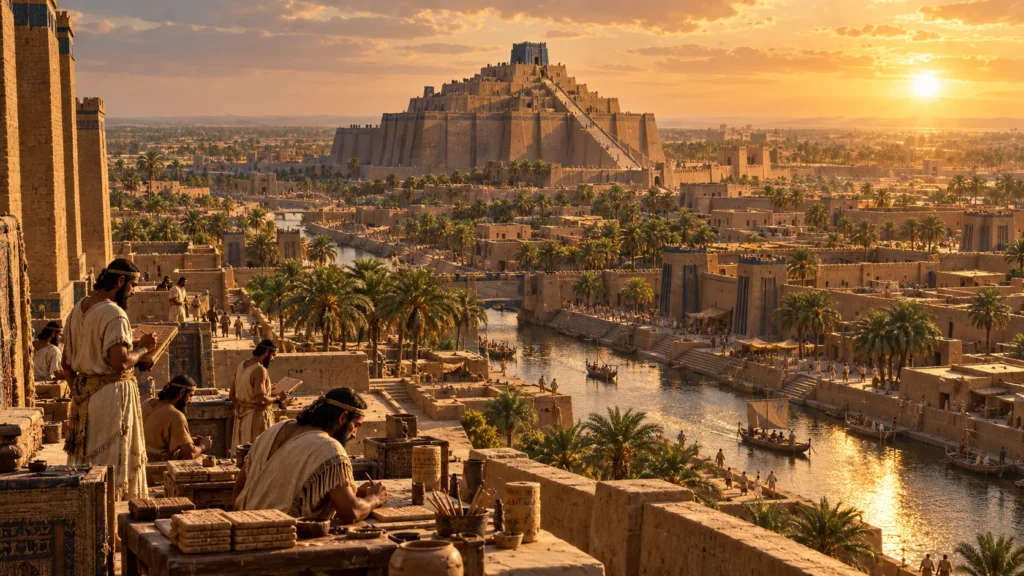
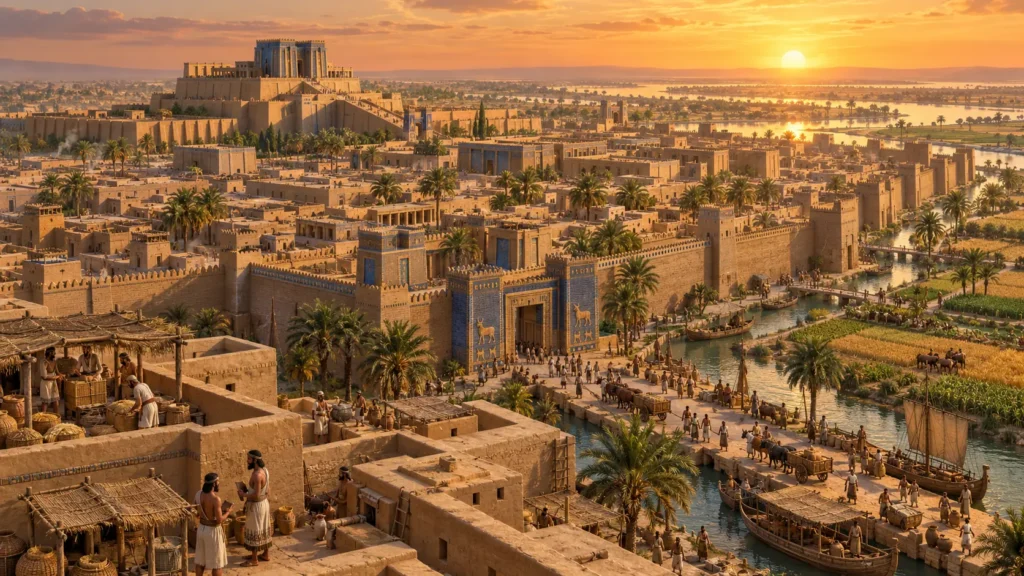
Historical reconstruction of Kish, an ancient Sumerian city in Mesopotamia with mudbrick buildings, temples, canals, and early urban life

Kish: The Ancient Sumerian City That Shaped Early Mesopotamia

Introducción Kish was one of the most important cities of ancient Sumer, a civilization that emerged in southern Mesopotamia more than 5,000 years ago. Located in present-day Iraq, near the modern city of Hillah and the ancient centers of Babylon and Babylonian civilization, Kish became a major political and cultural center during the early history

Kish: The Ancient Sumerian City That Shaped Early Mesopotamia Read More »
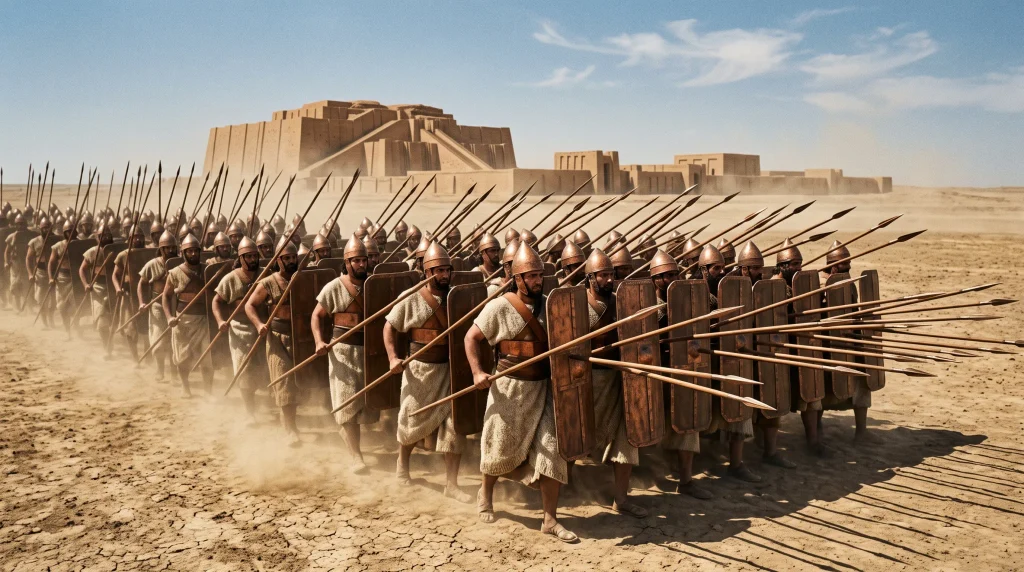
Hyper-realistic historical reconstruction of the ancient Sumerian army of Lagash marching in a disciplined infantry phalanx formation with shields and spears, inspired by the Stele of the Vultures.

Lagash and Girsu: The Warrior City-State of Ancient Sumer

When exploring the origins of civilization, many ask: was Lagash an advanced city? The answer is an emphatic yes, but understanding its true scale requires a slight shift in how we view ancient geography. To ask what is Lagash is to uncover not just a single urban center, but a formidable political empire. People frequently

Lagash and Girsu: The Warrior City-State of Ancient Sumer Read More »

Hyper-realistic architectural reconstruction of the ancient Sumerian city of Nippur at sunset, featuring the stepped mudbrick Ziggurat of Enlil (Ekur), flat-roofed houses, and the Shatt-en-Nil canal.

Nippur: The Sacred City of Sumer and the Temple of Enlil

When asking, was Nippur an ancient city?, the word “city” barely captures its true magnitude. If Uruk was the birthplace of the metropolis and Ur was the seat of imperial wealth, Nippur was the undisputed Vatican of ancient Mesopotamia. It was the spiritual axis of the universe, the dwelling place of Enlil—the Lord of the

Nippur: The Sacred City of Sumer and the Temple of Enlil Read More »

The Best Historical Fiction Novels Set in Ancient Mesopotamia

When historical fiction readers look for their next epic adventure, the market is usually flooded with novels set in ancient Rome, Tudor England, or Pharaonic Egypt. But what about the true cradle of civilization? Finding high-quality historical fiction novels set in ancient Mesopotamia—spanning the mudbrick metropolises of Sumer to the iron-fisted empires of Assyria and

The Best Historical Fiction Novels Set in Ancient Mesopotamia Read More »

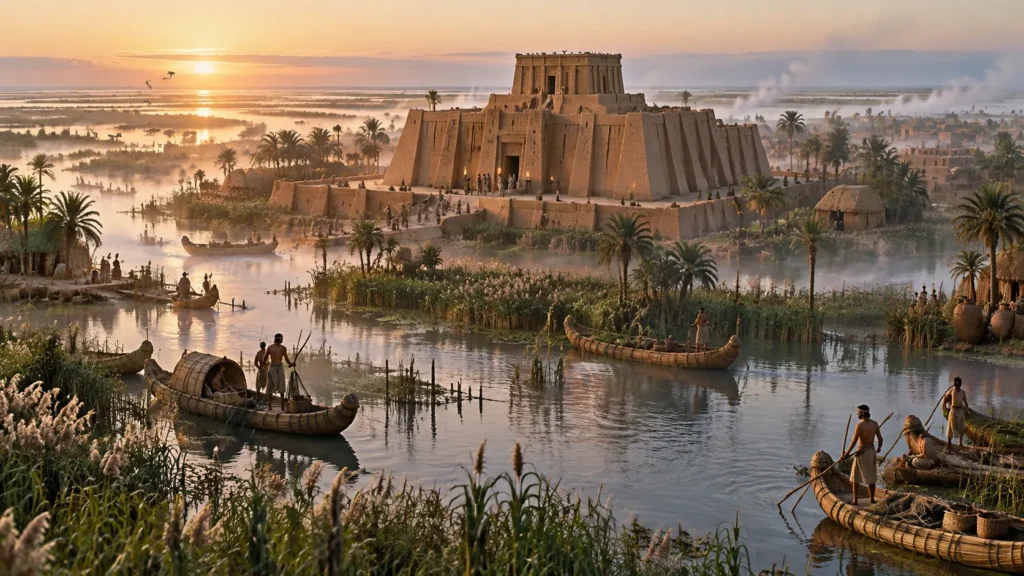
Hyper-realistic architectural reconstruction of the ancient Sumerian city of Eridu located in the lush freshwater marshes, featuring the mudbrick E-Abzu temple dedicated to Enki and traditional reed boats.

Eridu: The Oldest City in the World and the Origins of Mesopotamia

According to ancient Sumerian tradition, human civilization began in one specific place. As the famous Sumerian King List proclaims: “When kingship was lowered from heaven, the kingship was in Eridu.” For archaeologists and historians, the question “Is Eridu the oldest city in the world?” is a subject of intense debate. While places like Jericho or

Eridu: The Oldest City in the World and the Origins of Mesopotamia Read More »

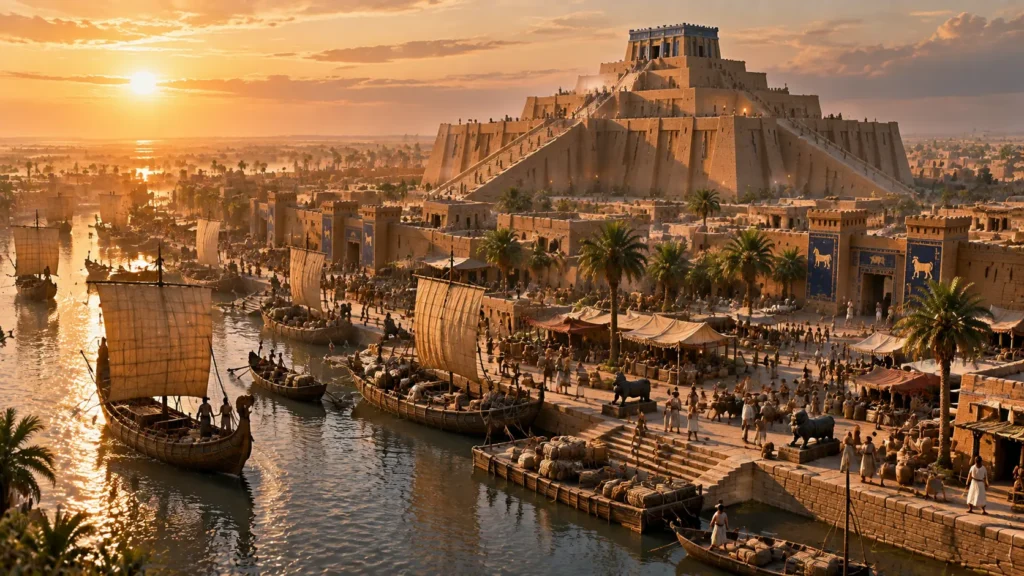
Hyper-realistic architectural reconstruction of the ancient Sumerian city of Ur during the Bronze Age, featuring the monumental Great Ziggurat of Ur with its three staircases, and a bustling river port on the Euphrates.

Ur: The Ancient City of the Royal Tombs and the Great Ziggurat

If Uruk represents the birth of the metropolis, the city-state of Ur represents the absolute zenith of Sumerian wealth, imperial power, and bureaucratic mastery. For centuries, Ur was the glittering jewel of southern Mesopotamia, a bustling commercial port where ships from as far away as the Indus Valley docked to trade exotic goods for Sumerian

Ur: The Ancient City of the Royal Tombs and the Great Ziggurat Read More »

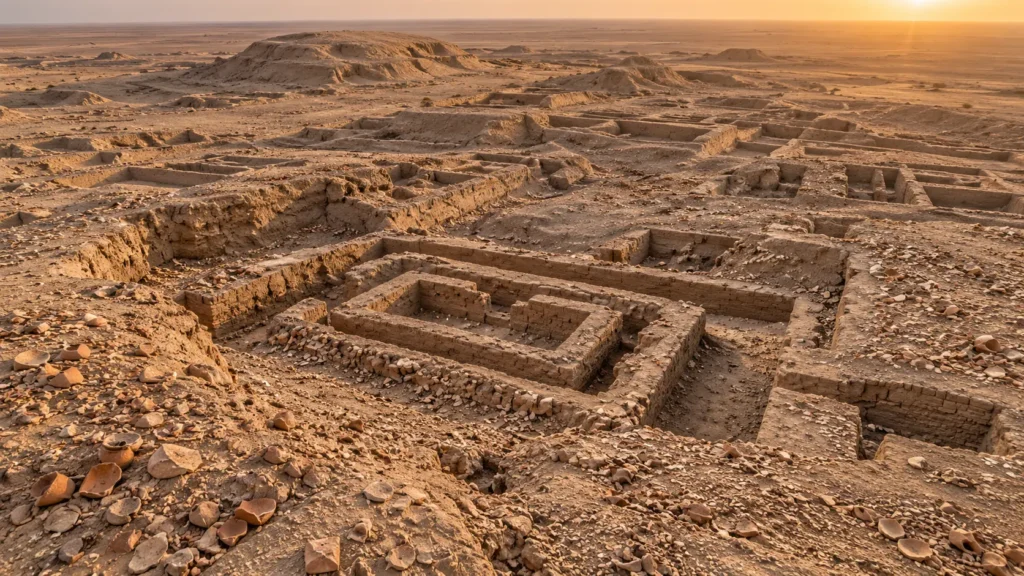
Aerial view of the archaeological site of Warka in Iraq, showing eroded mudbrick mounds, excavation trenches, and scattered pottery from the ancient Sumerian city of Uruk.

Uruk: The First Metropolis of Ancient Mesopotamia

Long before the marble columns of Athens, the legions of Rome, or the Hanging Gardens of Babylon, there was Uruk. In the study of human history, the transition from scattered, egalitarian farming villages to complex, stratified urban societies did not happen everywhere at once. It happened first in southern Mesopotamia, and its absolute epicenter was

Uruk: The First Metropolis of Ancient Mesopotamia Read More »

The Best Museums for Ancient Mesopotamian Artifacts: A Visitor’s Guide

Reading about the cradle of civilization is fascinating, but standing three feet from a 4,000-year-old cuneiform tablet is a completely different experience. You are not just looking at an old object; you are confronting the oldest recorded moments of human thought, pressed into clay by someone who never imagined you would be standing there five

The Best Museums for Ancient Mesopotamian Artifacts: A Visitor’s Guide Read More »

The Best Books on Ancient Mesopotamia: A Reading Guide for Beginners & History Buffs

Diving into the history of ancient Mesopotamia can feel like stepping into a labyrinth. You are dealing with more than 3,000 years of history, a dizzying succession of empires—Sumerians, Akkadians, Babylonians, and Assyrians—and cities that have been buried under the sands of Iraq for millennia. Because the subject is so vast, finding the right book

The Best Books on Ancient Mesopotamia: A Reading Guide for Beginners & History Buffs Read More »

Assyria in the Bible: History, Captivity, and Ancient Prophecies

Who Were the Ancient Assyrians in the Bible? When readers encounter the ancient Assyrians in the Bible, they are introduced to the ultimate antagonist of the Old Testament. Before Babylon or Rome cast their shadows over the biblical narrative, Assyria was the apex predator of the ancient Middle East. However, before they became a sprawling,

Assyria in the Bible: History, Captivity, and Ancient Prophecies Read More »

Pharaoh Akhenaten: The Religious Revolution, Nefertiti, and the Sun Cult of Aten

Pharaoh Akhenaten (reigned c. 1353–1336 BCE), originally ascending the throne as Amenhotep IV, remains one of the most enigmatic, controversial, and transformative figures in ancient Egyptian history. Ruling during the late Eighteenth Dynasty (New Kingdom), he executed a radical religious, artistic, and political upheaval by rejecting the traditional polytheistic pantheon headed by Amun-Ra of Thebes.

Pharaoh Akhenaten: The Religious Revolution, Nefertiti, and the Sun Cult of Aten Read More »

Pharaoh Thutmose III: The Military Genius and Empire Builder of Ancient Egypt

Pharaoh Thutmose III (reigned c. 1479–1425 BCE), ruling under the throne name Menkheperre, is recognized as the supreme military strategist and empire-builder of ancient Egypt’s Eighteenth Dynasty (New Kingdom). Co-ruling during his early years with his stepmother and aunt Hatshepsut, Thutmose III launched an unprecedented era of imperial expansion upon assuming sole power. Conducting at

Pharaoh Thutmose III: The Military Genius and Empire Builder of Ancient Egypt Read More »

Pharaoh Narmer: The Unifier of Ancient Egypt and Founder of the First Dynasty

Pharaoh Narmer (fl. c. 3100 BCE) stands as the foundational monarch in ancient Egyptian historical tradition. Ruling at the dawn of the Early Dynastic Period (Dynasty 1), he orchestrated the political and military integration of Upper Egypt (the southern Nile Valley) and Lower Egypt (the northern Nile Delta). Through this unification (Sema-Tawy), Narmer instituted the

Pharaoh Narmer: The Unifier of Ancient Egypt and Founder of the First Dynasty Read More »

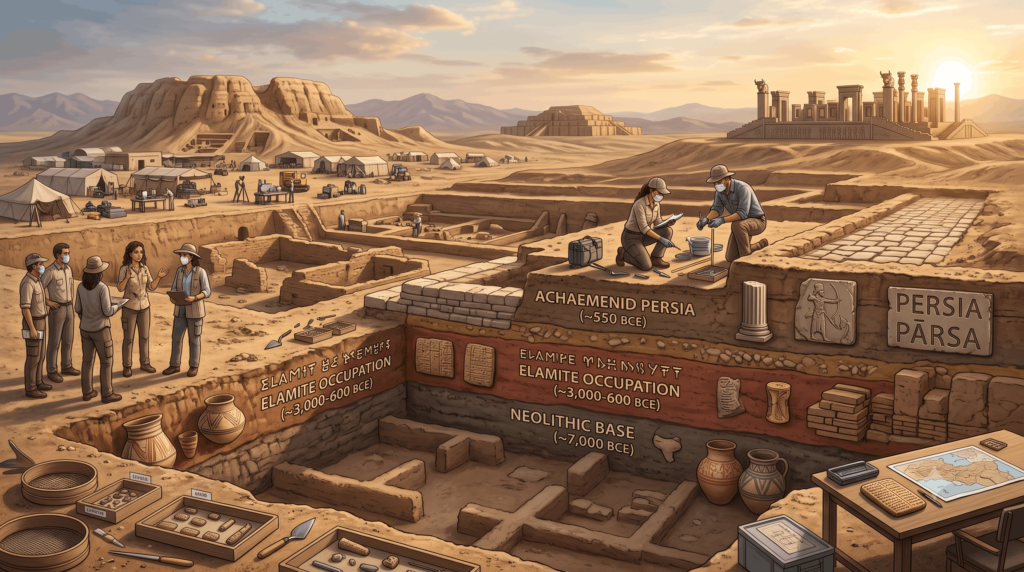
Archaeological excavation trench showing distinct stratigraphic layers from Neolithic base and Elamite occupation up to the Achaemenid Persian period.

Is Persian Civilization Really 7,000 Years Old? What Archaeological Stratigraphy Actually Proves

A popular claim frequently surfaces across social media, tourism campaigns, and nationalist discussions: “Persian civilization is over 7,000 years old.” While the Iranian plateau undeniably preserves some of the oldest settled farming communities, painted pottery traditions, and urban experiments on Earth, conflating these ancient prehistoric cultures with the historical emergence of Persian identity is an

Is Persian Civilization Really 7,000 Years Old? What Archaeological Stratigraphy Actually Proves Read More »

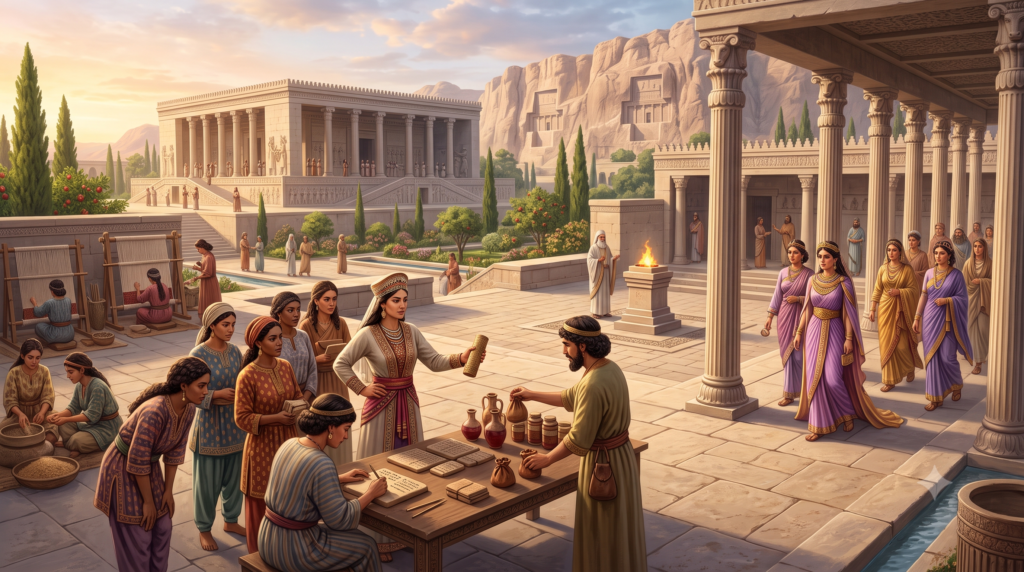
Achaemenid female workshop chief supervising textile artisans while imperial scribes record maternity wine and grain rations on cuneiform clay tablets in Persepolis.

Maternity Rations, Landed Estates, and Female Chiefs: The Unspoken Reality of Women in Ancient Persia

For centuries, Western historical imagination has reduced the women of the ancient Persian court to silent, exoticized figures confined behind palace walls—a biased literary trope primarily inherited from classical Greek playwrights and historians like Herodotus, Ctesias, and Xenophon. However, twentieth-century archaeological excavations in southwestern Iran completely shattered this narrative. The discovery and translation of thousands

Maternity Rations, Landed Estates, and Female Chiefs: The Unspoken Reality of Women in Ancient Persia Read More »

Persepolis: The Ceremonial Capital, Architecture, and Fall of the Achaemenid Metropolis

Persepolis (Old Persian: Pārsa; modern Takht-e Jamshid) represents the pinnacle of ancient Persian engineering, monumental art, and imperial ideology. Founded around 518 BCE by Darius I (the Great) in the rugged highland heartland of Fars (southwestern Iran), the city was conceived not as a routine military garrison or mundane commercial hub, but as the supreme

Persepolis: The Ceremonial Capital, Architecture, and Fall of the Achaemenid Metropolis Read More »

Xerxes I: The Great King of Persia, The Greco-Persian Wars, and the Master Builder of Persepolis

Xerxes I (Old Persian: Xšayāršā, meaning “Ruling Over Heroes”; reigned 486–465 BCE), commonly known as Xerxes the Great, was the fourth King of Kings (Xšāyaθiya Xšāyaθiyānām) of the Achaemenid Persian Empire. Ascending the throne at the absolute zenith of Persian geopolitical dominance, he governed an imperial expanse encompassing over five million square kilometers—stretching from the

Xerxes I: The Great King of Persia, The Greco-Persian Wars, and the Master Builder of Persepolis Read More »

Darius I (Darius the Great): The Architect of the Achaemenid Empire, Satrapal Reforms, and Global Vision

Darius I (Old Persian: Dārayavahuš, meaning “Holding Firm the Good”; c. 550–486 BCE), universally known as Darius the Great, was the third King of Kings (Xšāyaθiya Xšāyaθiyānām) of the Achaemenid Persian Empire. While Cyrus the Great founded the empire through rapid military conquest and Cambyses II annexed Egypt, it was Darius I who transformed a

Darius I (Darius the Great): The Architect of the Achaemenid Empire, Satrapal Reforms, and Global Vision Read More »

Cyrus the Great (Cyrus II): Founder of the Achaemenid Persian Empire, Imperial Conquests, and Historical Legacy

Cyrus II of Persia (Old Persian: Kūruš; c. 600–530 BCE), historically recognized as Cyrus the Great, was the visionary founder of the Achaemenid Empire—the first Persian Empire and the largest geopolitical superpower the ancient world had ever witnessed. Ascending the regional throne of Anshan around 559 BCE, Cyrus transformed Persia from a minor tributary highland

Cyrus the Great (Cyrus II): Founder of the Achaemenid Persian Empire, Imperial Conquests, and Historical Legacy Read More »

Isis: Egyptian Goddess of Magic, Motherhood, and Protection

Isis was one of the most important goddesses in ancient Egyptian religion. She was associated with magic, motherhood, healing, protection, kingship, and the afterlife, and she played a central role in the myth of Osiris, whom she restored after his murder by Set. As the mother of Horus, Isis also represented the protection of the

Isis: Egyptian Goddess of Magic, Motherhood, and Protection Read More »

Osiris (Asir): The Egyptian God of the Underworld, Resurrection, and the Duat

Osiris (Ancient Egyptian: Wsjr, Asir, or Usir) stands as one of the most prominent, revered, and enduring deities in the pantheon of ancient Egypt. Worshipped continuously for nearly three millennia, he personified the ultimate promise of resurrection, the eternal renewal of agricultural life, and supreme judicial authority over the human soul in the afterlife (The

Osiris (Asir): The Egyptian God of the Underworld, Resurrection, and the Duat Read More »

Anubis (Inpu): The Ancient Egyptian God of Mummification, Embalming, and Guide of Souls

Anubis (Ancient Egyptian: Jnpw, vocalized as Inpu or Anpu) is one of the oldest, most formidable, and visually iconic deities in the Egyptian pantheon. Predating the nationwide rise of the Osirian cult, Anubis served as the primordial lord of the dead, guardian of desert cemeteries, master of mummification, and the supreme psychopomp (guide of souls)

Anubis (Inpu): The Ancient Egyptian God of Mummification, Embalming, and Guide of Souls Read More »

Hatshepsut: The Female Pharaoh Who Ruled Ancient Egypt

Introduction Hatshepsut (Ancient Egyptian: ḤꜢt-špswt; throne name: Maatkare) was one of the most influential rulers of ancient Egypt and one of the few women to assume the complete authority of pharaoh. She ruled during the 18th Dynasty of the New Kingdom (c. 1479–1458 BCE), a period when Egypt reached unprecedented political stability, economic prosperity, and

Hatshepsut: The Female Pharaoh Who Ruled Ancient Egypt Read More »

Pharaoh Khufu (Cheops): Reign, Great Pyramid, & History

Introduction: Pharaoh Khufu and the Golden Age of the Fourth Dynasty Pharaoh Khufu (reigned c. 2589–2566 BCE), known to the classical Greco-Roman world as Cheops (Χέοψ) or Suphis, stands as one of the most monumental and debated figures in human history. As the second sovereign of ancient Egypt’s Fourth Dynasty (Old Kingdom), Khufu presided over

Pharaoh Khufu (Cheops): Reign, Great Pyramid, & History Read More »

Cleopatra VII: The Last Pharaoh of Egypt, Reign, Alliances, & Legacy

Introduction: The Final Sovereign of the Ptolemaic Kingdom Cleopatra VII Thea Philopator (reigned 51–30 BCE) was the final active monarch of the Ptolemaic Dynasty and the last sovereign pharaoh of ancient Egypt. Ascending the throne in the twilight of the Hellenistic Age, Cleopatra governed an empire possessing immense agricultural wealth, sophisticated naval capabilities, and the

Cleopatra VII: The Last Pharaoh of Egypt, Reign, Alliances, & Legacy Read More »

Tutankhamun: The Boy King of Egypt, Tomb KV62, Reign, & Facts

The Boy King of Ancient Egypt: Identity, Metrics, and Lineage Tutankhamun (reigned c. 1332–1323 BCE), originally named Tutankhaten, was an Egyptian pharaoh of the Eighteenth Dynasty during the New Kingdom period. Ascending the throne at approximately eight or nine years of age, he earned the enduring historical epithet “The Boy King” (The Boy Pharaoh). While

Tutankhamun: The Boy King of Egypt, Tomb KV62, Reign, & Facts Read More »

Marduk: The Supreme God of Babylon and King of the Babylonian Gods

Marduk was the chief god of ancient Babylon and one of the most important deities in Babylonian religion. Originally the patron god of Babylon, Marduk rose in status as the city became a major political power and was eventually regarded as king of the gods. He is best known for his role in the Enuma

Marduk: The Supreme God of Babylon and King of the Babylonian Gods Read More »

Nebuchadnezzar II: King of Babylon, Reign, Conquests, & Architecture

The Architect of the Neo-Babylonian Empire Nebuchadnezzar II (Akkadian: Nabû-kudurri-uṣur II, meaning “O Nabu, preserve my firstborn son”; reigned c. 605–562 BCE) was the second and most powerful monarch of the Neo-Babylonian (Chaldean) Empire. Inheriting a newly liberated Mesopotamian kingdom from his father, Nabopolassar, Nebuchadnezzar transformed Babylon into the preeminent military, political, and cultural metropolis

Nebuchadnezzar II: King of Babylon, Reign, Conquests, & Architecture Read More »